




Say it ain’t so. For the devoted fans of Burbank Clown House, that old pop-punk plea became a quiet, heartbroken murmur this week as the beloved Halloween attraction announced it would not be opening its doors—or, more accurately, its fog-shrouded, animatronic-lined front yard—for the 2026 season. The announcement came in a late September Instagram post that landed like a mallet to the gut of the community. “We here at Burbank Clown House are sad to announce that we will be dark for the 2026 season,” the organizers wrote, choosing the word “dark” the way theme parks do when a ride goes quiet, but knowing full well that this darkness would be felt in the laughter of children who had already started planning their clown costumes. For years, this quirky, carnival-themed haunted attraction had turned an ordinary home in the Los Angeles suburb into a spectacularly spooky destination, one where families could wander through a nightmare rendered in rubber masks, painted smiles, and homemade magic. It wasn’t just a Halloween display; it was a tradition, a free-spirited alternative to expensive theme parks, and a testament to what a community can build in its own backyard. The news left fans reeling, flooding the comments with sadness, anger, and desperate questions. The Burbank Clown House had become more than a tourist blip—it was a weird, wonderful piece of neighborhood identity, and the thought of Halloween without it felt like a holiday stripped of its soul.
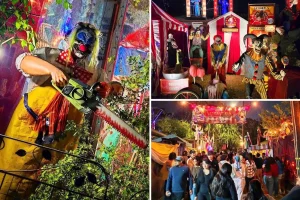
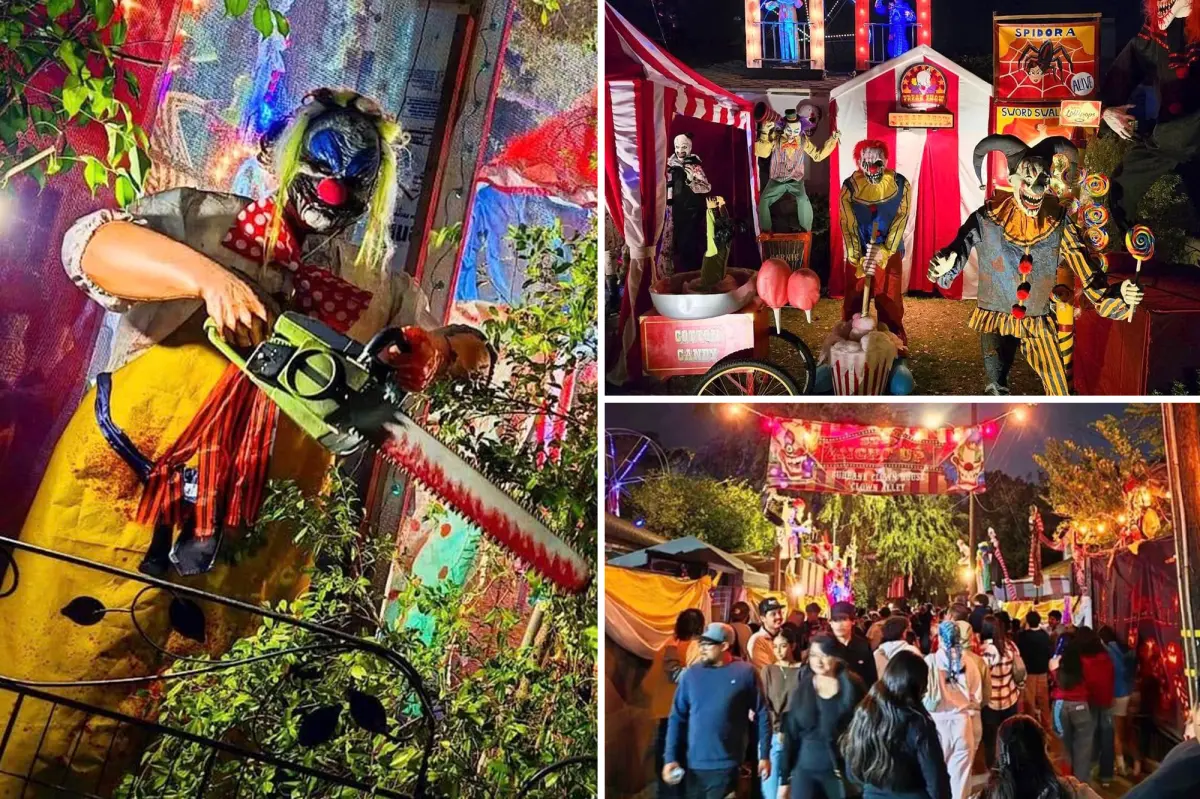
To understand why this cancellation stings so deeply, you have to understand what the Burbank Clown House actually is—and what it became. Picture a quiet residential street, usually unremarkable, transformed each October into a full-blown carnival of horror, complete with more than 100 animatronics, ten live performers in menacing clown makeup, and the unmistakable sound of creepy organ music drifting through the night air. The attraction didn’t try to hide its homemade heart; instead, it embraced it. Visitors would approach a front yard that had been reborn as a haunted funhouse, complete with twisting paths, sudden scares, and clowns lurking behind every corner. It was theatrical, immersive, and utterly unique—a place where the line between a child’s birthday party and a horror movie began to blur. The clowns weren’t just there to frighten; they were there to perform, to interact, to make each guest feel as though they had stepped into a living, breathing nightmare. For families who lived in the area, it was a rite of fall. For the performers, many of them volunteers and friends, it was a labor of love. And for the thousands who flocked to the site, it was proof that Halloween didn’t need a massive corporate budget to be magical. It just needed a little imagination, a lot of fake blood, and a crew of people who genuinely loved scaring the daylights out of their neighbors.
So what went wrong? Why would a beloved attraction with thousands of devoted fans suddenly go dark? The answer, as is so often the case, comes down to the complicated logistics of running a massive operation from a residential property. After last season, when crowds overwhelmed the area and drew attention for both the right and wrong reasons, organizers said they “worked tirelessly” to find a new home for the haunted experience. They wanted to expand, to improve, to make the 2026 installment even bigger and better than before. They secured two potential partners, both of whom seemed ready to provide a larger, more suitable location. But then, one by one, those deals fell through. It wasn’t a lack of heart or effort; it was a matter of circumstance. Real estate, zoning, permits, insurance—these are the unsexy, unspooky realities of producing a large-scale haunted attraction. When the second partner backed out, organizers had to make a choice: rush to produce a subpar event in a location that didn’t fit, or take a year off and regroup. They chose the latter. It was a decision that no doubt disappointed them as much as it did their fans. But it was also a decision made with integrity—a refusal to deliver anything less than the jaw-dropping, awe-inspiring experience the Burbank Clown House had become known for.
The good news, buried beneath the disappointment, is that this is not goodbye. It’s a see-you-later. Organizers were quick to promise that the Burbank Clown House would return in 2027, and when it does, it will be “bigger and better than ever” with a new interactive “Klown Maze.” The announcement gave fans something to hold onto, a light flickering in the dark. The promise of a maze suggests a whole new level of immersion, an opportunity for visitors to walk through a twisty, turny, clown-filled nightmare designed to test their nerves and reward their courage. It’s an exciting evolution of the original concept, and it signals that the creators are using this year off not to rest, but to dream. They’re looking ahead to a future where the Burbank Clown House isn’t just a front-yard attraction, but a destination. The phrase “we’re looking forward to 2027 and brining you an amazing experience” carried with it a little typo, but the sentiment was clear: this is a break, not a break-up. The Klown Maze will be a fresh chapter in a story that has always been about pushing creative boundaries, and if the past is any indication, it will be worth the wait. Fans just have to survive one long, quiet, clown-free Halloween season before the dream becomes a reality.
And if there was any doubt about how deeply this attraction has touched people, the comments section offered a masterclass in community grief. “Oh man! Gut punch after gut punch! Definitely better to take the time then try to last minute pull something together,” one fan wrote, trying to find a silver lining in the disappointment. “Sorry to hear it guys! But I’m sure next year is gonna be insane!” Others were less forgiving. “Does this mean nothing at all ??? My son will be devastated,” lamented another parent, the weight of that sentence impossible to ignore. For a child, Halloween is a magical, monumental event, and the Burbank Clown House had become the highlight of the season. “Wow, the city of Burbank is going downhill fast. Can’t even get their act together to help host a fun Halloween event. Very sad,” a third commenter wrote, reflecting the frustration of a public that often doesn’t see the behind-the-scenes struggles of producing a free, high-quality attraction. These comments aren’t just digital noise; they’re a testament to the emotional connection this home has built with its community. It’s rare for a haunted house to inspire this level of devotion. It’s even rarer for a front-yard display to become a source of civic pride. But that’s exactly what the Burbank Clown House achieved, one scare at a time.
At the heart of it all is organizer Gary Lane, who launched the Burbank Clown House with his brother, Larry, and set designer Michael Bowen in 2019. What started as a passion project has grown into a lifeline for families who want the full Halloween experience without the price tag of a corporate theme park. “So many parents tell us ‘I can’t carry my kids to Universal, I can’t afford Disney‘. This is their Halloween,” Lane told CBS LA. Those words capture the true spirit of the attraction. It’s not about the animatronics or the clowns; it’s about accessibility. It’s about giving every child, regardless of their family’s income, a chance to experience the thrill of Halloween in a safe, welcoming, and utterly magical environment. The event is completely free, though organizers accept donations through their website to help cover the considerable costs of building and running the display. In 2025, Lane estimated that the attraction drew about 5,000 people on Friday nights, with another 3,000 visitors stopping by throughout the week. Those numbers are staggering for a residential event, but they make sense when you consider the reputation the Clown House has earned. It is a giant, beating heart dressed in a tattered clown suit, and its absence this year will leave a hole in the community that no amount of store-bought decorations can fill. But if there’s one thing clowns are known for, it’s resilience. The Burbank Clown House will be back, and when it returns, it will be ready to make Halloween magic again. The lights may be off this year, but the magic, like a clown’s smile, is never truly gone. It’s just waiting for the perfect moment to reappear—and when it does, it will be unforgettable.