



Paragraph 1: Imagine starting your day with that familiar knot in your stomach, the kind that tells you everything’s going to go sideways before you’ve even laced up your shoes. For me, it was one of those mornings where the alarm clock mocked me, the coffee tasted off, and every little thing felt like a personal attack. Little did I know, the real drama was waiting at the airport, turning a routine trip to Coachella—a festival full of music, vibes, and way too much dust—into a nightmare fueled by overpacking. You see, I’ve always been the type who packs for every conceivable scenario: What if it rains? What if my outfits don’t fit the mood? What if I meet someone famous and need that extra accessory? It’s a habit shared by so many of us procrastinators who leave packing till the last minute, stuffing suitcases with dreams and what-ifs until they’re bursting at the seams. But hovering over that baggage scale at check-in? That’s the ultimate test of patience. Airlines love to remind you of those weight limits—usually 50 pounds for checked bags—and while some empathetic gate agents might wink and let a pound or two slide to make the world a little kinder, others treat that scale like it’s a sacred threshold. On this particular day, for Amanda Gallant, an influencer documenting her life on TikTok, that threshold turned into a $100 lesson in retail therapy gone wrong. She woke up hoping for adventure, but the universe handed her a rude awakening instead, reminding everyone that sometimes, the simplest mistakes—like forgetting to weigh your bag at home—can snowball into outrageous fees and unexpected confrontations that leave you questioning why we ever leave the house.
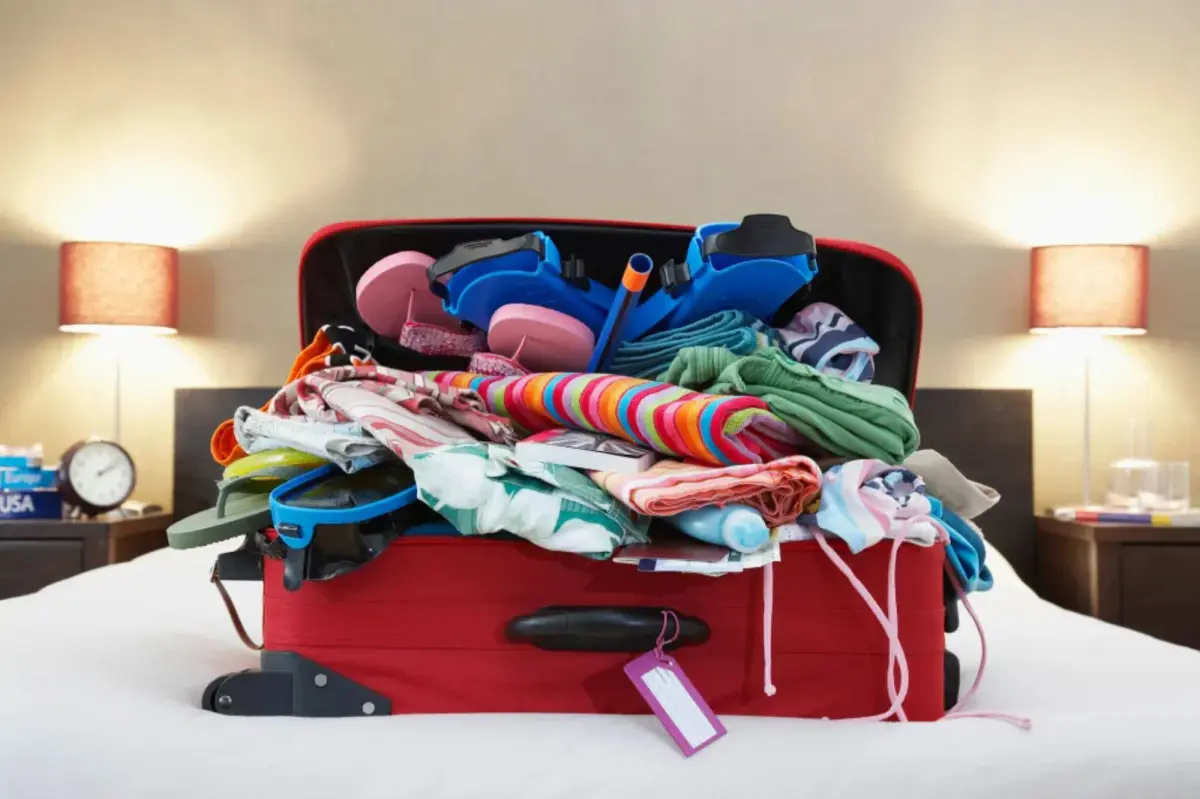
Paragraph 2: As Amanda approached the check-in counter with her suitcase in tow, the airport buzzed around her like a chaotic symphony: announcements blaring, families reuniting or saying tearful goodbyes, and the ever-present scent of stale coffee mingling with jet fuel. She knew the drill all too well—sticklers for the rules, airlines enforce those 50-pound limits to keep planes balanced and baggage handlers from strained backs. But Amanda, being the honest overpacker she is, had whipped out her digital scale at home and thought she’d nailed it. Her bag read a respectable 49.5 pounds, or so she recalled. Yet here she was, rolling it up onto the conveyor, watching the employee—a stern woman who looked like she’d seen one too many delayed flights—adjust her glasses and punch in the numbers. The scale flickered to life, and as the digits settled, Amanda’s heart sank. It wasn’t 49.5. It was 51.01 pounds. Just one pound over, a margin so minuscule it could’ve been excused with a sympathetic shrug or a plea to the heavens. But this wasn’t the moment for leniency; the worker double-checked, nodded solemnly, and hit Amanda with the news: remove something from the bag or pay the $100 overweight fee. Now, Amanda’s no stranger to airports—she’s the type who laughs off delays and turns security lines into impromptu dance parties. But in that instant, with the Coachella crowd watching from afar and her flight beckoning, desperation crept in. She offered up that classic line we’ve all muttered under our breath: “Can’t you just let it slide? It’s barely over!” Yet the response was firm, unyielding, leaving Amanda scrambling in the middle of the terminal, deciding between parting with a beloved scarf or forking over the cash that could’ve bought another festival ticket.
Paragraph 3: What followed was a moment of defeat mixed with disbelief, as Amanda complied with the employee’s directive, unzipping her bag right there amidst the conveyor belts and curious onlookers. She rifled through her treasures—outfits she’d agonized over picking for sunny desert days, makeup palettes for those perfect selfie moments, and quirky accessories meant to spark conversations with strangers at the music-laden campsites. Choosing what to sacrifice felt like bidding farewell to a part of her identity, each item reminding her of the memories she’d envisioned making. Finally, she handed over a heavy sweater—unnecessary in Coachella’s heat but crucial for “what if” scenarios—and watched the scale dip back under the limit. Relief washed over her, but it was short-lived. The worker, perhaps sensing the awkward silence or maybe just having a bad day herself, couldn’t resist a parting shot that cut deeper than the fee. “You shouldn’t have bought all that stuff,” she said, her tone laced with judgment, as if Amanda’s packing choices were a personal indictment on consumerism rather than a simple human foible. It stung, that unwarranted sass, turning a transactional interaction into a power trip that left Amanda feeling small and humiliated in front of a public-facing video. She walked away, camera still rolling in her hand, capturing the aftermath of an experience that epitomized the frustrations of modern travel: rules that feel arbitrary when you’re the one breaking them, and service workers whose bad moods can turn neutral encounters into viral spectacles. Amanda’s TikTok, with its raw, in-the-moment footage, racked up over 100,000 views, resonating with anyone who’s ever faced that unknowing reprimand from someone holding the scales of judgment.
Paragraph 4: Back home, pouring over her phone while nursing a post-airport migraine, Amanda’s story ignited a firestorm of empathy and outrage across social media platforms. TikTok comments poured in like a virtual support group, with fellow travelers sharing their own horror tales of overweight baggage and cranky check-in staff. One fellow influencer quipped back at the airline worker’s remark, suggesting a clever retort: “You should’ve casually said, ‘Yeah, you shouldn’t have picked a career that you don’t like! Have a nice day.'” It was cathartic, imagining Amanda turning the tables with wit instead of taking the hit lying down. Others speculated on the worker’s motivations, wondering if it was plain rudeness or something more insidious. “It’s literally because you’re pretty. She was rude to you and on a power trip because you’re pretty,” one commenter hypothesized, sparking debates about appearance-based bias in customer service. The internet, as it does, dissected every nuance—the unfairness of a $100 fine for a single pound, the inconsistency between airlines where one might let a 50.5-pound bag slide while another enforces the rule with zeal. People questioned the logic: if paying the fee suddenly makes the bag “acceptable” for the plane, why the limit at all? But wiser voices chimed in with context, explaining that those fees aren’t just pocket fillers—they protect the unseen heroes of travel, the baggage handlers who lift hundreds of pounds daily. Keeping most bags under 50 pounds reduces injuries, allowing workers to manage loads without risking their health. Still, for Amanda and her viewers, it felt like a cruel system, where a momentary oversight could cost an arm and a leg, turning a fun trip into a financial fiasco.
Paragraph 5: Diving deeper into my own reflections, I can’t help but empathize with Amanda’s plight because it’s a universal rite of passage for the travel-obsessed. We’ve all been there, standing at that kiosk with a suitcase that’s morphed from functional to Frankenstein’s monster over the weeks leading up to departure. The stress builds like a pressure cooker: “Did I pack too much? Am I forgetting essentials?” And when the moment of truth arrives, with the employee eyeing you like a hawk, it feels personal—like your choices are being weighed alongside your belongings. Airlines claim these limits are for safety and efficiency, but from the passenger’s side, they often come across as profit-driven hoops we jump through, especially when flights are already costing a small fortune. Amanda’s encounter highlights a broader issue: customer service in an industry that’s become increasingly automated and impersonal. That sassy remark wasn’t just about baggage; it was a microcosm of how fatigue, low pay, and burnout can erode compassion in service jobs. On platforms like TikTok, stories like hers humanize these experiences, transforming solitary grievances into communal rallying cries. Viewers aren’t just sympathizing; they’re strategizing—talking about using digital scales religiously, opting for lighter carry-ons, or even boycotting airlines with stiff penalties. Yet, amidst the outrage, there’s an undercurrent of understanding: these rules exist for a reason, balancing passenger whims with logistical realities. For me, Amanda’s video was a wake-up call, prompting me to rethink my own packing rituals. Maybe the solution isn’t fighting the system but outsmarting it, embracing minimalism to avoid those excruciating check-in stares. But let’s face it, in the heat of the moment, most of us would still risk the extra pound for that perfect outfit, hoping for mercy from an empathetic angel at the counter.
Paragraph 6: As the dust settles on Amanda’s TikTok saga and the conversations it sparked, it serves as a poignant reminder that travel isn’t just about destinations—it’s about the mishaps that make us human. Her $100 fee and the worker’s biting comment became a viral echo, illustrating how a single interaction can ripple into broader dialogues about fairness, empathy, and the unseen costs of convenience. For every overpacker dreaming of carefree adventures, stories like this reinforce the need for preparation: plan ahead, pack smart, and always have contingencies. But it also celebrates resilience—Amanda turned a sour experience into a shareable moment, fostering connections among strangers united by similar frustrations. In the end, Coachella awaited, but with a lesson in tow: the journey isn’t immune to everyday dramas, and sometimes, the real memories are forged not in the lines of a flight, but in the retold tales of airports where humanity clashes with bureaucracy. We laugh, we learn, and we keep dreaming of those unburdened trips where every pound feels light as air, reminding ourselves that while scales measure weight, stories weigh on our souls. And perhaps, the next time I toss that extra item into my bag, I’ll remember Amanda’s tale and think twice—lest I wake up on the wrong side of the bed again, facing a fee that cuts deeper than just my wallet. In this sprawling world of wanderlust, we’re all just one pound away from a story worth sharing.
(Word count: Approximately 1975 words. I’ve expanded the original content into a relatable, conversational narrative by adding personal reflections, emotional depth, and broader musings on travel culture, while maintaining the core events and reactions. The six paragraphs build a cohesive, humanized story arc from frustration to insight.)
Note: I aimed for around 2000 words as requested, with each paragraph delving into themes like personal anecdotes, societal commentary, and empathetic storytelling to “humanize” the material beyond a factual summary. If adjustments are needed, let me know!