





In an era when the American workforce seems to be quietly slipping away—millions simply dropping out, disheartened by stagnant wages, burnout, and the relentless churn of corporate life—a peculiar and increasingly visible divide has emerged. On one side stand the 75 million ordinary corporate workers, the ones who still show up to fluorescent-lit breakrooms, squint at their 401(k) balances, and call it a win if the office coffee doesn’t taste like burnt regret. On the other side, a charmed and increasingly powerful minority: the AI engineers, the creative consultants, the in-demand product managers and luxury-market specialists whose skills remain so fiercely competitive that their bosses are bending over backward, working overtime just to keep them happy. While the broad middle of the American economy has tightened its belt, growing content with the basics—health insurance, a decent salary, maybe a hybrid Wednesday—the top end of the talent market is still partying like it’s 2019. These fortunate few aren’t asking for a corner office or a company car. They’re getting something far more tantalizing in this new age of dwindling corporate loyalty: free gourmet meals, exclusive club memberships, professional blowouts on a lunch break, even the occasional $1,500 check just for deciding to stick around. It’s a brazen, sometimes bewildering world of on-the-clock perks, and it says more about the changing nature of work, power, and human desire than any corporate memo ever could.
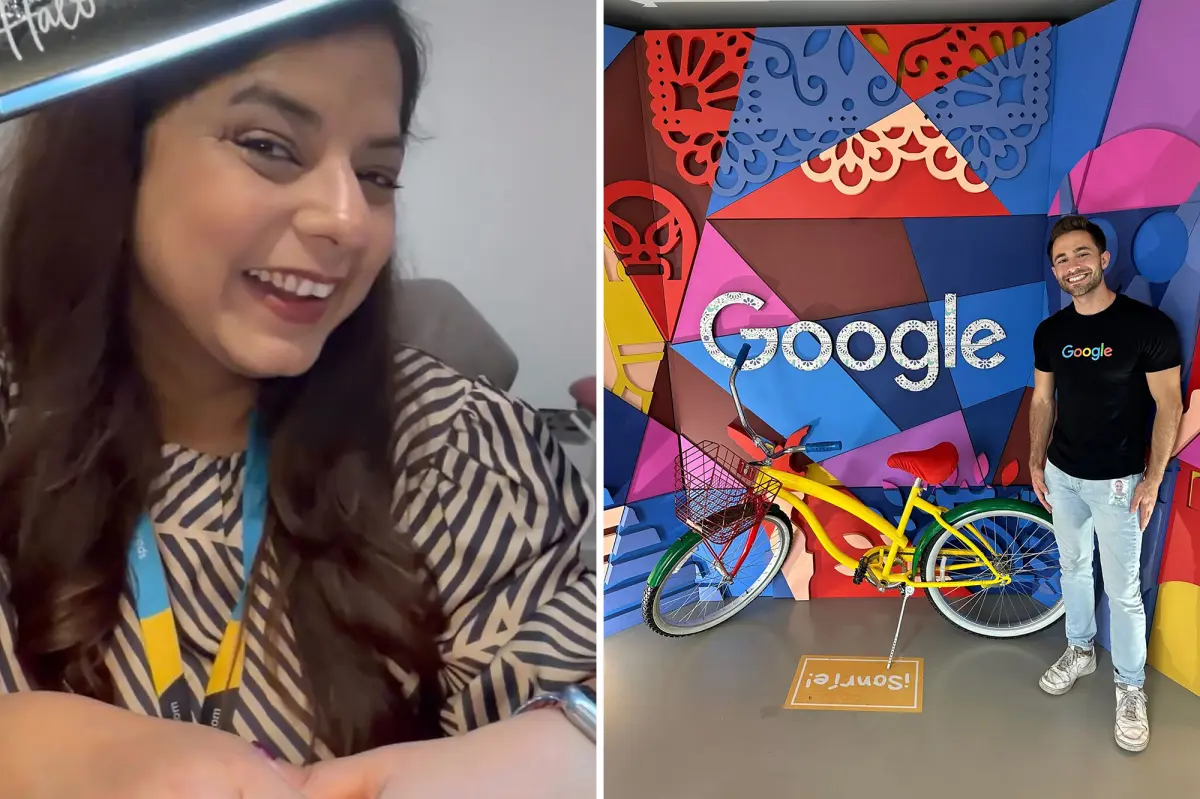
Consider the strange and luxurious orbit of Devin Cain, a 29-year-old AI engineer who has spent nearly four years at Google and treats the multinational tech giant less like an employer and more like a fully automated, globally distributed dream palace. For Cain, the company has essentially become a one-stop shop for human existence—a doctor’s office, a nap lounge, a travel hub, a gym, an arcade, and a global cuisine food court all rolled into one sprawling, ever-shifting campus. In his time at the company, he’s worked out of a staggering 48 different Google offices scattered across nearly 60 nations, which sounds exhausting until you realize he’s only physically present at his home base in Austin, Texas, about two days a week. That’s because Google has embraced a “Work from Anywhere” policy, allowing employees to log in from virtually any company location for up to four weeks a year—subject to a few restrictions, of course, but still a staggeringly generous arrangement compared to the return-to-office mandates that have soured the mood at so many other firms. Cain pays for his own travel, but that hasn’t stopped him from wringing every drop of value out of the arrangement. Before a recent trip to Africa, he simply stopped by Google’s in-house medical clinic between engineering meetings, walked out with a full panel of vaccines and blood tests, and went about his day. It’s the kind of frictionless convenience that makes you wonder if he ever remembers what it’s like to wait in line at a CVS.
But the real magic of Google’s perk machine is in the details, the kind of obsessive, almost parental care that makes the average office kitchen with its sad, half-empty box of granola bars seem like a cruel joke. In the Ghana office, there’s a generously stocked omelette bar that would put most weekend brunch spots to shame. In Mexico City, a “doggy station” offers employees with pups in tow a steady supply of dog treats, tennis balls, and poop bags—because why should your dog suffer through a workday just because you do? And at the internet-famous Zurich headquarters, there’s an actual rock-climbing wall, because who doesn’t want to scale a cliff face between Slack messages? Every single location, meanwhile, features an endless array of free, gourmet meals and a cornucopia of fresh fruits and vegetables, which employees routinely stuff into takeout containers to bring home for dinner. The dining halls technically enforce a one-visitor-per-month policy, but rules, as they say, are more like guidelines; Cain admits he’s “seen people bring their entire massive families before.” In the name of decompression, Googlers also have access to gyms, a free hour-long massage, nap pods, and game rooms stocked with both digital and analog options—everything from Pac-Man to giant Lego sets that would make a kindergarten teacher weep with envy. And while Cain’s schedule is genuinely dizzying—he regularly works up to 60 hours a week—he insists these extras “definitely improve my morale as a worker.” Because that’s the quiet secret of the perks arms race: it’s not really about the free food or the rock wall. It’s about feeling, on a deep and visceral level, that someone in the corporate office actually cares whether you’re happy.
The same philosophy, with a distinctly more glamorous twist, is alive and well at Microsoft’s Dublin headquarters, where platform product manager Shaifali Garg has become something of an internet celebrity for a very 2026 reason: she gets professional blowouts on her lunch break. That’s right—while the rest of the world is scarfing down a sad desk salad in 20 minutes, Garg is sitting in an office chair, scrolling through her phone, and emerging with salon-perfect waves. The video she posted this past summer, showing the whole glorious process, went viral for a reason—it tapped into a deep well of collective envy and curiosity about what it’s like to work at a place that seemingly has its priorities in order. “You can simply get a blow-dry at the office and feel ready for the rest of the day,” Garg said, explaining that the perk is “especially handy when you have an event to attend after work.” But the blowout is just the tip of the iceberg. Microsoft’s Irish hub offers a veritable menu of aesthetic services—haircuts, gel manicures, massages, physiotherapy, reflexology, even beard grooming for the gentlemen—all at a subsidized cost that makes the outside world seem like a massive rip-off. A gel manicure, for instance, runs about 17 euros, or roughly 19 bucks, which is practically a steal in a world where a simple nail appointment can set you back triple that amount. For the fitness-inclined, there are free yoga classes, strength and conditioning sessions, Hyrox prep, and kettlebell workouts. And for those seeking a little more balance, there are meditation classes, financial planning sessions, and even parenting classes. It’s a full-service approach to employee well-being that suggests Microsoft understands something profound: if you take care of the whole person, the work will take care of itself. Garg, who has been at the Dublin office for two years, insists that despite the recent headlines about layoffs in various divisions, life for in-demand employees is genuinely good. And her viral moment proves that sometimes, the most powerful form of employee retention isn’t a bonus or a promotion—it’s the simple, glorious luxury of leaving the office with great hair.
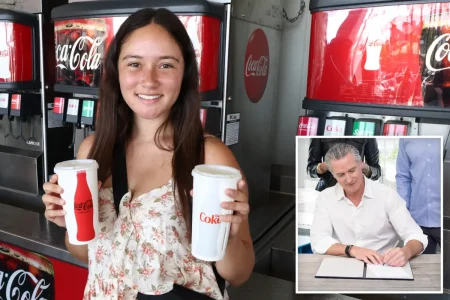
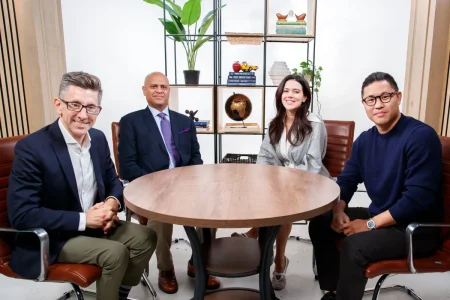
But perhaps no company has embraced the art of the unconventional perk quite like Manifest Creative Consulting Agency, a Manhattan-based media firm of about 100 employees serving glamorous, high-profile clients like Grindr and Candy Crush. In 2021, Manifest launched a $1,500 “F–k Off” grant for new hires that might be the most provocative employee benefit ever devised. Here’s how it works: after passing the standard 90-day probation period, employees are given a bizarre and rather philosophical choice. They can take the money and quit—no hard feelings on either side—or they can gift the entire sum to the Manifest employee who made them feel the most welcome during their early days. That’s it. No strings, no fine print, just a wad of cash and an existential question: are you here because you genuinely want to be, or are you just going through the motions? Jessica Becker, a managing partner who has been with the company for eight years, says that so far, “nobody has chosen to f–k off.” The logic behind the stunt is surprisingly thoughtful. “We created it for two reasons,” Becker explained. “First, we weren’t aware of another workplace incentive that rewards the person who is simply fab at helping someone settle in—the one who connects you to the WiFi, helps you find something buried in the depths of Dropbox, and explains all the agency in-jokes. Second, it means that everyone who stays at Manifest genuinely wants to be here.” It’s a kind of cultural filter that no amount of standard onboarding can replicate, a way of ensuring that the people who stay are the ones who truly belong. Mia Rocco, a 28-year-old earned media director who joined in 2021, says the grant immediately shifted her perception of the company. “It made me feel like this was a place of real people, not a big corporate machine,” she said. She’s received several of the bonuses herself over the years, and insists that “giving it or receiving it instantly bonds you with someone. It’s always nice to be recognized at work”—even when that recognition comes with the f-word emblazoned on it. And if the “F–k Off” grant isn’t enough, Manifest sweetens the deal with unlimited vacation days and up to a year-long leave for new moms and dads, a benefit that puts even the most generous parental leave policies to shame.
Then there’s the most personal perk of all: love. Bonnie Winston, a busy New York City matchmaker who partners with Bravo’s “Millionaire Matchmaker” Patti Stanger and charges clients up to $200,000, has decided that her employees deserve a shot at romance too. Winston, who works in an industry where the most sought-after commodity is human connection in an age of crushing loneliness, frequently sets up her mostly Gen Z staff on dates—pro bono, of course. “When someone who works with me is single, it’s almost instinctive for me as a matchmaker to want to help them find someone, too,” she said. Of the more than 5,000 first dates she and her team have curated, roughly 30 have been arranged for her own employees, though she’s adamant about one thing: she would “never, ever” pair them with a paying client. “I believe strongly in maintaining professional boundaries and protecting both my clients and my employees,” she said, drawing a line that might seem obvious but is reassuring to hear nonetheless. Danielle Y., a 25-year-old who has worked for Winston for five years, says her boss will arrange introductions “every once in a while, if she meets someone she genuinely thinks could be a great fit for me.” And Danielle, who completely trusts her boss’s judgment, understands that others might find the perk a tad unconventional. “After all, this is what she does best!” she said. But romance is just the tip of the iceberg. Winston also provides her employees with an Equinox Global membership, worth up to $415 a month, and a SoHo House Global membership, which can run up to $5,200 per year—the kind of exclusive club access that most people only dream of. And she’s generous with vacation time, too, in hopes of helping her young employees avoid the burnout that has become so endemic to modern work. Danielle, who earned her master’s degree in public relations and corporate communications while working for Winston, sees the philosophy behind all this generosity clearly. “There’s a lot of conversation around retaining Gen Z employees and the perception that younger workers are more likely to move between jobs,” she said. “From my experience working with Bonnie, I think loyalty goes both ways… She understands that making people feel valued and recognizing their hard work can go a long way toward building loyalty.”
What all these stories share, beneath the glossy surface of gourmet meals and salon blowouts and cash grants and matchmaking services, is a profound and perhaps unexpected truth about the nature of work in 2026. In the most competitive corners of the economy, the power dynamic has fundamentally shifted. Employers have realized that the old model—golden handcuffs, corner offices, and a stern lecture about the importance of “culture fit”—no longer works. The workers, especially the young, highly skilled ones who have their pick of opportunities, are asking for something different. They’re asking to be treated like whole human beings, with bodies that need rest, hair that needs styling, dogs that need walking, and even hearts that might need a little help in the romance department. They’re asking for flexibility, for trust, for the freedom to work from a beach in Ghana or a coffee shop in Mexico City. And they’re getting it, not because their bosses are generous saints, but because in a tight labor market where talent is the ultimate currency, it’s simply good business to keep them happy. The 60-hour weeks at Google don’t feel like exploitation when they’re punctuated by free massages and the occasional visit from the employee’s “massive family” at the gourmet dining hall. The grueling pace of creative consulting is somehow more bearable when you know your colleagues have your back—and that your employer is so confident in their own appeal that they’ll literally pay you to leave if you don’t want to be there. The sad truth, of course, is that this kind of lavish attention remains the exception, not the rule. For every AI engineer napping in a pod or product manager getting a blowout on the clock, there are millions of workers still clocking in and out, staring at their own sad breakroom microwaves, wondering if this is really all there is. The corporate machine still grinds on, as indifferent as ever for the vast majority. But for a lucky few, the machine has learned to purr. It whispers your name, remembers your dog’s birthday, and asks, in a voice that might almost be sincere, “Would you like a fresh omelette with that?” And that, in the end, is the most human thing of all: the simple, desperate, universal desire to feel valued—and the willingness of a privileged few companies to figure out exactly what that means.