






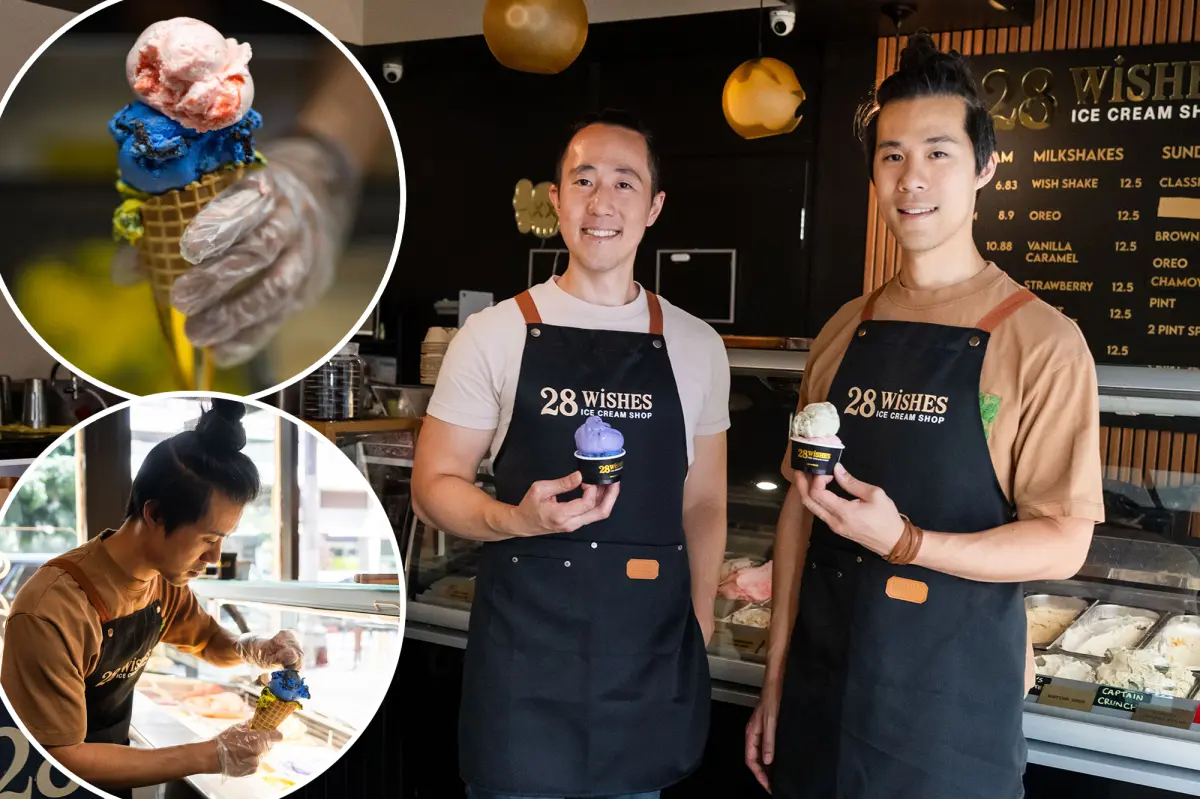
For small business owners, bad weather is usually an unavoidable curse that washes away the day’s profits. But at 28wishes, a trendy, highly-rated independent ice cream parlor nestled in downtown Los Angeles, a rainy day simply means it is time to cash in. The shop’s co-owner, 37-year-old former corporate banker Jason Jiang, has found a brilliant way to protect his bottom line against the unpredictable elements. Rather than just watching his shop sit empty whenever a cold front rolls through Southern California, Jiang has turned to Kalshi, a popular online prediction market, to hedge his business losses. By placing strategic, daily bets on freezing temperatures, rain, and cold weather anomalies, he has transformed a recurring seasonal headache into a highly lucrative secondary revenue stream.
Jiang’s venture into financial weather hedging began with a simple, painful reality of the dessert industry: ice cream is incredibly weather-dependent. Whenever the thermometer in Los Angeles dips below a comfortable 70 degrees, foot traffic evaporates, and 28wishes experiences an immediate 20 percent drop in daily sales. To combat this, Jiang and his younger brother and co-owner, James, decided to apply their analytical skills to a new kind of game. Having previously enjoyed casual sports betting, the brothers realized in April that they could use Kalshi’s climate-related contracts to offset their quietest retail days. By consistently placing a modest wager of about $20 a day on impending cold snaps, they created a homemade insurance policy that pays out precisely when their physical cash registers fall silent.
To ensure their predictions are far more than just random stabs in the dark, the Jiang brothers have turned climate forecasting into a daily science. They diligently analyze professional meteorological models, scour climate news websites, and closely follow academic scientists on social media to spot patterns before they hit the local headlines. This rigorous, data-driven approach has yielded results that Jason describes as “scarily accurate.” While they accept that risking $600 a month comes with inherent gambles, the strategy has paid off handsomely, generating up to $1,500 in monthly gains. Remarkably, these digital winnings cover roughly 43 percent of the physical shop’s $3,500 monthly rent, proving that intellectual curiosity and a bit of calculated risk can directly sustain a brick-and-mortar dream.
This unconventional strategy initially met with some understandable skepticism at home. When Jason first explained the business plan to his wife, her eyebrows shot up in concern, questioning whether wagering store capital on weather patterns was truly a sound idea. However, doubts quickly vanished when he demonstrated the tangible proof of their success, showing how a single, well-timed weather prediction could net the business as much as $800 in a single day. In the volatile world of small business, where margins are razor-thin and overhead is relentless, such an undeniable influx of capital is impossible to argue with. It turned a skeptical spouse into a believer and solidified the app’s role in the shop’s survival strategy.
The tool making this financial wizardry possible is Kalshi, a regulated prediction platform founded in 2021 by MIT graduates Tarek Mansour and Luana Lopes Lara. Boasting over five million active monthly users and federal oversight from the Commodity Futures Trading Commission, the app allows users to trade on the outcomes of real-world events ranging from politics to pop culture. Although some states have tried to restrict its use, the platform offers unprecedented flexibility for creative thinkers like Jiang. Reflecting on his journey from the structured corporate banking world to the unpredictable life of an entrepreneurial ice cream scooper, Jiang notes that life itself is a gamble. For him, embracing this unique blend of finance and food service is simply what it takes to find happiness and security.
Meanwhile, back at the counter, 28wishes continues to charm Angelenos with its vibrant, creative creations. Their current crowd favorite is “Cookie Monster,” an eye-catching blue treat that combines classic ice cream with antioxidant-rich blue spirulina microalgae, alongside the baseball-inspired “Dodger’s Swirl.” Inspired by their financial success on the prediction market, Jason is now dreaming up a brand-new flavor dedicated entirely to Kalshi. He envisions using high-quality Japanese matcha powder—already a staple in their popular Matcha Cookies & Cream—to create a signature dessert that mirrors their unique business model. After all, the intense, earthy green of matcha is the perfect culinary tribute to the sweet shade of money they have successfully harvested from the cold.