



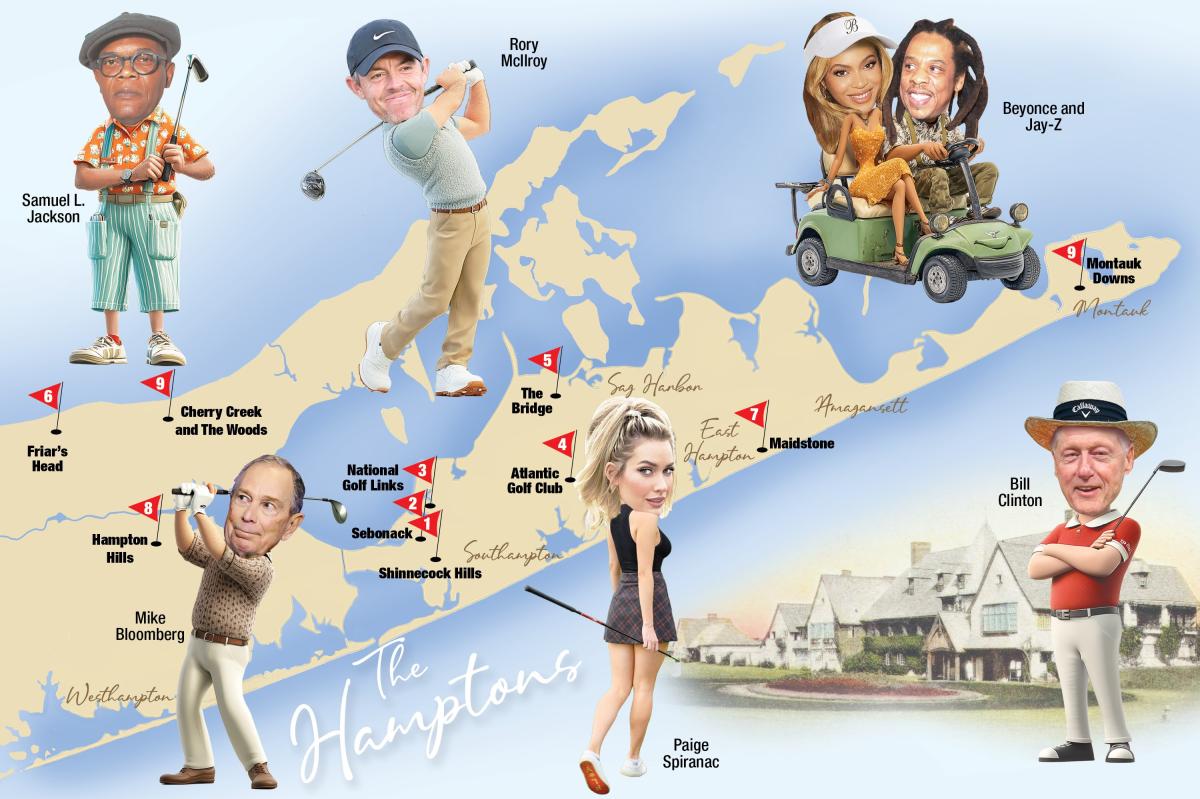
Securing a hotel room or a summer rental in the Hamptons during the month of June is usually a relatively straightforward task, but when the historic U.S. Open championship descends upon the region, normal rules are cast aside. The East End of Long Island transforms into a bustling epicenter for golf enthusiasts, players, and spectators alike, all drawn by the magnetic allure of the iconic Shinnecock Hills Golf Club in Southampton. Golf-obsessed travelers think nothing of shelling out premium rates for lodging and travel just to stand along the fairways and witness history in the making. Yet, while the spotlight naturally shines brightest on Shinnecock during major championship weeks, this legendary course is merely the crown jewel in a sprawling crown of world-class golf courses that dot the local landscape. For those dreaming of playing these immaculate fairways themselves, the reality of local golf culture can be starkly divided. Gaining access to the area’s legendary private clubs is an incredibly exclusive endeavor, requiring not just impeccable social connections and passing rigorous membership committees, but also astronomical financial investments. Initiation fees at these ultra-exclusive sanctuaries are rumored to range from a hefty $175,000 to an eye-watering $1.8 million before taxes, and that is before taking into account the annual membership dues that can easily run between $25,000 and $65,000. Understable privacy concerns mean most clubs keep these exact numbers close to the chest, leaving onlookers to marvel at the sheer scale of wealth concentrated along these coastlines. Fortunately, the Hamptons also harbor a more democratic side. Scattered among these billionaire playgrounds are several highly respected, beautifully maintained public and state-run courses where everyday players can experience the dramatic coastal topography, ocean breezes, and historic architecture of East End golf for green fees that start at a modest $40 and rarely exceed $100.
For those who do manage to cross the threshold into the upper echelons of Hamptons society, Southampton offers an unparalleled trio of private clubs that represent the absolute pinnacle of golf architecture and prestige. Shinnecock Hills Golf Club, established way back in 1891, is one of the five founding members of the United States Golf Association and stands as an enduring monument to the sport’s American roots. Its classic links-style layout, nestled gracefully between the Peconic Bay and the Atlantic Ocean, has played host to multiple thrilling U.S. Opens, drawing high-profile fans and players over the decades that include former President Bill Clinton, media billionaire Michael Bloomberg, and prominent financial figures like Jimmy Dunne. Right next door to this historic monument sits the equally breathtaking Sebonack Golf Club. Perched directly on the Great Peconic Bay, Sebonack represents a fascinating collaborative marriage between two dominant, yet starkly different, minds in golf course design: the highly strategic Jack Nicklaus and the rugged, minimalist architect Tom Doak. This visual masterpiece, which famously hosted the 2013 U.S. Women’s Open, regularly attracts world-class pros like Rory McIlroy and Phil Mickelson, alongside powerful business titans such as real estate developer Stephen Ross. Completing this legendary Southampton triumvirate is the National Golf Links of America. This British-inspired classic, which consistently ranks among the top ten finest golf courses in the entire world, is famous for its creative homage to the historic links of Europe, even featuring a faithful replica of the legendary “Road Hole” from the Old Course at St Andrews in Scotland. Having played host to the inaugural Walker Cup and welcoming cultural icons like Arnold Palmer, Jack Nicklaus, and Warren Buffett, the National Golf Links remains a holy grail of classical golf design.
As the game has evolved, several newer private clubs in the area have carved out their own unique identities by defying traditional, stuffy country club conventions in favor of modern luxury, innovative layouts, and philanthropic missions. The Atlantic Golf Club in Bridgehampton is a prime example of this modern evolution. Designed by renowned architect Rees Jones and opened in 1992, this striking links-style venue was envisioned by Lowell Schulman, a passionate developer who bought a 205-acre potato farm and transformed it into a rolling sanctuary of dunes entirely free of water hazards. The club serves as the proud home of “The Gust,” a highly anticipated invitational charity tournament that brings together politically and culturally influential figures—from Bill Clinton to financial giants like John Tisch and Stephen Schwarzman—to raise substantial funds for local charities. Despite its elite status, the club maintains a warm, grounded charm, famous among members not just for its high-end steak and seafood dinners, but also for its surprisingly popular, perfectly crafted peanut butter and jelly sandwiches. A short distance away, The Bridge offers an even more radical departure from the wood-paneled, conservative traditions of yesterday’s golf world. Built overlooking the water on the historic, elevated grounds of the old Bridgehampton Race Circuit, this architectural marvel swaps traditional designs for a stunning, minimalist lifestyle clubhouse made of glass and steel. Most notably, The Bridge famously permits its players to wear blue jeans on the greens, a relaxed dress code that belies its incredibly steep initiation fees. The creative, avant-garde spirit of the club is kept alive by its founder, former commodities trader and art collector Robert Rubin, who also funds a dedicated non-profit organization in Harlem that blends golf instruction with academic tutoring. This unique combination of high art, philanthropy, and relaxed luxury has attracted an exceptionally stylish crowd of members and frequent guests, including music royalty Jay-Z and Beyoncé, art dealer Larry Gagosian, music executive Lyor Cohen, artist Richard Prince, and legendary singer Smokey Robinson.
Other exclusive sanctuaries on the East End choose to celebrate the raw, untamed nature of the Long Island landscape, creating peaceful retreats where golf is played in its purest, most understated form. At Friar’s Head in Riverhead, the focus is placed squarely on the classic walking tradition of the game, with members and their guests actively encouraged to bypass motorized golf carts in favor of traversing the stunning terrain on foot. The club’s magnificent stone clubhouse sits high atop towering cliffs, offering panoramic, sweeping views of the Long Island Sound that make every round feel like an escape from the modern world. This peaceful, dramatic backdrop has long appealed to legendary athletes and Hollywood stars alike, with icons like Samuel L. Jackson, Phil Mickelson, Julius Erving, and the late Bill Russell frequently spotted walking its fairways. Further east, the Maidstone Club in East Hampton represents the quintessential old-guard heritage of the Hamptons. Steeped in history and fiercely protective of its privacy, Maidstone has been a summer haven for generational American dynasties, including the influential Whitney family. Rather than relying on heavy earth-moving equipment and artificial hazards, Maidstone’s layout winds organically through wild coastal dunes, thick seagrass, and sandy paths immediately adjacent to the crashing waves of the Atlantic Ocean, offering players an authentic connection to the coastal wilderness. For those seeking a slightly more laid-back yet pristine private retreat, Hampton Hills Golf & Country Club in Westhampton offers a beautiful escape. Tucked safely away within a massive, 2,000-acre protected preserve of quiet oak and pine forests, this course features dramatic elevation changes and park-like views. Operating with a distinctly welcoming, less formal attitude, it has become a cherished getaway for notable figures such as fashion designer Tommy Hilfiger, television personalities Michael Strahan and Bill Hemmer, and actor Kelsey Grammer.
Fortunately, the profound joys of playing golf on the East End are not reserved solely for those with multi-million-dollar net worths or hereditary social connections, as the region boasts incredibly scenic public courses that welcome everyone. In Riverhead, everyday golfers can enjoy a fantastic day on the greens at the sister courses of Cherry Creek Golf Links and The Woods at Cherry Creek. These highly accessible public facilities offer two wonderfully contrasting playing experiences: Cherry Creek provides a wide-open, traditional links-style design where players must navigate coastal breezes and sweeping vistas, while its sister course, The Woods, challenges golfers with tight, precisely carved fairways bordered by dense, mature trees. Both of these public properties offer local residents and visiting tourists the chance to sharpen their skills and enjoy a premium day of sport without the burden of exclusive memberships or high-society politics. However, the ultimate destination for public golf in the region is undoubtedly the Montauk Downs State Park Golf Course, located near the easternmost tip of Long Island. Originally constructed as a high-end private club, the property was eventually acquired by New York State following a corporate bankruptcy, transforming it into a public treasure. Today, it is widely celebrated as one of the absolute finest public golf courses in the entire nation. Featuring a punishingly beautiful layout where the relentless ocean winds serve as a much bigger challenge than the sand traps, Montauk Downs offers a world-class test of skill that has attracted illustrious visitors, including former President Bill Clinton, while remaining completely open and affordable to any local resident looking to walk the fairways.
Ultimately, the vibrant golf culture of the Hamptons is defined by this beautiful duality between elite, historic luxury and accessible, community-driven sport. It is a unique coastal landscape where the rich history of the game lives on, not just in the private, guarded boardrooms of century-old clubs, but also in the shared public parks where families and working-class players gather under the same sun. Whether one is negotiating a high-stakes business merger on the immaculate, billion-dollar fairways of Southampton, wearing casual denim at a modern architectural masterpiece, or challenging the ocean breezes with friends at a state park, the true spirit of East End golf remains the same. It is an enduring love affair with the elements—the sand, the wind, the sea, and the simple, timeless pursuit of hitting a ball across a beautiful landscape. As the summer sun warms the shores of Long Island and the crowds gather to watch the world’s greatest players compete on these historic links, the Hamptons continues to solidify its reputation as one of the most magical, diverse, and captivating golf destinations on earth.