


Paragraph 1
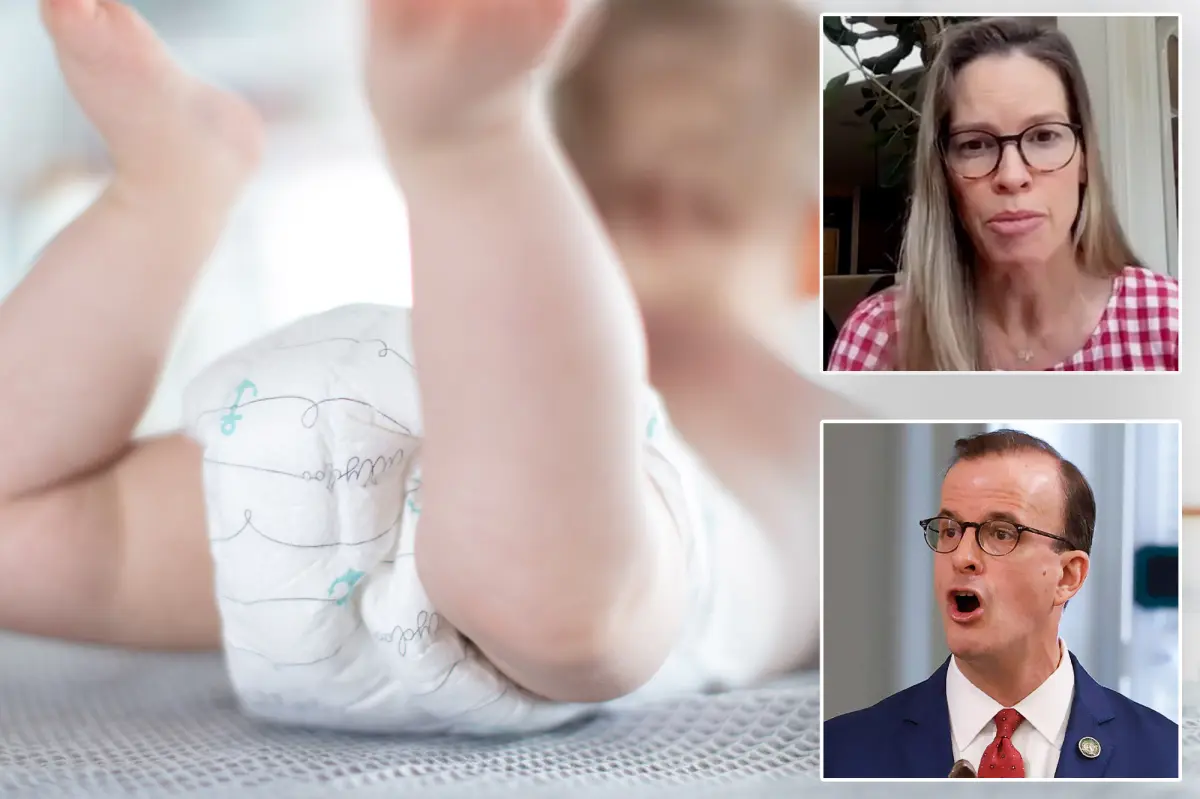
Picture it: it’s two in the morning, you’re running on three hours of sleep, and you’re fumbling with a wriggling newborn in the dim glow of a nightlight. You’re about to put a fresh diaper on your baby’s bottom, the same product you’ll use thousands of times before they’re out of them. In that moment, do you ever stop to wonder what, exactly, is resting against your child’s most sensitive skin? If you do, you’re not alone. But here’s the shocking part: unlike nearly every other baby product on the market, diapers are not required to tell you. Ingredient lists are mandatory for lotions, shampoos, wipes, and even toys, but diaper manufacturers have been curiously exempt from disclosing what their nappies are actually made of. That means parents are expected to trust a product that touches their baby around the clock for the first two years of life, without the most basic information about what’s inside. California Assemblymember Marc Berman, a Democrat from Menlo Park, found himself in exactly that position not long ago. After the birth of his son, he started doing what so many new parents do: researching which baby products were safe and which might be hiding something. He was appalled to discover that diapers were a massive blind spot. “I went and looked at the box in our garage, and there wasn’t anything on there,” he recalled. That empty box was the spark for a mission that has now become a major piece of proposed legislation. “Parents deserve better than a guessing game,” Berman said, “especially when it comes to a product that will be touching their baby’s skin for every minute of every day for the first two years of their lives.” That simple, powerful statement has resonated far beyond Sacramento, and it’s about to challenge an entire industry to open its books.
Paragraph 2
Berman’s answer to this problem is AB 1901, a consumer safety and transparency bill that would finally force diaper manufacturers to disclose all intentionally added ingredients, both on the packaging and online. It’s not a radical ask, really. It’s just a matter of basic honesty. In May, the bill sailed through the state Assembly with an overwhelming 68-to-1 vote, and it’s now being considered in the state Senate, where it faces its next major hurdle. The legislation grew directly out of Berman’s own experience as a new father, and it has gained momentum because it speaks to a frustration so many parents share: we are told to do everything right, to read labels, to avoid mysterious chemicals, and then we’re handed a product with no information at all. If it were just one or two companies being secretive, that would be bad enough. But Consumer Reports, which co-sponsored the legislation, recently conducted a sweeping analysis of ingredient transparency across 31 brands of disposable diapers. Their findings were sobering. Of all those brands, only two disclosed every or nearly every material they used. Seven other manufacturers provided what could generously be called minimal information. The rest? Silence, vague promises, or nothing at all. Even when companies did share something, they often hid behind dangerously broad umbrella terms like “fragrance” or “parfum,” which can legally cover formulations containing hundreds of undisclosed ingredients. Adhesives and wetness indicators, materials that sit right against a baby’s skin, are almost never disclosed on packaging. So when you tear open a fresh diaper in that half-awake 2 a.m. haze, you are literally holding a mystery wrapped in plastic and cloth, and nobody is required to tell you what it is.
Paragraph 3
This week, the push for transparency got a big Hollywood boost. Academy Award-winning actor Hilary Swank joined Berman and other advocates in Sacramento just before a key Senate committee vote. Swank is not just a celebrity showing up for a photo op. She is a mother of three-year-old twins, and she serves as chief innovation officer for HealthyBaby, a brand that focuses on non-toxic diapers. Her involvement makes the issue deeply personal. “As diaper changing became one of the biggest parts of our daily lives, I started to wonder, what are these diapers actually made of?” she said. That question, so simple and so human, is at the heart of the entire movement. Swank’s perspective as a parent carries weight because she has lived the same experience as millions of others: the endless cycle of changing, wiping, refastening, and worrying. She knows the diaper is in contact with her children far more than any other single product they’ll ever wear. Gabe Knight, a senior safety policy analyst at Consumer Reports, put it even more bluntly. “Parents deserve to know which chemicals companies are putting in diapers, so they can make informed choices about what’s best for their baby. A baby’s skin is very delicate and absorbent, and diapers are in almost constant contact with their most sensitive areas, making ingredient transparency so important.” That last point is crucial. A baby’s skin is not like adult skin. It is thinner, more permeable, and far more vulnerable to absorbing whatever it comes into contact with. Add to that the fact that diapers are worn 24 hours a day for years, and you have a recipe for chronic, ongoing exposure to whatever chemicals a manufacturer decides to use. Parents have a right to make informed choices, but they can’t make informed choices if companies keep the information hidden.
Paragraph 4
So what exactly are parents worried about? The concerns are not hypothetical. They are grounded in real research and real potential health effects. Last year, a study published in the journal Toxics found that babies who used diapers made with phthalates, synthetic chemicals commonly used as plasticizers to make materials flexible, actually had traces of those chemicals in their urine. That means the phthalates weren’t just sitting inertly in the diaper. They were leaching out, coming into contact with the baby, and being absorbed into the body. The researchers warned that, down the line, such chemicals could cause DNA damage that predisposes a baby to chronic diseases. Phthalates are not the only concern. As Swank noted, the problem is much bigger than any single chemical. “Diapers can contain thousands—not just a few, but thousands—of different materials and chemicals, including those that can alter a baby’s hormones, harm their nervous system, or make them more susceptible to cancer, reproductive problems, asthma, or severe rashes,” she said. That sounds alarming, and it is, but it’s also a direct consequence of the lack of transparency. When you don’t have to list what you put in a product, there is very little incentive to be careful, and every incentive to use whatever is cheapest, most absorbent, or most convenient, regardless of what it might do to a developing body. Supporters of AB 1901 are quick to clarify that the bill does not ban any particular ingredient or material. It doesn’t decide what is safe or unsafe. It simply requires companies that manufacture or sell diapers in California to provide a list of intentionally added ingredients, both online and eventually on the outer packaging. In other words, it doesn’t tell parents what to do. It just gives them the information they need to decide for themselves. That may sound modest, but in an industry built on vague promises and hidden formulas, it would be transformative.
Paragraph 5
In the meantime, many parents have taken matters into their own hands. Faced with mounting fears about chemical additives, a growing number of families have quietly made the switch to cloth diapers, and in recent years, one surprising material has emerged as a favorite: wool. It might sound old-fashioned, even strange, to put wool where you would normally put a synthetic disposable, but wool has some remarkable properties. It is naturally breathable, antimicrobial, and incredibly absorbent, and it doesn’t require the kind of harsh processing that many conventional diaper materials go through. But the real reason so many parents are choosing wool diapers is economic. At first glance, the price tag seems daunting. A single wool diaper cover can cost anywhere from $40 to $100, which sounds like an enormous splurge for something that is going to be covered in, well, you know. But here’s the trick: because wool is so highly absorbent and naturally resistant to odor, you don’t need many of them. Some families get by with just a handful, rotating through them and washing them by hand. Take Lunapaca, which one expert called the Holy Grail of wool diapering vendors. They sell a complete birth-to-potty-training set of alpaca diapers for $750, all in. That sounds like a lot, but spread that across two to three years of diapering, and it starts to look very different. Compare that to the cost of disposable diapers, which some estimates put at about $900 per year. Over the course of a single child’s diapering years, a family could easily spend $1,800 to $2,700 or more on disposables. Wool is a larger upfront expense, but it pays for itself many times over, and it works for siblings afterward too. That matters because nearly half of American families say they can’t afford the ongoing cost of disposable diapers. This isn’t a luxury choice for those families. It’s a lifeline.
Paragraph 6
Ultimately, AB 1901 is about something even deeper than chemicals or costs. It’s about the relationship between the people who make products and the people who use them. For too long, diaper manufacturers have operated on a kind of paternalistic assumption: leave it to us, we know what’s best, don’t ask questions. But parenting in the twenty-first century is built on information. We read labels on our food, we research car seats, we check ingredient lists on baby lotion, and we expect honesty from the companies we support. Diapers should be no exception. Marc Berman’s bill is not a radical overhaul of the industry. It doesn’t demand that companies eliminate every controversial chemical or prove that their products are perfectly safe. It simply asks them to do something shockingly reasonable: tell parents what is actually in the thing that will be wrapped around their child’s body for the first two years of life. If the product is safe, disclosure should be easy. If the product isn’t safe, parents deserve to know that too. The overwhelming bipartisan support in the Assembly suggests that this idea is not controversial. It’s common sense. As the bill moves through the Senate, it carries with it the voices of all those parents who have looked at an empty diaper box and felt a pang of unease, who have wondered if they are doing the right thing, who have wanted answers and been told that none are available. The California legislature now has a chance to change that, not just for California families, but for the entire country, because what happens in California often sets the standard for the rest of the nation. This isn’t just about diapers. It’s about accountability, transparency, and the simple belief that parents, not corporations, should have the final say over what touches their children’s skin. And after years of guessing, Berman is determined to make sure they get it.