



In our fast-paced modern world, the dinner table remains one of the few sacred spaces where we can slow down, connect with loved ones, and find genuine comfort in a warm, hearty meal. For decades, families throughout the Mid-Atlantic region—particularly across Virginia, North Carolina, and West Virginia—have turned to Ukrop’s Homestyle Foods to provide that exact sense of home-cooked comfort on busy weeknights when time is short but the desire for a nourishing dinner is strong. Known for their convenient, comforting, and deeply satisfying dishes, Ukrop’s has become a beloved staple of regional food culture, offering classic recipes like their rich, cheesy baked spaghetti and their savory, golden-crusted chicken cobbler that evoke fond memories of shared family gatherings. However, the comforting peace of mind that these convenient meals typically bring to busy households was suddenly disrupted when the U.S. Department of Agriculture’s Food Safety and Inspection Service (FSIS) issued a high-profile, urgent recall notice. Nearly 23,000 pounds of Ukrop’s baked spaghetti and chicken cobbler products were quickly pulled from distribution channels, retail shelves, and home freezers alike due to a chilling and unexpected safety concern: the potential contamination of these family-sized meals with sharp, foreign metal slivers. For many loyal consumers who rely on these products to feed their children and aging parents, this news was a jarring reminder of how quickly a symbol of domestic warmth, convenience, and security can transform into a serious physical hazard, prompting households across three states, as well as military personnel purchasing through commissaries, to immediately halt their dinner plans and inspect their kitchens with an anxious eye.
What makes this particular safety measure so compelling is that it was not triggered by a routine laboratory test, a scheduled government audit, or a corporate quality-assurance check, but rather by the alert eyes and direct experience of an everyday consumer. According to the official FSIS announcement, the entire recall process was set in motion immediately after the manufacturing establishment received a direct, concerning complaint from a customer who discovered a physical piece of metal embedded within a fully cooked, ready-to-eat meal they had prepared at home. This critical moment highlights the profound power and necessity of consumer vigilance in our modern food supply chain; a single individual’s decision to speak up and report an abnormality did not just protect their own household, but it set a massive federal safety apparatus into motion, potentially saving thousands of others from a painful and dangerous experience. Upon receiving this alarming report, Ukrop’s and federal regulators acted with commendable speed, coordinating to isolate the affected production batches and issue public warnings before any injuries could manifest. While the FSIS has thankfully confirmed that there are currently no documented reports of injury, illness, or adverse health reactions associated with consuming these recalled products, the potential threat of swallowing sharp metal shards remains extremely dangerous, carrying risks of internal cuts, dental damage, or digestive tract complications. Consequently, the agency has emphasized that anyone who suspects they may have ingested a foreign object or is experiencing unusual physical discomfort should contact a healthcare professional immediately, reminding us that behind every regulatory dry notice is a very real, human concern for individual physical well-being.
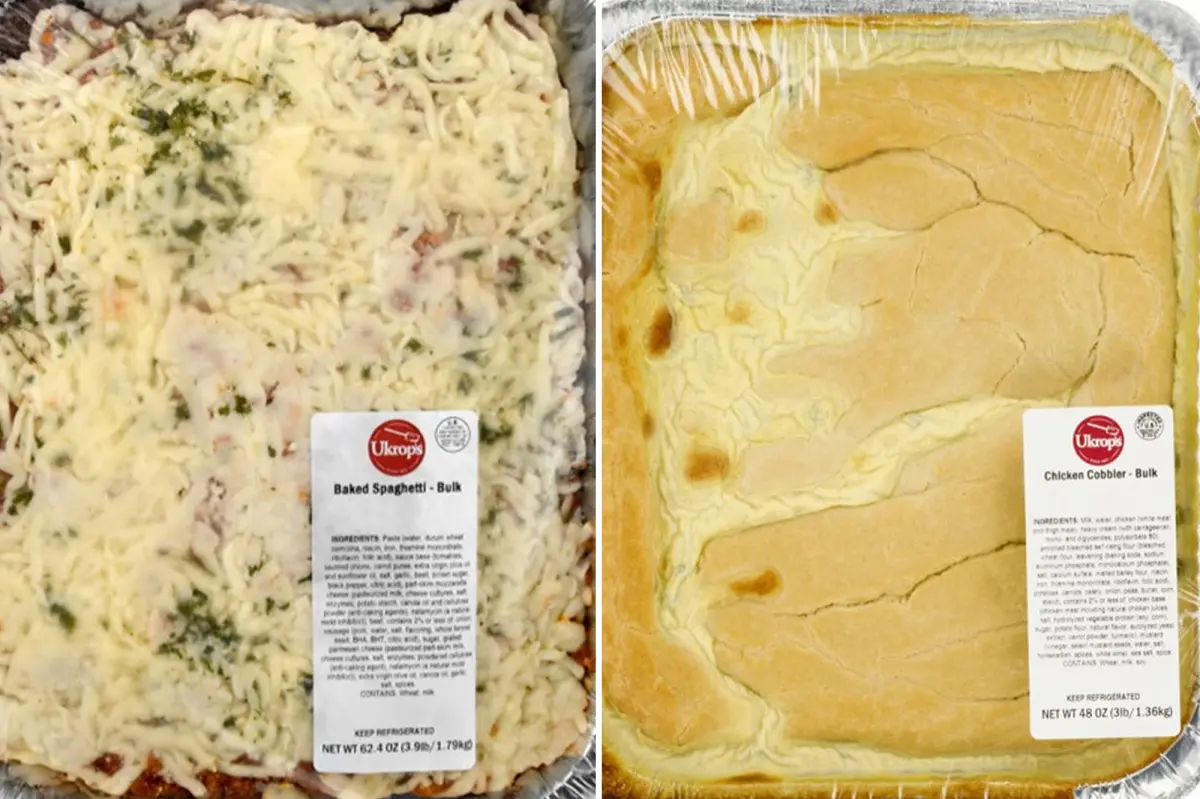
For families currently trying to determine if their own kitchens are affected by this safety alert, understanding the specific details of the recalled items is absolutely essential to maintaining a safe home environment without causing unnecessary panic. The recall specifically targets a carefully defined selection of Ukrop’s Baked Spaghetti and Chicken Cobbler products that were manufactured during a month-long summer production window between July 1 and July 29, 2026, carrying “best by” dates that range from July 8 through August 5. To help consumers identify these items in their refrigerators or deep freezers, safety officials have released the exact packaging sizes and formats affected by the notice. This includes the massive, crowd-pleasing 62.4-ounce bulk pans of Ukrop’s Baked Spaghetti, which are frequently used to feed large families, potlucks, and community gatherings, as well as the more modest 4.8-ounce single-serving trays designed for quick, individual lunches or elderly relatives living independently. Additionally, the warning covers the substantial 48-ounce family-size pans and the 11.6-ounce single-serving trays of Ukrop’s Chicken Cobbler, a dish deeply beloved for its savory, seasoned chicken broth and fluffy, golden biscuit toppings. These specific products were distributed through various retail supermarkets in Virginia, North Carolina, and West Virginia, and they were also made available to military service members and their families through Department of Defense commissaries, as well as to nationwide consumers via online sales channels. By knowing exactly what product names, weights, and dates to look for on the packaging labels, everyday shoppers can conduct a thorough, accurate audit of their current food supplies, ensuring that no contaminated batch remains hidden in the back of the freezer waiting for a future meal.
Faced with the discovery of a recalled product in their possession, consumers are urged by safety officials and consumer advocates alike to handle the situation with caution, prioritizing physical safety over the natural human reluctance to waste food. The official guidance issued by the USDA and the FSIS is clear and uncompromising: do not consume these products under any circumstances, even if they appear perfectly fine to the naked eye, as tiny metal slivers can easily go unnoticed until it is too late. Instead, households are advised to either immediately throw the items away in a secure, sealed outdoor trash receptacle where pets, children, or local wildlife cannot accidentally access them, or return them directly to the retail store or commissary where they were originally purchased to receive a hassle-free, full refund. For many families, particularly those navigating tight weekly grocery budgets in an era of rising food costs, throwing away a large, family-sized meal can feel incredibly counterintuitive, painful, and emotionally frustrating. However, grocery stores and manufacturers are fully prepared to honor refunds for these recalled items, recognizing that financial peace of mind is just as important as physical safety. By taking these prompt, responsible actions, consumers protect not only their immediate household but also help retailers track the return and disposal rate of the contaminated items, transforming a moment of household inconvenience into an active contribution to the collective health and safety of their entire community.
While it is easy to view this specific recall as an isolated failure by a single local brand, it actually highlights a much broader, systemic challenge inherent in the massive scale and complexity of modern, mechanized food production. Only a month prior to the Ukrop’s announcement, the American food industry faced another significant metal contamination event when Rich Products Corporation was forced to recall over 160,000 pounds of its popular Farm Rich Pizza Cheese Crunchers across 21 states after the Food and Drug Administration (FDA) warned that the frozen snacks might contain similar metal fragments. These recurring incidents serve as a fascinating, albeit sobering, reminder of how our food is made today: in high-tech, high-volume facilities where massive stainless-steel machinery mixes, chops, cooks, and packages thousands of pounds of ingredients every single hour. Despite highly advanced manufacturing technology, sophisticated industrial metal detectors, and strict hazard prevention protocols, the constant physical friction of these heavy machines can occasionally lead to unexpected mechanical wear and tear, causing tiny, microscopic fragments of steel, aluminum, or wire to break off and end up in the production line. When we place the Ukrop’s recall within this larger, industry-wide context, we can begin to appreciate the immense scale of the regulatory challenge and the vital importance of the continuous, rigorous oversight provided by federal agencies like the FDA and the USDA, who work tirelessly behind the scenes to monitor our food supply and act as our ultimate line of defense against industrial accidents.
In the aftermath of a major product recall, the path forward for both the manufacturer and the public is built entirely on a foundation of transparency, open communication, and a renewed, visible commitment to safety. For a community-focused brand like Ukrop’s Homestyle Foods, which has spent decades cultivating a deep sense of trust, warmth, and reliability among its loyal customer base, recovering from a contamination scare requires a humble, proactive approach that prioritizes public safety above all else. This process involves thoroughly auditing their manufacturing plants, upgrading automated metal detection equipment, retraining facility staff, and ensuring that mechanical maintenance schedules are strictly enforced to prevent any future mechanical failures. For consumers, while news of metal contamination can temporarily shake our confidence in the brands we welcome into our homes, the rapid, transparent, and cooperative resolution of this incident actually serves as reassuring proof that our food safety systems are working exactly as they were designed to. Ultimately, our relationship with food is deeply emotional and tied to our sense of safety and community; once the immediate danger has passed and the necessary safety adjustments have been made, the enduring human desire for the comfort of a warm, shared meal will inevitably lead us back to the table, wiser, more vigilant, and deeply appreciative of the invisible safety nets that watch over our families’ daily bread.