



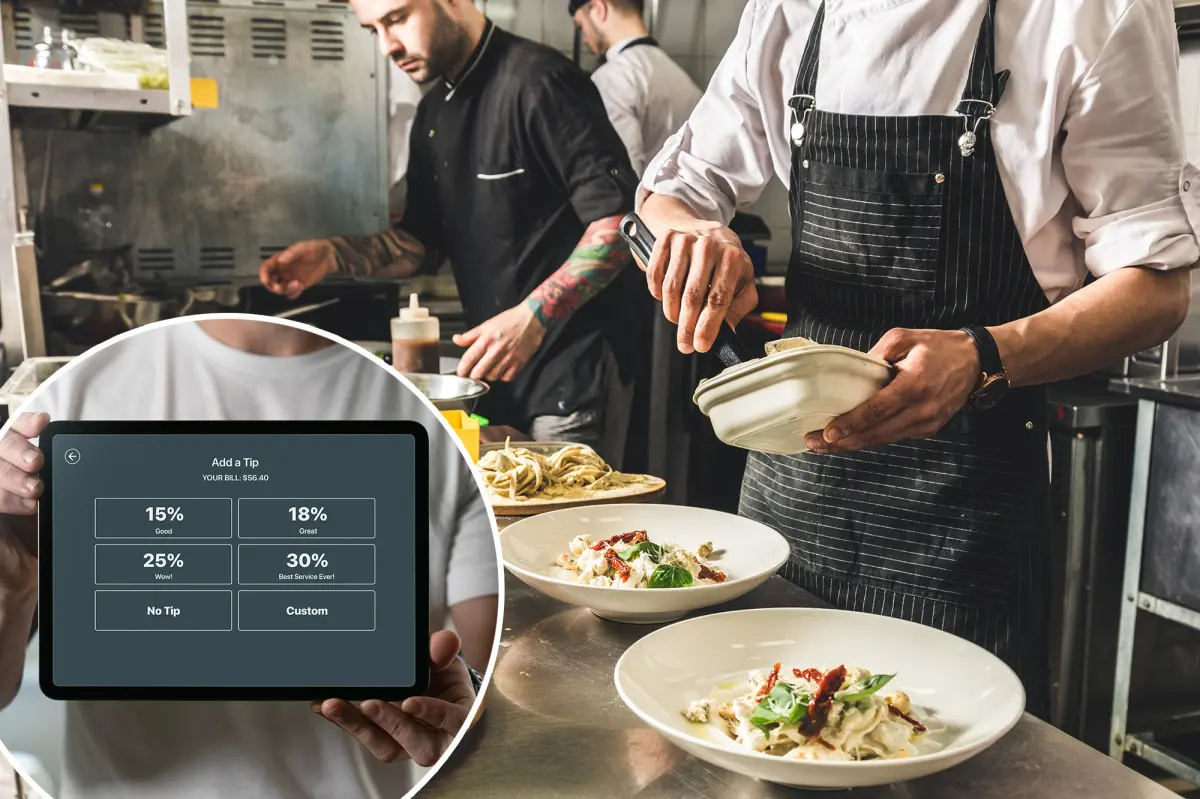
It is an experience that has become all too familiar to the modern consumer: you walk into a quiet, counter-service establishment, place a straightforward order for a basic item, and prepare to swipe your card. Suddenly, the employee behind the register spins a sleek digital tablet toward you, their eyes darting away in a practiced gesture of polite detachment as the screen demands to know how much extra money you would like to hand over. What used to be a warm, uncomplicated transaction has transformed into a high-stakes psychological battlefield, leaving customers feeling caught in an endless web of social guilt, financial anxiety, and mounting frustration. The creeping expansion of tipping culture has officially breached the boundaries of traditional sit-down dining, spilling over into fast-food joints, convenience stores, self-service kiosks, and online checkouts. No longer is a gratuity viewed as a voluntary token of appreciation for exceptional, above-and-beyond tableside service; instead, it has been repackaged as an aggressive, front-loaded demand for extra cash before any service has even been rendered. This systemic shift has left millions of everyday people asking themselves where the madness ends, wondering why they are suddenly expected to subsidize the basic payroll of almost every business they interact with. The collective exhaustion of the consumer public has reached a boiling point, transforming what was once a minor inconvenience into a passionate, nationwide debate about fair wages, corporate accountability, and the erosion of genuine human hospitality.
This growing cultural resentment was perfectly captured in a brief, raw video that recently went viral on X, formerly Twitter, after being shared by the account @HistorianUSA1. In the short clip, a man sits in his car, visibly bewildered and deeply unsettled by a routine lunch run that went entirely off the rails of common sense. He explains to his viewers that, while running errands, he decided to stop by Schlotzsky’s—a popular fast-casual chain specializing in sandwiches and pizzas—marking his first visit to the establishment in over fifteen years. Eager to enjoy a nostalgic meal, he walked up to the counter and placed his order, only to be confronted by a credit card machine that boldly asked him to tip the kitchen crew before his sandwich had even been put together. The prompt immediately triggered a wave of genuine anxiety in his mind, forcing him to confront a bizarre and deeply uncomfortable modern dilemma: if he chose to decline the tip, would the kitchen staff retaliate against his food out of spite? He candidly asks the camera if he is going to end up with a “booger sandwich” simply because he refused to pay an upfront premium for a standard transaction, highlighting a fear that many consumers silently harbor but rarely voice so plainly. His frustration peaks as he questions why we are now expected to tip when there is absolutely no tableside waiting involved, pointing out the absurdity of being forced to pay extra out of sheer fear that our food might be intentionally compromised if we do not comply.
The video quickly struck a massive chord with the public, racking up tens of thousands of views and triggering a torrent of passionate commentary from everyday citizens who are thoroughly fed up with what they perceive as a systemic shakedown. The user who shared the video summed up the collective anger perfectly, declaring that tipping culture has spiraled completely out of control and pointing out that when a customer is asked to tip before they even receive their food, the transaction ceases to be about hospitality and instead resembles a form of soft extortion. The comment section quickly turned into a virtual town square, with hundreds of people stepping forward to share their own frustrating experiences and state their firm boundaries. One user argued that it should be flatly illegal for payment terminals to force customers to answer a tipping prompt before completing a transaction, suggesting that while a voluntary tip jar is perfectly acceptable, forcing a digital interaction is a manipulative tactic designed to exploit social pressure. Others admitted to taking drastic measures to preserve their dignity, with one individual revealing that they have walked away and canceled entire orders on the spot when confronted with pre-service tip screens, refusing to allow the quality of their food to be held hostage by a digital prompt. Another commenter succinctly pointed out that any business refusing to pay its staff a living wage does not deserve to remain in business, arguing that consumers should stop shielding greedy corporate entities from the consequences of their poor labor practices.
This widespread pushback has given rise to a new set of informal social rules as consumers desperately try to claw back some semblance of control over their hard-earned money. Among the most popular of these self-imposed guidelines is the “stand-up rule,” which states quite simply that if you have to stand up to order your food, carry your own tray to a table, and clean up after yourself when you are finished, no tip is required or warranted. For generations, the social contract of dining out was incredibly clear: customers tipped waitstaff because those individuals worked for a sub-minimum “tipped wage,” spent an hour or more tending to the table’s specific needs, refilled drinks, brought out hot dishes, and ensured a pleasant dining experience from start to finish. In contrast, the modern counter-service model involves a customer walking up to a register, speaking to an employee for thirty seconds, and waiting for their number to be called so they can fetch their own meal. To demand a fifteen, twenty, or even twenty-five percent gratuity for this minimal interaction feels like an insult to the intelligence of the consumer, especially when the payment screens are deliberately programmed to make the “no tip” button as small, hidden, and embarrassing to press as possible. This aggressive design choice turns what should be a simple business transaction into an emotionally manipulative ordeal, forcing customers to publicly declare their refusal to tip in front of the very workers who are about to prepare their meals.
To understand how we arrived at this uncomfortable cultural moment, one must look at the structural shift in how businesses utilize technology and manage their operating costs. Following the economic upheavals of recent years, many establishments turned to digital point-of-sale systems as a way to streamline operations, but these software platforms came pre-loaded with highly optimized tipping prompts designed to maximize revenue. Rather than raising menu prices to pay competitive wages, many business owners realized they could keep their advertised prices deceptively low while relying on these guilt-inducing digital screens to coax customers into paying their staff’s wages directly. This strategy effectively shifts the burden of employee compensation from the employer to the consumer, turning a voluntary gesture of appreciation into a mandatory, guilt-ridden subsidy for low-paying corporations. Meanwhile, the employees themselves are caught in the middle of this systemic failure; they are often overworked, underpaid, and left to rely on the erratic generosity of frustrated customers to make ends meet, while corporate executives and business owners shield themselves from the backlash. The result is a deeply toxic environment of mutual resentment, where workers feel undervalued by non-tipping patrons, and customers feel exploited by greedy businesses that refuse to take financial responsibility for their own staff.
The depth of this consumer rebellion is not just anecdotal; it is backed up by hard data that reveals a profound, nationwide weariness with the current state of commerce. According to a comprehensive survey conducted by Popmenu, an overwhelming seventy-eight percent of consumers believe that tipping culture has officially become ridiculous, while seventy-four percent have actively noticed that restaurants and eateries are steadily inflating the suggested gratuity percentages displayed on their payment screens. This statistical reality proves that the average American is no longer willing to quietly accept the relentless expansion of tip prompts into every corner of daily life. True hospitality is built on a foundation of mutual respect, transparent pricing, and genuine care, none of which can survive in an ecosystem defined by digital guilt-tripping and the subtle threat of subpar service. If we ever hope to restore sanity to our daily transactions, businesses must step up to the plate, pay their workers fair and livable wages, and stop treating their customers like automated cash dispensers. Until that structural change occurs, consumers will continue to push back, draw firm boundaries, and demand a return to a simpler time when a sandwich was just a sandwich, a price tag meant what it said, and generosity was a heartfelt choice rather than a mandatory shakedown.