





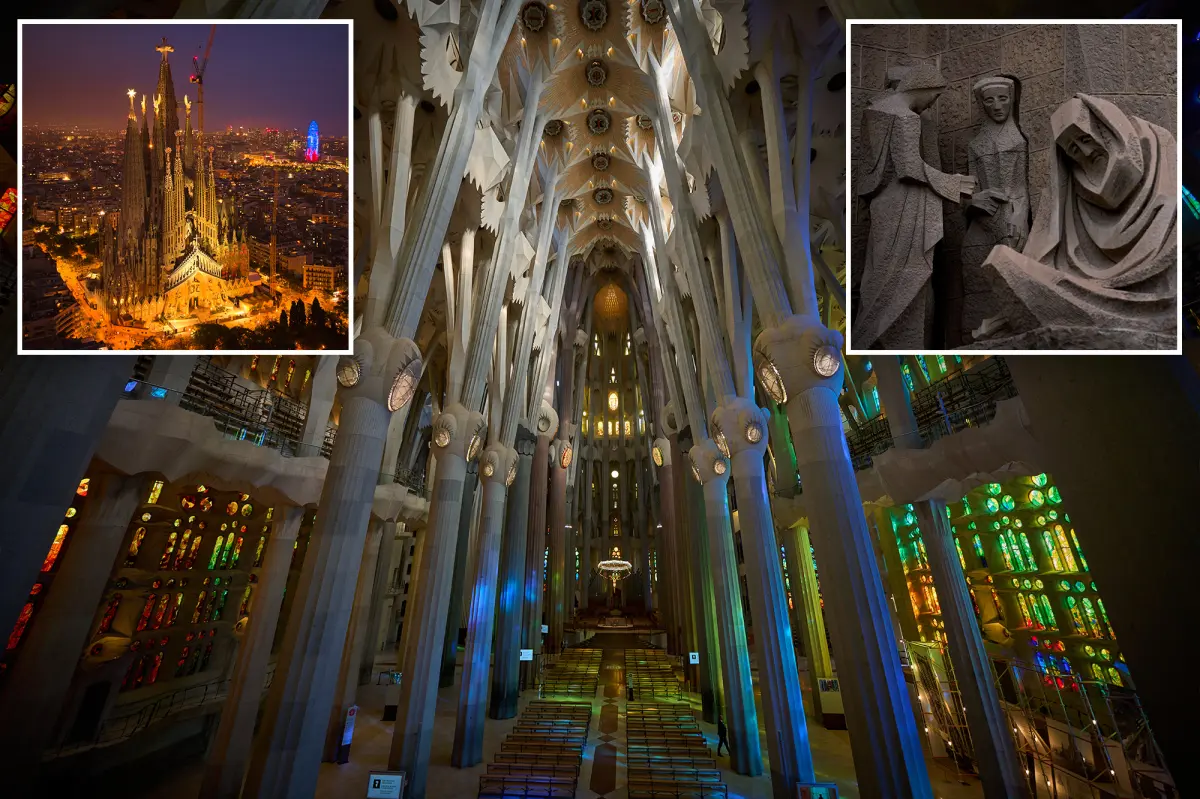
To wander through Barcelona’s Sagrada Familia is to step into a shifting, living dream where the boundaries between the natural world and sacred architecture dissolve entirely. The basilica, with its organic, sandcastle-like spires reaching toward the Iberian sky, stone pillars carved to mimic the branchings of forest canopies, and a kaleidoscopic interior bathed in fractured, liquid light, is a monument designed to leave even the most frequent visitors breathless. Beyond its monumental scale, the cathedral harbors a universe of hidden treasures and intimate secrets that escape the casual eye but fuel the daily devotion of those who call it home. Josep Turull, the passionate Catalan rector who oversees the basilica’s vast parish activities, speaks of the structure not as an inert block of stone, but as an endless, unfolding spiritual landscape. Even after spending eight intensive years directing its communal rhythms, Turull confesses that he continues to discover new details, subtle shadows, and hidden geometric messages etched into the walls every single morning. This sense of eternal discovery is particularly heightened today, as the cathedral hums with an expectant, sacred energy ahead of a momentous visit by Pope Leo XIV, who is scheduled to celebrate a historic Mass within its soaring nave. Preparing the sanctuary for the Holy Father means dusting off treasures that have sat quietly in the shadows, waiting for their moment to speak of the divine harmony Antoni Gaudí so brilliantly conceptualized. It is a reminder that the Sagrada Familia is a bridge between the earthly and the celestial, a physical manifestation of humanity’s search for the infinite, where every stone tells a story of suffering, redemption, and natural beauty.
This narrative begins on the steps of the temple, where the external façades serve as colossal stone scriptures open to the public plaza. Each morning, as the Mediterranean sun sweeps across the stone, Rector Turull walks past these structures, finding himself captivated by the deliberate theological puzzles left by the builders. While some of the biblical symbolism is easily decipherable to those familiar with Christian lore, other details are striking, avant-garde, and intentionally jarring for a traditional sanctuary. The western-facing Façade of the Passion is a masterclass in architectural expressionism, deliberately crafted to be stark, angular, and deeply unsettling. Gaudí had envisioned this section of the church to be “harsh and cruel, as if made of bones,” capturing the raw physical and emotional agony of Christ’s final hours on earth. Decades after Gaudí’s tragic death, the sculptor Josep Subirachs realized this vision but chose to counter the overwhelming sorrow with subtle, cerebral, and playful tributes. High above the central doors, a sculpted figure of Gaudí himself quietly observes Jesus bearing his cross toward Calvary, a permanent witness to the passion he spent his life translating into stone. Just adjacent to the depiction of Judas’s infamous, betraying kiss, Subirachs placed a mysterious, sudoku-like grid of sixteenth-century-style numbers. This mathematical enigma, known as the “magic square,” holds a profound symbolic weight: adding the numbers in any horizontal, vertical, or diagonal direction consistently yields thirty-three, the traditional age of Jesus Christ at his crucifixion. Further along, near the sculpture of Peter’s bitter denial of his master, a discreet, labyrinthine square forces observers to pause. To Turull, this maze represents the winding, confusing paths of human doubt, reminding us that even when we feel lost, faith eventually leads back to the center of divine grace.
Lifting one’s eyes from the heavy themes of the Passion toward the dizzying heights of the sky, the basilica undergoes a breathtaking transition from human sorrow to cosmic celebration. The crowning achievement of this vertical ascent is the newly completed Tower of Jesus Christ, which, upon its completion in October, officially crowned the Sagrada Familia as the tallest church building on earth. This soaring tower is scheduled to receive a special apostolic blessing from Pope Leo, an event that underscores the basilica’s triumph over time and architectural skepticism. Looking up at the colossal towers, one sees that Gaudí’s design is a vertical garden teeming with symbolic life, where stone gargoyles take the form of crawling reptiles and the tops of the spires are adorned with colorful, mosaic-tiled cornucopias of ripe Mediterranean fruits. Yet, the wildlife inhabiting these heights is not entirely petrified in stone; indeed, the basilica has become a sanctuary for real, living birds of prey. High atop the tower dedicated to St. James, a family of majestic peregrine falcons has established a permanent nesting ground. These raptors serve a highly practical purpose, protecting the delicate carvings of the cathedral by naturally deterring messy flocks of pigeons, but their presence carries a deeper, ecological meaning. In the 1970s, peregrine falcons had entirely vanished from Barcelona due to urbanization and pollution, making the Sagrada Familia one of the last urban refuges where they were known to breed. Through careful environmental efforts over the past two decades, the falcons were successfully reintroduced into the city’s ecosystem, choosing Gaudí’s spires as their preferred home. For Turull, the sight of these swift, magnificent creatures hunting and nesting among the stone saints is a beautiful fulfillment of Gaudí’s theology, demonstrating a living harmony where the artificial monument heals and restores the natural circle of local life.
Yet, for all the grandeur of its climbing towers and the brilliance of the sun filtering through the towering stained-glass windows, the true spiritual anchor of the Sagrada Familia lies not in the clouds, but deep beneath the earth. To find this quiet sanctuary, away from the bustling crowds of tourists, flashing camera lenses, and translating tour guides, one must seek out a modest side entrance and descend a flight of worn stone stairs. Underground, the atmosphere shifts dramatically; the roaring noise of the cosmopolitan city above fades into a profound, reverent silence. Here lies the crypt, a small, intimate, and dimly lit chapel where local parishioners gather daily for Mass, shielding their devotion from the spectacle of global tourism. It is in this peaceful womb of stone that Antoni Gaudí himself is buried, resting in a simple, elegant tomb tucked into a quiet alcove. Exactly one century ago, the path of this eccentric, deeply devout architect was abruptly cut short when he was tragically struck down by a Barcelona streetcar, leaving his grand masterpiece unfinished. Today, his resting place is constantly illuminated by the warm, flickering glow of dozens of devotional candles placed by pilgrims who travel from all corners of the globe to ask for his spiritual intercession. This devotion is part of a larger, ongoing movement, as the Vatican is currently reviewing Gaudí’s life for potential sainthood. In 2025, Pope Francis officially declared the architect “venerable,” the first major step toward canonization, which now requires the documentation of two distinct, scientifically unexplainable miracles attributed to his heavenly intercession. The basilica’s staff has quietly proposed that Pope Leo XIV make a personal pilgrimage to this humble grave during his visit, a gesture that would deeply touch the hearts of the millions who view Gaudí not just as a brilliant artist, but as a holy mystic of the modern age.
Returning to the upper levels of the basilica, one is constantly reminded of Gaudí’s foundational belief that nature is the ultimate textbook written by the hand of God, a philosophy reflected in even the smallest functional details of the space. Before climbing back to the main nave, Turull highlights a striking example of this philosophy: a massive, naturally formed seashell from the Philippines that serves as the basilica’s main vessel for holy water. Instead of carving a basin from marble, Gaudí chose to mount this genuine ocean artifact onto a custom-designed frame of wrought iron leaves, anchoring it to a structural column where worshippers can dip their fingers before prayer. This simple shell acts as a physical manifesto, demonstrating how Gaudí consistently rejected sterile, artificial geometries in favor of the organic, fluid structures designed by nature. To access the treasures reserved for the clergy, one must ascend a narrow, winding spiral staircase that leads to a private vestry bathed in brilliant, golden sunlight. Inside this secluded chamber stand two magnificent, free-standing oak cabinets decorated with intricate, hand-forged ironwork designed by the master architect himself. These historic pieces of furniture serve as a sacred wardrobe, safeguarding the basilica’s most prized clerical vestments and physical relics of modern church history. Among these treasures is the beautifully preserved chasuble worn by Pope Benedict XVI when he traveled to Barcelona in 2010 to consecrate the Sagrada Familia, an event that elevated the unfinished structure to the official and revered status of a minor basilica in the eyes of the global Catholic world. The room stands ready to welcome its next historic guest, acting as a quiet sanctuary where Pope Leo XIV will prepare his spirit, surrounded by the physical elements of Gaudí’s enduring aesthetic legacy, before stepping out to face the expectant crowds.
As the hour of the historic papal liturgy draws near, the private ward has become a hive of quiet, reverent preparation. In this very room, Pope Leo will clothe himself in an exquisite, newly fashioned chasuble that is currently being hand-sewn with meticulous care in a specialized liturgical workshop. While Rector Turull remains intentionally mysterious about the precise design of the vestment, he hints that its embroidery will incorporate rich symbols celebrating both this historic day and the geometric lines of the basilica’s recently completed outer cross. This blend of carefully guarded secrets and public celebration perfectly mirrors the complex character of the Sagrada Familia itself, a monument that thrives on the tension between the visible and the hidden, the sacred and the mundane, the eternal and the fleeting. From the mathematical puzzles on its stone walls to the peregrine falcons soaring above the city, and from the quiet, candlelit crypt below to the secret vestments waiting in oak cabinets, the cathedral remains an unfinished symphony of human faith and natural beauty. It is this dynamic, ever-changing nature that prevents the basilica from ever becoming a mere museum frozen in time; instead, it is a living, breathing testament to a community’s ongoing spiritual journey. When Pope Leo raises his hands to offer his blessing on Wednesday night, he will not just be blessing a monument of stone and glass, but a living sanctuary where art, nature, and the human soul are bound together. Gaudí’s grand vision of a temple that “never exhausts itself” will continue to unfold, inviting future generations to step inside, look upward at the forest of columns, and discover their own moments of quiet, unexpected wonder.