


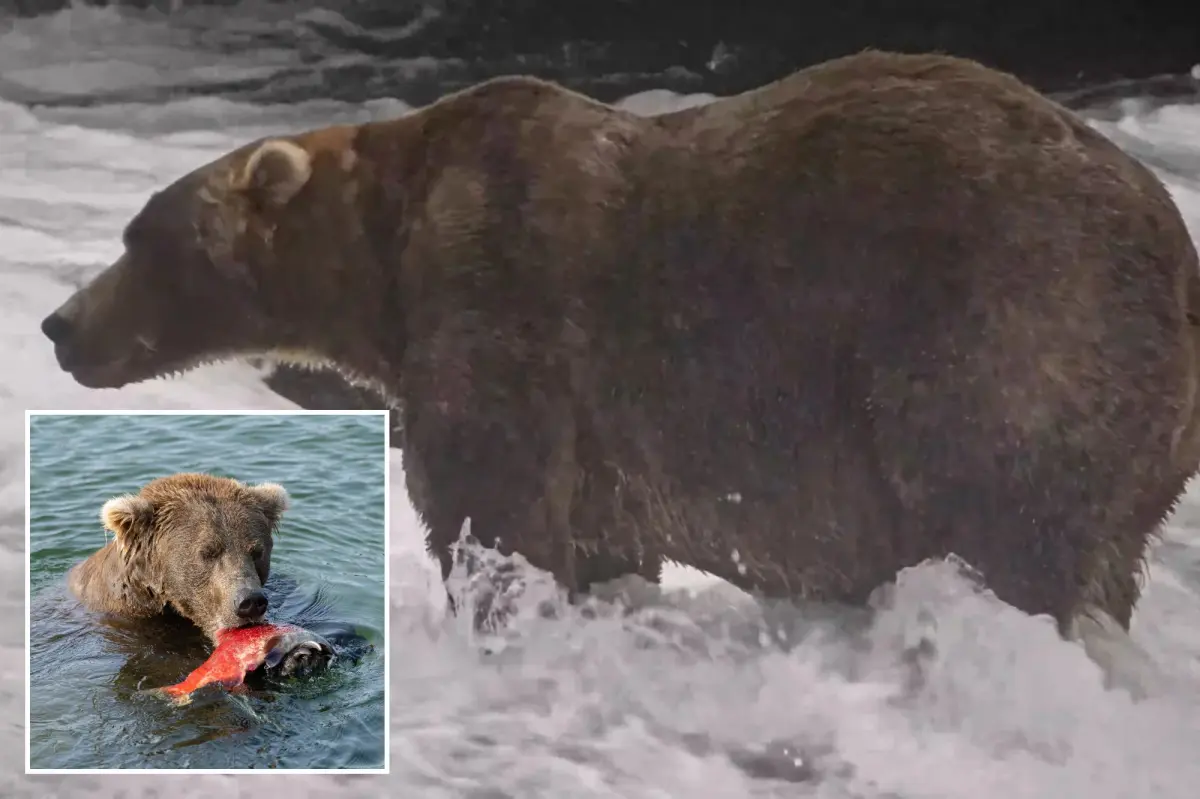
After a week of webcam watching, bracket debating, and thousands of quiet little moments spent rooting for a favorite furry face, Backpack has officially been crowned the champion of Fat Bear Week. The beloved brown bear, known more formally as Bear 89, won the final showdown with more than 100,000 votes, narrowly defeating Bear 910 with just over half of the poll. To many people, this felt less like a quirky internet contest and more like a genuine celebration of a wild soul who has touched their hearts. Backpack lives among the 2,200 brown bears of Katmai National Park and Preserve, a wild, windswept corner of the Alaska Peninsula that reaches from the southwest edge of the state toward the Aleutian Islands. His victory is a tribute to the patience, skill, and sheer hard work it takes for a bear to grow fat in this landscape. It is also a tribute to a particular kind of character—a bear who does not fight, does not bully, and seems to view the world with calm, curious eyes. In a species known for fierce competition, Backpack won his heavyweight title by being something rarer: a gentle champion.
Fat Bear Week began in 2014 as a way to teach the public about brown bears, the coastal cousins of grizzlies, in a fun and interactive way. Since then, it has grown into one of the internet’s most beloved seasonal traditions, a celebration of resilience, abundance, and survival. The contest takes place every year at Brooks River, where salmon return in late June, and the bears gather by the dozens to feast. The nonprofit that runs the event puts it plainly on its website: “Fat bears are successful bears.” It is not a joke to the bears themselves. Each one must eat as many as thirty fish a day in the summer months, storing up enough fat to carry them through a long winter of hibernation, when they will not eat or drink at all and may lose a third of their body weight. The contest is a way to honor that struggle, and to help people understand what those enormous bodies really mean. Viewers watch the bears through explore.org’s livestream cameras, following their daily routines, learning their histories, and falling in love with their personalities. What begins as curiosity often becomes genuine affection, and by the time the bracket closes, people are not just voting for a bear—they are cheering for a survivor they feel they know.
Backpack’s history makes his victory especially moving. He is the son of Holly, a former Fat Bear Week champion, who introduced him to the Brooks River when he was a first-year cub in 2006. He earned his name because he used to climb onto his mother’s back whenever they swam across the river, riding along as if she were his personal ferry. That image—a tiny bear cub clinging to his mother’s fur, trusting her completely—stayed with the people who watched him grow up. Now, years later, he has become one of the largest and most respected bears in the area, but he seems to have never lost that gentle nature. His contestant profile notes that unlike many large adult male bears, Backpack has not shown much aggression toward his competitors. He uses his quiet strength rather than brawling, and he is often seen sitting alone on a rock downstream, just staring at the scenery around him. Fans on Instagram pointed out his royal lineage, calling him a worthy heir to his mother’s legacy, but also praised him for being a gentle giant. He faced Bear 910, the daughter of another former champion named Beadnose, so the final was something of a dynasty matchup. But in the end, the voters chose the bear who seemed to embody peace instead of power, and in doing so they sent a warm message about the kind of strength we all might admire.
The tournament itself was filled with drama, heartbreak, and unexpected twists. Sixteen bears entered the competition this year in a single-elimination bracket, and all voting took place online at fatbearweek.org. Last year’s champion, Chunk—officially known as Bear 32—was expected to make a strong run after being estimated at around 1,200 pounds in his prime. But he was handily defeated in the first round by Bucky, a younger challenger who went on to lose a faceoff with Backpack. This year’s bracket also included five bear families, a record number of mothers and cubs at Brooks River, which made the contest even more tender. A mother bear must feed and protect her cubs while also eating enough calories to sustain herself through hibernation, and the cubs themselves face danger from other bears in a world shaped by territorialism and food scarcity. One of the most emotional stories belonged to Bear 132, a large and experienced mother, and her three spring cubs. They fought their way all the way to the semifinals before losing to Bear 910, and along the way they gave viewers quite a scare when one of the cubs became separated from the family in mid-July, wandering the river corridor alone for several days before being reunited. Moments like these remind us that Fat Bear Week is not just about size—it is about the unsung heroism of wild animals navigating a demanding world.
The physical scale of these bears is almost impossible to grasp until you stop and think about it. Adult male brown bears typically weigh between 600 and 900 pounds in midsummer, a number that already seems spectacular. But by the time hibernation approaches, after weeks of feasting on migrating and spawning salmon, large males can weigh well over 1,000 pounds. Females are about one-third smaller, but that does not make their accomplishment any less remarkable. These bears are essentially trying to pack a full year’s worth of food into about six months, because the long Alaskan winter leaves them no other option. They eat fish after fish after fish, sometimes thirty in a single day, working with an intensity that seems almost heroic. During hibernation, they neither eat nor drink, and they can lose one-third of their body weight, relying entirely on the fat they built so carefully during the summer. That is why a fat bear is a successful bear. Every roll of fur-glazed flesh represents a season of hard work, a mother’s dedication, a young bear’s cleverness, or an old bear’s experience. To see a bear like Backpack moving along the river is to see the whole ecosystem humming along, and there is something deeply beautiful about that.
In the end, Fat Bear Week is far more than a silly vote about overweight animals. It is a love letter to the wild, a celebration of a place where nature is still largely intact and where bears are allowed to be exactly who they are. The contest, now in its twelfth year, gives people a reason to slow down and pay attention to that world. Through the livestream cameras, we watch bears fish, swim, nap, play, and sometimes simply sit in silence. We learn their names and their stories, and we find ourselves moved by their challenges. When Backpack took the title, it felt earned in a deeply emotional sense: he is a bear who survived, thrived, and did it all without losing the gentle spirit that made him so beloved. His victory is a reminder that strength comes in many forms, and that even in the animal kingdom, kindness has a quiet power. As the salmon season winds down and the bears begin to settle in for another long winter, we can look at Backpack and feel a little more connected to the natural world. Fat Bear Week turns an ordinary Tuesday in September into a moment of shared wonder, and this year, it gave us all a reason to root for the gentle giant who carries his mother’s memory and his own calm grace.