


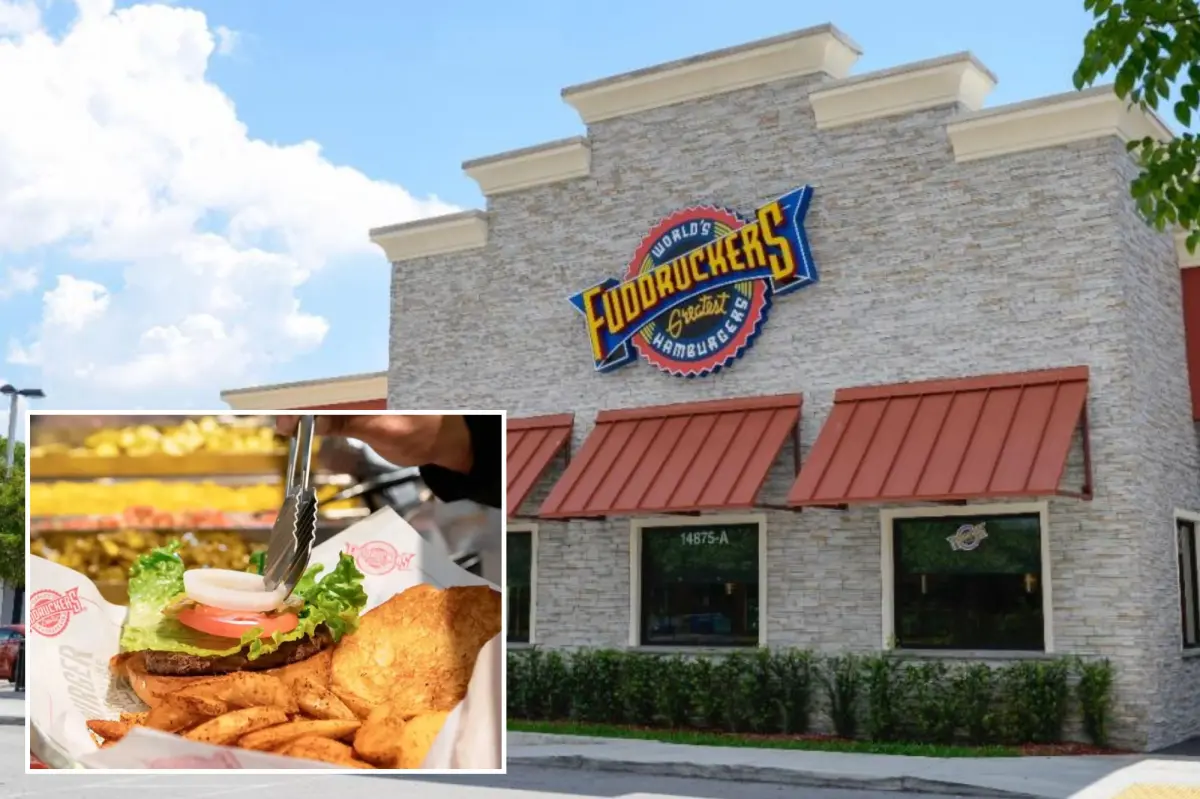
Once, the name Fuddruckers evoked a very specific, sensory image of Americana: the intoxicating aroma of freshly baked sesame-seed buns, the giant glass-walled butcher shop where premium beef was ground in plain sight, and the legendary, warm cheese pumps that felt like a self-serve paradise for children and adults alike. Yet, today, the self-proclaimed purveyors of the “world’s greatest hamburgers” have become a ghostly shadow of their former glory. The massive national footprint that once defined road trips and weekend family outings has shrunk to a mere 44 locations nationwide. Business analysts and industry onlookers view this decline not just as a standard corporate failure, but as a poignant tragedy of cultural irrelevance. As Las Vegas-based business coach Brad Sugars brutally yet accurately observed, Fuddruckers has evolved—or rather, devolved—into the Blockbuster Video of the burger world. This comparison stings because it highlights a painful truth: a brand can be fiercely loved, deeply woven into the fabric of American youth, and still be completely left behind by the merciless march of time and shifting consumer expectations.
To understand how Fuddruckers reached this precipice, one must journey back to its vibrant origins in San Antonio, Texas, in the tail end of 1979. Created by the eccentric and highly successful restaurateur Phil Romano—the mastermind who would also bring Romano’s Macaroni Grill to the culinary world—Fuddruckers was born from a desire to return to the basics of quality food, but on a grand, theatrical scale. Romano’s concept was revolutionary for its time: instead of the mysterious, pre-packaged patties of standard fast-food joints, customers could watch their meat being ground fresh and their buns baked from scratch right before their eyes. Throughout the flashy, neon-lit decade of the 1980s, this experiential formula proved to be pure gold. The chain expanded with breathtaking speed, capitalizing on the decade’s obsession with abundance and spectacle, peaking at between 200 and 500 bustling locations. For a generation of diners, a trip to Fuddruckers was not just a quick meal; it was an event, a noisy, joyful pilgrimage to a warehouse of culinary indulgence where consumers were the ultimate masters of their own burger destiny.
However, the very grandeur that propelled the brand to stardom during the height of the 1980s eventually became a heavy anchor as the economic and cultural tides began to turn. As the decades wore on, Fuddruckers fell victim to a dizzying cycle of changing ownership groups and mounting debt, gradually losing its directional compass along the way. The parent company’s descent into Chapter 11 bankruptcy protection culminated in 2010 when the cafeteria chain Luby’s stepped in to acquire the brand, hoping to steady the ship and restore its nostalgic appeal. Instead, the ultimate reckoning came in 2020 during the unprecedented global upheaval of the COVID-19 pandemic—a health crisis that shattered the foundation of the restaurant industry, leading to the permanent or long-term closure of over 100,000 dining establishments across the United States. Forced into liquidation by Luby’s in 2020, Fuddruckers seemed permanently doomed until entrepreneur Nicholas Perkins stepped into the fray in 2021. Purchasing the ailing giant for $18.5 million through his Houston-based Black Titan Franchise Systems, Perkins brought a wave of optimistic vitality, promising to put the brand back on offense and steer it away from the defensive posture that had plagued its recent history.
Yet, as business experts like Brad Sugars point out, passion and capital are ultimately meaningless without a willingness to evolve alongside the modern consumer’s digital lifestyle. Sugars highlights Domino’s Pizza as the ultimate masterclass in corporate self-awareness and technological adaptation, serving as a stark contrast to Fuddruckers’ stagnant model. When Domino’s realized its core product was failing, it publicly committed to improving its recipes, expanded its menu with dynamic options, and fundamentally redefined itself as a technology company that happens to sell pizza. By creating an unmatched, highly intuitive mobile application and mastering fast delivery logistics, Domino’s successfully insulated itself against the rise of third-party delivery giants like Grubhub and Postmates. In stark contrast, Fuddruckers remained stubbornly analogue, failing to build a robust digital footprint or cultivate an app-based loyalty ecosystem. While modern consumers migrated toward the convenience of algorithmic ordering, contactless pickup, and customized digital rewards, Fuddruckers was left behind in the physical realm, lacking the vital digital tools needed to stay visible in a saturated marketplace.
Beyond the technological deficiency, Fuddruckers suffered from a profound cultural shift in how Americans view the dining experience itself. The massive, open-concept, warehouse-style buildings that once felt so exciting and communal in the late 20th century eventually began to feel hollow, noisy, and outdated to the modern palate. On internet forums like Reddit, nostalgic customers and former franchise managers have gathered to mourn and dissect the chain’s decline, pointing out that “theme” and “specialized concept” restaurants naturally carry a definitive shelf life. The theatricality of the custom produce bar—where patrons could pile their burgers high with lettuce, tomatoes, and liquid cheese—began to lose its charm, particularly in a post-pandemic world where sanitary concerns and a preference for curated, chef-designed flavor profiles replaced the appeal of DIY dining. The sheer physical footprint required to run an industrial-sized Fuddruckers became a financial liability, turning what was once a bustling temple of beef into a quiet, cavernous reminder of a bygone era.
Ultimately, the story of Fuddruckers is a deeply human narrative about nostalgia, the passage of time, and the difficult art of letting go. For millions of Americans, those remaining 44 locations represent far more than just a place to buy a meal; they are time capsules of childhood birthday parties, late-night high school sports celebrations, and quiet weekend afternoons spent looking out of large glass windows. The challenge now lies with Nicholas Perkins and his team to bridge the widening gap between this sentimental past and a fast-paced, digital future. Whether Fuddruckers can successfully rise from the ashes by modernizing its operations while retaining the soul of its scratch-baked origins remains to be seen. But as we look at the dwindling number of vintage signs still standing across the country, we are reminded that in the culinary world, as in life, consistency and nostalgia can only carry you so far before you must either adapt to the changing wind or join the long list of legends lost to history.