





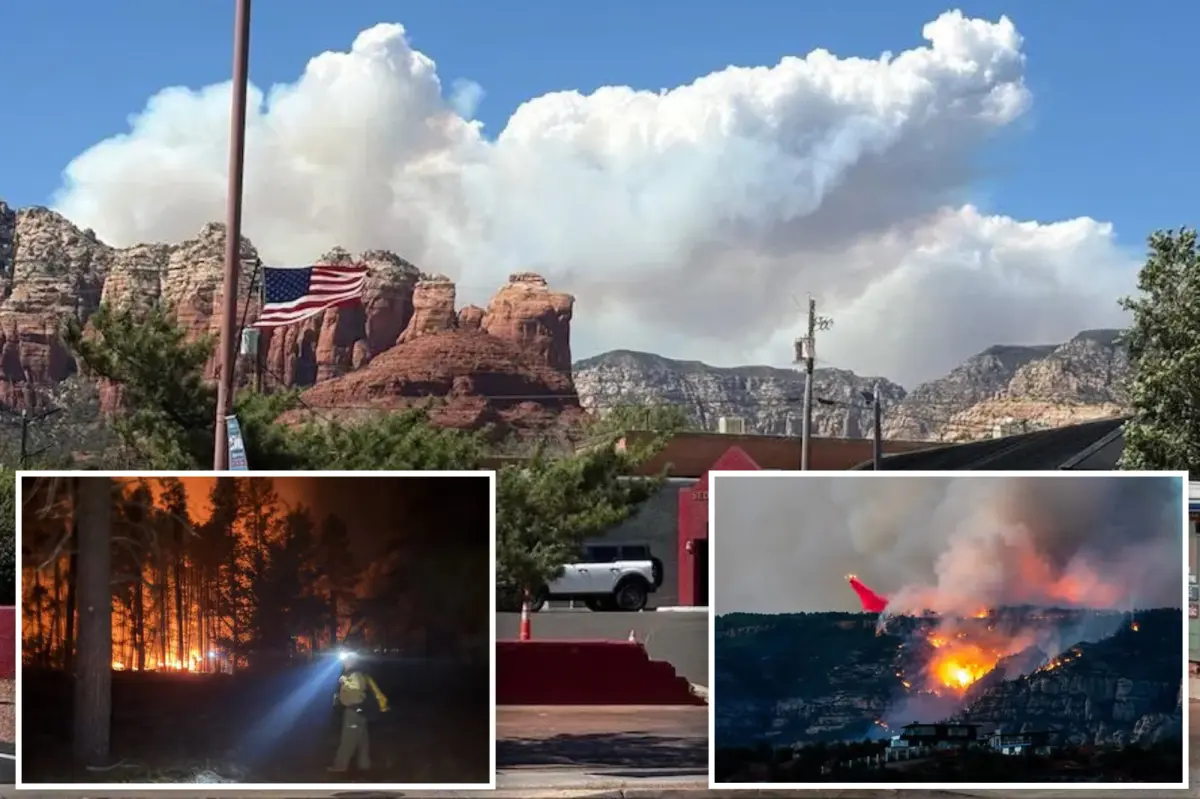
Nestled between the towering, sun-kissed crimson cliffs of Sedona and the high-altitude ponderosa pine forests of Flagstaff lies one of Arizona’s most spectacular, pristine natural sanctuaries: Oak Creek Canyon. This sweeping, verdant oasis, carved deeply into the edge of the Colorado Plateau, has served for generations as a cool, life-giving retreat from the blistering desert heat, a magical place where families from all over the globe gather to wade in refreshing creek waters, camp under towering canopies, and hike the world-renowned West Fork trail with its delicate ferns and steep canyon walls. Yet, the serene, joyful hum of the upcoming summer season was violently shattered on June 19 when an unresolved spark initiated what has rapidly grown into the terrifying Pocket Fire. Spreading with devastating speed across the parched, dry wilderness north of Sedona and directly west of Oak Creek Canyon, the wildfire has exploded to a staggering 17,069 acres, boasting a meager twenty percent containment as of Wednesday morning. As the major Fourth of July holiday weekend fast approaches—a time traditionally earmarked for outdoor exploration, laughter around the picnic table, and starry nights in nature—the landscape is instead dominated by a towering, ominous column of gray smoke and the relentless, hungry crackle of consuming timber. This sudden environmental emergency has completely decimated the holiday plans of thousands of eager hikers, campers, and tourists, trading their anticipated peaceful forest retreats for a stark, hazardous zone of soot and ash that threatens to permanently alter the region’s geographical identity. With visitors canceling reservations and families scrambling to rearrange their hard-earned vacations, the fire has cast a somber shadow over what is normally one of the most celebratory times of the year.
To combat this gargantuan, fast-moving inferno, an army of more than 950 highly trained wildland fire personnel has descended upon the rugged terrain, attempting to construct containment lines under some of the most brutal and unforgiving environmental conditions the Southwest can offer. The topography of the area is a massive obstacle in itself, characterized by sheer, crumbling canyon walls, steep drop-offs, and dense, dry underbrush that hasn’t seen rain in months, making it incredibly perilous for hotshot crews and support staff to gain a foothold on the ground. Fire operations officials have soberly described the battle as a “long-duration event,” warning the public that the Pocket Fire will not be easily tamed, and that isolated pockets of active burning will likely persist for weeks to come. The terrifying intensity of the blaze was brought to light by a fire behavior analyst who reported that the burning index—a critical mathematical metric used by foresters to evaluate the difficulty of controlling a wildfire—reached an unprecedented, all-time record high over the weekend. With flames occasionally leaping sixteen feet or higher into the dry, hot mountain air, the fire has firmly settled into the “extreme” danger category, creating a thermal environment so intense and unpredictable that direct, head-on attacks by ground crews, heavy engines, or even low-flying air tankers are virtually impossible, forcing strategists to rely on indirect, defensive tactics in a desperate bid to steer the flames away from vulnerable surrounding communities. The bravery of these dispatchers, hotshots, and support personnel is tested hourly as they work in suffocating heat to protect both nature and human lives.
The immediate human impact of this ecological disaster is felt in the tense, heavy atmosphere hanging over nearby mountain communities, where the threat of evacuation looms like a dark cloud over day-to-day life. Several key residential areas and historic neighborhoods, including Oak Creek Canyon, Kachina Village, Forest Highlands, and Pine Del, have been placed under “SET” evacuation status—a stressful, high-alert designation that instructs families to pack their most cherished heirlooms, organize their pets, and prepare to flee at a moment’s notice should the wind suddenly shift in the fire’s favor. Essential arteries of travel, lifestyle, and local commerce have been completely severed; State Route 89A, the iconic, winding highway that snakes through the canyon and serves as a vital corridor between Sedona and Flagstaff, has been entirely closed to non-local traffic, denying travelers one of the most stunningly beautiful drives in the American West just days before the busiest holiday of the summer. Popular campgrounds, pristine day-use picnic locations, and critical forest access roads have been shuttered and transformed instead into staging grounds for fire response vehicles and heavy machinery. Compounding the community’s collective anxiety, stringent Stage 2 fire restrictions have been implemented across the region, strictly banning all campfires, charcoal grills, stove fires, and outdoor smoking, as forest officials warn that even the smallest errant spark could easily trigger another independent catastrophic blaze in the tinder-dry forest floor. Neighborhood associations are holding emergency meetings as neighbors check on one another, highlighting the deep bonds of community that surface during times of great crisis.
For locals and frequent travelers alike, the destruction of Oak Creek Canyon is not merely a statistical loss of acreage; it is a deeply personal, emotional heartbreak that has sparked a collective wave of mourning across online platforms and neighborhood forums. On community spaces like Reddit, devastated users have gathered to share their profound grief and process the unfolding tragedy, with many referring to the canyon as a “beautiful gem” that holds decades of family memories, childhood summer camps, and romantic weekend adventures. One user expressed deep, relatable anxiety, noting they had just camped along the pristine creek a couple of weeks prior and had watched the rising afternoon winds with a mounting sense of dread, while a resident from the Flagstaff area shared how the thick, choking plume of smoke had settled directly over their daily life, making the air unsafe to breathe and forcing sensitive individuals to remain trapped indoors. Longtime Arizona residents have lamented that the area will likely remain a “crispy canyon” for years to come, a sterile and blackened monument to the fire’s devastating path. These digital platforms have transformed into a safe haven for shared nostalgia, where people swap cherished stories of walking through the shaded canopy of the West Fork trail, listening to the rushing waters, and marveling at the towering rock formations, highlighting the deep, soul-stirring connection that humans form with these sacred wild spaces. This virtual campfire of shared memory serves as a reminder of how deeply tied our human identities are to the natural landscapes we cherish.
While the grief of the community is highly visible, some voices have sought to offer a perspective of quiet comfort, reminding their neighbors that wildfire is an ancient, natural, and necessary component of the southwestern ecosystem’s perpetual life cycle. Historically, low-intensity forest fires have cleared out dead organic accumulation, allowing new seedlings to take root and maintaining a health-promoting balance in the forest dynamic, though modern climate realities have unfortunately made these blazes far more intense, destructive, and dangerous to human civilization. While the physical recovery of Oak Creek Canyon will undoubtedly take decades, leaving a stark scar that will outlive many who loved the forest in its prime, the natural world possesses an incredible, quiet power of regeneration that will slowly mend the charred mountainside over time. The immediate meteorological outlook offers a complicated double-edged sword; weather forecasters report that there is no rain in the immediate forecast to assist the hundreds of exhausted firefighters, but this dry spell also crucially means there is little threat of lightning strikes igniting secondary fires elsewhere in the parched national forest. This lack of natural moisture leaves the defense of the canyon resting entirely on the shoulders of human bravery and carefully coordinated engineering. As the land continues to smolder, the community is left to grapple with the complex tension between the ecological necessity of wildland fire and the profound human sorrow of seeing a masterpiece of nature deeply scarred.
Ultimately, the Pocket Fire has fundamentally rewritten the narrative of this year’s Fourth of July holiday in northern Arizona, transforming a period usually characterized by bustling tourism, family reunions, and vibrant outdoor recreation into a quiet time of hyper-vigilance, disruption, and economic pause. The thick, acrid haze drifting from the canyon has settled over Flagstaff and neighboring mountain towns, obscuring the dramatic views of the San Francisco Peaks and casting a literal and metaphorical shadow over normally bustling historic downtown districts, where local business owners have reported a noticeable drop in foot traffic and holiday commerce. Yet, in the face of this immense adversity, the spirit of the local community remains resilient and unbroken, characterized by a deep sense of mutual support and endless gratitude for the hundreds of firefighters risking their lives daily on the steep, burning cliffs. Though the physical landscape of Sedona’s canyon country may bear the dark marks of this fire for generations to come, the collective love for this unique corner of the earth remains completely unchanged. When the smoke finally clears and the last hot spot is extinguished, the long and arduous healing process will begin, fueled by the enduring hope that nature—much like the strong, tight-knit communities that cherish it—will find a way to rebuild, grow green again, and eventually welcome back those who seek its peace. This shared ordeal serves to strengthen the resolve of Arizonans to protect their natural heritage, proving that even the fiercest flames cannot destroy the enduring connection between a people and their land.