



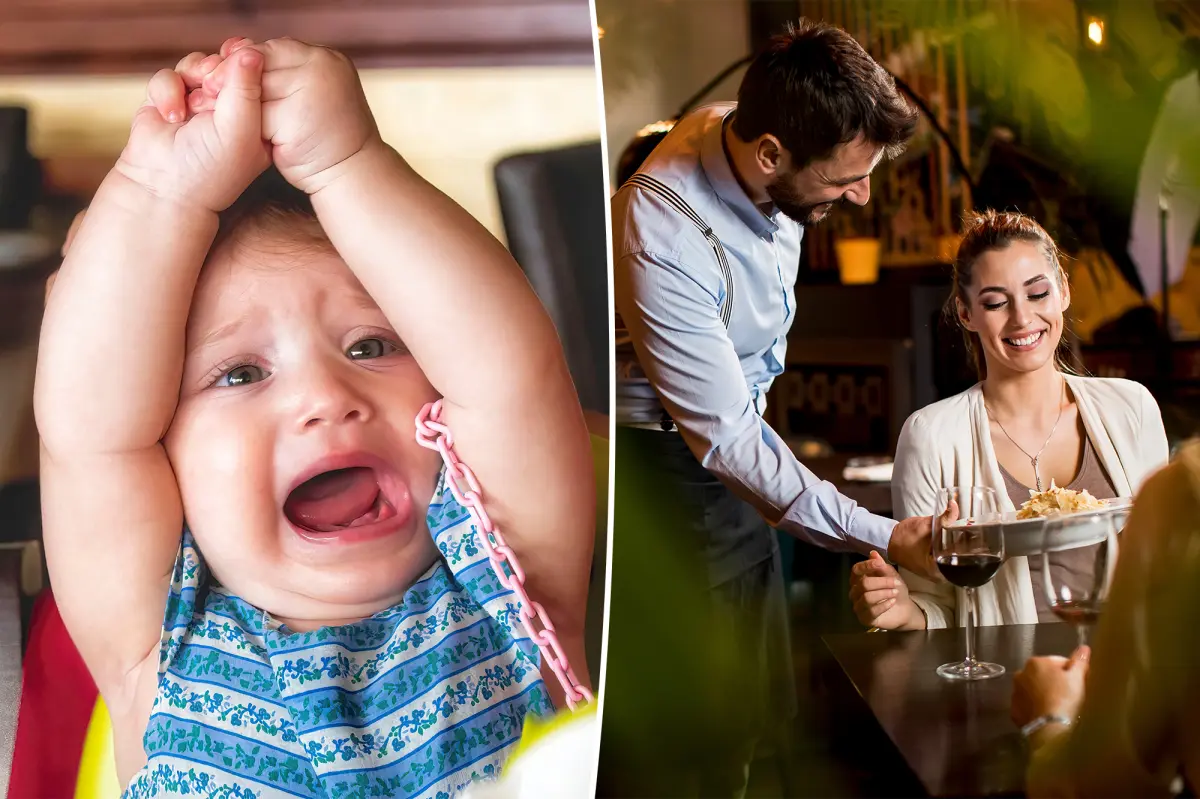
Dining out has always been about much more than merely satisfying our physical hunger; it is a sacred sensory escape, an opportunity to step away from the mundane chores of daily life and immerse ourselves in a carefully curated atmosphere of flavor, lighting, and community. Yet, as our collective expectations around leisure evolve, a fascinating shift is occurring in how we choose to share these communal spaces. According to a comprehensive new survey of 1,000 American adults conducted by Lightspeed Commerce, a staggering 75% of respondents believe that restaurants should offer some form of adults-only dining options. This growing consensus is not born out of a collective disdain for children, but rather a deeper desire for tailor-made environments where different social needs can peacefully coexist. Whether through designated seating areas, late-night restrictions, or strictly child-free romantic settings, consumers are increasingly seeking out spaces designed to match their specific emotional and social objectives. This desire is most acutely felt when evening falls and experience-specific dining takes center stage. Nearly half of those surveyed—about 49%—expressed strong support for keeping late-evening hours free of young children, while 46% favored clearly demarcated adults-only seating sections. An identical 46% believed that romantic dinner dates deserve an uninterrupted, child-free sanctuary, and 43% advocated for age restrictions in alcohol-focused environments where the atmosphere naturally leans toward mature indulgence. It is becoming increasingly clear that the modern diner views the restaurant table not just as a place to eat, but as an experiential canvas where the presence of young children can sometimes alter the intended brushstrokes of a quiet, intimate, or highly spirited evening.
Perhaps the most revelatory and heartwarming insight from this national conversation is that this movement is not being driven by a faction of child-avoiding cynics, but rather by parents themselves. Adoniram Sides, the Rhode Island-based senior vice president of hospitality product at Lightspeed, points out that the modern longing for child-free spaces is a widespread, mainstream cultural phenomenon rather than a niche demand reserved exclusively for high-end luxury or elitist isolation. Sides notes that the enthusiastic support from parents highlights a poignant reality of modern family life: parents are often the ones most desperately craving a brief, sacred respite from the beautiful chaos of raising children. When parents arrange for a babysitter and budget their hard-earned money for a rare night out on the town, they are looking to step back into their pre-parent identities, to reconnect with their partners, and to enjoy an uninterrupted adult conversation over a warm meal. They want to escape the constant vigilance of parenthood—the scanning of the floor for dropped crayons, the monitoring of table manners, and the inevitable rush to finish a meal before a meltdown ensues. Consequently, when parents go out, they want to be surrounded by other adults operating on that same frequency. They are seeking out situational experiences—such as late-night suppers, sultry romantic corners, or breezy, sophisticated rooftop lounges—and they are entirely willing to pay a premium for environments that allow them to truly unwind and remember who they are outside of their parental roles.
Putting these ideas into practice requires boldness, as some pioneering restaurateurs have discovered that establishing clear boundaries actually enhances the magic of their establishments. Consider the case of Capo’s Restaurant and Speakeasy in Las Vegas, a venue that spent its first decade welcoming guests of all ages before owner Nico Santucci made the strategic decision to transition to a strictly adults-only model. For a speakeasy operating in the vibrant, neon-lit theater of Las Vegas, the policy shift was about preserving a specific, historic illusion of mystery, freedom, and uninhibited conversation. Santucci explains that in a speakeasy atmosphere, people naturally want to let their hair down, indulge in craft cocktails, raise their voices in laughter, and discuss mature, unfiltered topics without the looming guilt of corrupting young ears or disrupting a family dinner. To illustrate his point, Santucci draws a vivid, universally understood comparison to travel, suggesting that walking into a child-friendly venue versus entering a dedicated sanctuary of mature nightlife is like boarding two entirely different flights; while one is a functional journey of endurance, the other is an indulgent escape where the journey itself is the destination. Even so, human hospitality always leaves a little room for grace, and Santucci admits he will occasionally make careful exceptions for loyal, long-time patrons hosting large celebratory gatherings that include older teenagers, demonstrating that even the firmest business models must retain a beating, empathetic heart.
On the other side of the hospitality spectrum, family-friendly establishments face the delicate task of balancing the energy of bustling households with the quiet desires of patrons seeking a peaceful retreat. Vicki Parmelee, the thoughtful owner of Jumby Bay Island Grill in Jupiter, Florida, operates a restaurant deeply rooted in family dining but approaches the issue with a profound sense of empathy and professional flexibility. Rather than enforcing blanket bans, Parmelee advocates for a philosophy of active listening and fluid accommodation, stating that she would never hesitate to seat a couple far away from active toddlers if they simply asked for a quieter corner. Drawing a sensible parallel to high-end establishments that enforce dress codes to curate a specific clientele, she believes that restaurants have a perfect right to establish boundaries that align with their brand identity, which is why her own grill happily enforces an adults-only policy at the bar area during late-night hours. This late-night restriction is not born out of exclusion, but out of a deep concern for the physical safety and moral well-being of minors, recognizing that a lively, alcohol-centric bar environment after hours is simply not a suitable sandbox for children. Through this balanced approach, family-friendly owners prove that hospitality does not have to be an all-or-nothing game, and that with a little spatial awareness and creative planning, both a child’s laughter and an adult’s quiet whisper can find their rightful place under one roof.
This evolving landscape also invites a deeper reflection on civil public behavior and the lost art of restaurant etiquette, which etiquette expert Jacqueline Whitmore believes should take center stage over outright bans. As the Florida-based founder of the Protocol School of Palm Beach, Whitmore reminds us that dining out is not merely a transaction of consuming food, but a vital, real-world classroom where children learn the essential social graces of public life. It is at the restaurant table that a child discovers how to speak in quiet tones, respect shared spaces, sit patiently through a conversation, and treat service staff with dignity—lessons that cannot be replicated easily in the isolation of a living room. However, this classroom only functions effectively when parents remain actively engaged, mindfully monitoring their children’s volume, preventing them from wandering or running through busy dining rooms, and stepping outside immediately if an emotional storm brews. At the same time, childless diners or couples seeking quietude have a tool at their disposal that requires no policy changes at all: the power of polite, honest communication. Whitmore, who does not have children, shares that she and her husband regularly ask hosts for a “quiet table” when arriving at an establishment, illustrating that a gracious, gentle request made to a host can almost always secure a peaceful haven without sparking resentment or alienating neighboring families.
Ultimately, the conversation surrounding child-free dining is a beautiful testament to the evolving, deeply human nature of the hospitality industry itself. At its core, hospitality is not about cold rules, rigid exclusions, or dividing society into warring factions of parents and non-parents; rather, it is about a profound, diplomatic commitment to making every single guest feel deeply seen, valued, and comfortable during their finite time of leisure. As Vicki Parmelee beautifully summarizes, when a guest decides to spend their hard-earned money and precious time dining out, their presence is an act of trust, and the industry’s ultimate duty is to honor that trust by aligning expectations with reality. By embracing a diverse ecosystem of dining options—where some tables are reserved for the chaotic joy of family celebrations, others are set aside for the quiet romance of candlelight, and some venues are kept strictly adults-only for nocturnal adventures—we create a richer, more harmonious social fabric. In doing so, we ensure that whether you are an exhausted parent seeking a momentary island of adult conversation, a couple celebrating a milestone anniversary, or a family building lifelong memories over a shared plate of pasta, there will always be a perfectly set, welcoming table waiting just for you.