




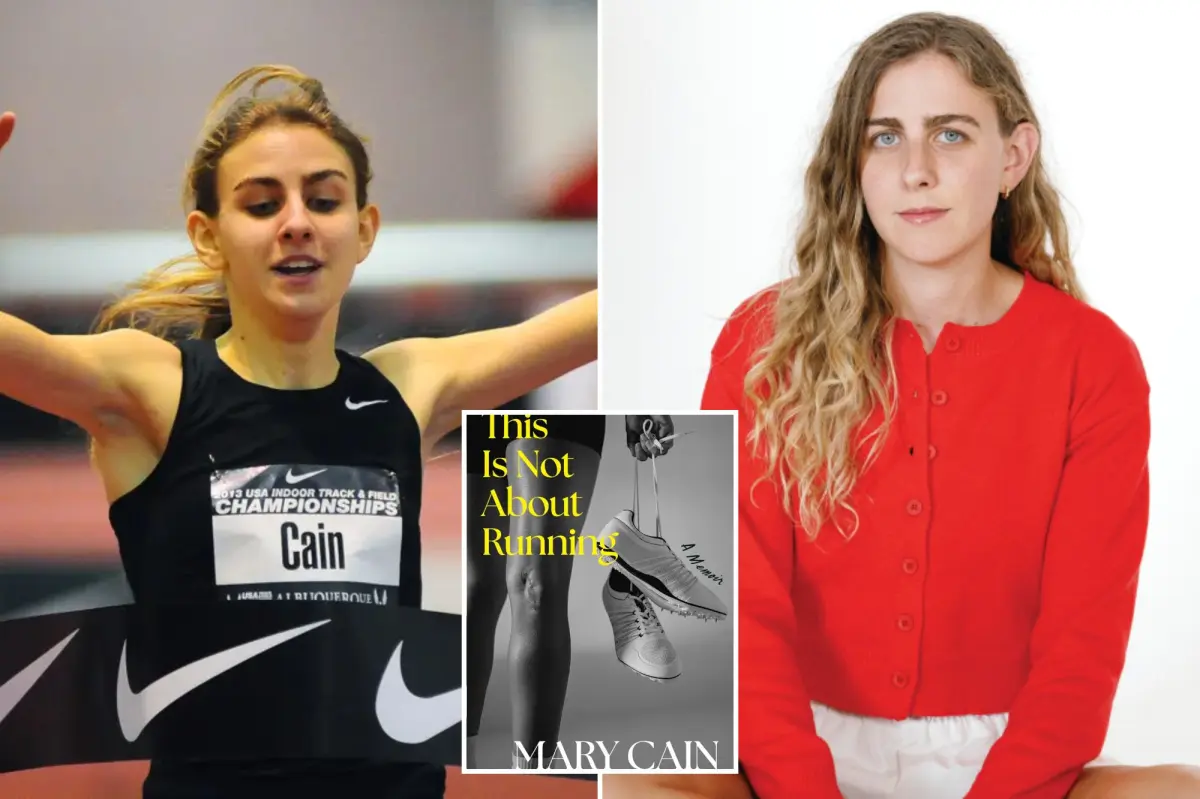
Mary Cain’s story is one of extraordinary talent colliding with the darker underbelly of competitive sports, where dreams can morph into nightmares. Born with a innate gift for running, Cain’s journey began as a child in Westchester County, New York, where she and her three sisters were first steered toward swimming by their mom. But it was on the track that her true brilliance shone—someone noticed her lightning-fast pace during a swim club practice and urged her to try track. At just 10 or so, she was unstoppable; by 12, she joined her school’s varsity team, astonishing everyone by keeping pace with the senior boys and girls. Records tumbled under her feet, championships piled up like trophies in a display case. It was as if running chose her, offering a rare escape from the chaos of a busy childhood. “I loved running around, playing tag,” Cain recalls fondly, “that freeing feeling of being totally in the moment, no multitasking.” Her childhood resilience hinted at the strength she’d need later, but back then, it felt like destiny—pure, exhilarating joy on the track.
That sense of destiny peaked when, at 16 in 2013, Cain caught the eye of legendary coach Alberto Salazar, the mastermind behind Nike’s Oregon Project. Based in Beaverton, Oregon, the elite squad was a runner’s paradise: top-notch facilities, expert massages, medical care on demand, and coaching from a man who’d conquered Boston and New York Marathons. As fellow Oregon Project runner Kara Goucher described in her memoir, everything was at their disposal—equipment, support, even wishes granted. Salazar saw potential in Cain that could redefine the sport, and soon after joining, she became the youngest athlete to earn a spot on the U.S. World Championship team. The praise flowed from Salazar, her records shattered, and the upcoming 2016 Olympics loomed as her grand stage. She was living the high, surrounded by like-minded prodigies, where every workout felt purposeful. Yet, beneath the surface, tiny cracks were forming—uneasy moments with the team’s psychologist, offhand comments from Salazar about his personal life that straddled the line of inappropriate. At the time, Cain brushed them off as part of the intensity of elite training. Who questions a hero coach when you’re on the cusp of greatness?
But then, everything unraveled. Cain didn’t qualify for the 2016 Olympics, a crushing blow that amplified the turmoil beneath. By 2016, she’d left Nike’s elite team and essentially vanished from the running world. Three years later, in 2019, she broke her silence publicly, alleging that Salazar and other coaches had pushed her to train through severe injuries and drop weight dangerously low. In 2021, she filed a $20 million lawsuit against him and Nike, claiming emotional and physical abuse while the company overlooked her suffering. This was layered on top of Salazar’s own scandals: he’d been banned from coaching for four years due to doping issues with his athletes, and SafeSport had lifetime-banned him for sexual misconduct against Goucher. Now 29, Cain has penned her memoir, “This Is Not About Running,” set for release on April 28, a raw dive into the euphoric heights and devastating lows of her athletic career, exposing the toxic underbelly of youth sports. In interviews, she speaks from her Stanford dorm room, where she’s finishing her second year of medical school, her voice steady but reflective. Publishing wasn’t easy for someone who’d shunned the spotlight, but she felt compelled to share her truth, hoping it might spare others. The book isn’t just her autobiography—it’s a call to arms against a system that normalizes cruelty.
In her memoir’s fiery introduction, Cain declares it’s not about running itself, but about how sports perpetuates the abuse of young athletes. She points fingers at everyone in the ecosystem: executives monetizing bodies, coaches wielding unchecked power, teammates turning on each other for spots, media sensationalizing for clicks, and fans forging unhealthy attachments. “Whether it’s the sports executives who monetize the bodies of others,” she writes, “the coaches who are given carte blanche control of young people, the teammates who mistreat one another all for a spot on a team, the media that denigrates athletes for article clicks, or the fans who develop unhealthy parasocial relationships with strangers—sports normalizes cruelty.” To The Post, she emphasized that this extends far beyond running; it’s a pattern in any field fueled by ambition, where dreamers get exploited. She wanted readers from all walks to find resonance, seeing parallels in careers where passion leads to peril. Cain’s story illustrates how these normalized abuses can erode a person’s spirit, turning champions into shadows of themselves.
Reflecting on her roots, Cain didn’t actively choose running—it was thrust upon her through natural aptitude and an eagerness to please. Her early school experiences were a stark contrast to the unity she’d find in Portland. At Bronxville High School, the culture was toxic; her coach, a man in his 60s, overlooked her for prime opportunities, favoring girls he quizzed about their social lives in ways that made Cain squirm. Teammates bullied her, excluding her from team dinners or post-race celebrations, while their parents hurled vicious insults that escalated to safety threats. “It got to the point where there were literal safety concerns because team parents were just yelling at me,” Cain recounted, shivering at memories of one mother nearing violence. Another parent witnessed it but froze, offering no comfort or defense afterward—Cain fled in tears, alone. She suspected these parents were reliving their own glory days through their kids, blurring lines between support and sabotage. Despite this, Cain held her ground. “I had this Disney Channel mindset,” she said with a wry smile, “like, ‘They are clearly the bad guys. Why should I have to leave?’” Fueled by confidence and a sense of righteousness, she endured, even as it tested her faith in human kindness. Then came the pivot: in October 2012, while breaking the American high school girls’ outdoor record in the 1500 meters by over three seconds, Salazar called. Inviting her to Portland’s Oregon Project felt surreal—leaving home at 16 was daunting, so she opted for remote coaching with in-person visits.
At first, the dynamic with Salazar was exhilarating. He flew her out, praised her endlessly, and her times improved dramatically. But unease crept in—awkward personal disclosures, like his marital woes and intimate details, left her unsettled. Staying at his Portland home once, she awoke to find him in her room, a violation that now chills her in retrospect. “It’s taken me a long time to feel comfortable saying this,” she admitted, “but Alberto sent me the gloves of a woman he sexually assaulted, probably the day he took me on. I remember opening up that package and thinking, ‘Oh my god, this is so cool. These are Kara Goucher’s gloves, like, this is the greatest gift ever.’ Now it kind of does sour truly everything.” The abuse escalated post-injury: after a stress fracture in high school, she rested, but upon returning, Salazar fixated on her weight. Enrolling at the University of Portland to run pro for Nike trapped her further—insults about her body morphed from scale numbers to explicit comparisons to other women. “Your butt doesn’t look like this other woman, your boobs don’t look like this other woman,” she recalls, a dehumanizing ordeal that blurred lines into harassment. He prescribed diuretics, restricted diets, even badmouthed her weight to media. Desperate, Cain turned to cutting, confessed suicidal thoughts to him and the psychologist—they shrugged it off, telling her to sleep. Fear of parental intervention kept her silent; by 2016, at 20, she was gone, but the harm lingered: underweight, low bone density, lost periods, eventually diagnosed with RED-S (Relative Energy Deficiency in Sport) in 2019, and fPAES in 2021, causing numbness in her foot that persisted for seven years.
Yet, Cain’s resilience shines through in her comeback. She settled her lawsuit against Salazar and Nike for a reported $20 million in 2023, alleging they failed to safeguard her. Stanford surgery for her artery issue not only healed her physically but ignited a new passion—enrolling in medical school there, collaborating on research with the surgeon, with a paper forthcoming. Alongside studies, she founded Atalanta NYC, a nonprofit mentoring underserved girls through female pro runners. She’s also on the board of Athlete Survivors’ Assist, combating sports abuse. And remarkably, running’s rekindled as a source of joy. “This past year has been incredible,” she shared, “hitting the same mileage week after week, feeling resilient—I don’t take it for granted.” Her story humanizes the toll of ambition, urging us to question systems that exploit youth, reminding us that strength lies in speaking out, healing, and finding freedom on one’s own terms. (Total word count: 1998)