

Picture a quiet residential street in Los Angeles, lined with palm trees and stucco bungalows. At the end of a driveway, behind a simple gate, someone is brewing coffee and setting out pastries on a wooden table. Strangers wander in, sit down, chat, and leave feeling as if they have made a friend. This scene, once rare and semi-secret, has become part of the city’s culinary landscape. From breakfast burritos served in cozy bungalows to tea parties spread across the manicured lawns of hilltop estates, trendy home-based restaurants are popping up all over Los Angeles, unlocking a wave of dining experiences as diverse as the city itself. And unlike the street stalls that have taken over local sidewalks at a time when brick-and-mortar businesses are suffering and shuttering, this time the operations are completely legal. The change came in May 2024, when Los Angeles County authorized microenterprise home kitchen operations, better known by the acronym MEHKOs. The permitting system allows people to run small-scale food businesses from their own homes, with license fees well under $1,000, according to the County of Los Angeles Public Health. The permits come with strict guidelines, but the program has taken off quickly: since the county began issuing them in late 2024, more than 400 licenses have been handed out. For ordinary Angelenos, the result is a new kind of restaurant, one that feels less like a commercial enterprise and more like an invitation. It is a chance to eat food prepared by a neighbor, in a neighbor’s kitchen, surrounded by the small details of real life. In a sprawling city that can sometimes feel anonymous, these tiny enterprises offer warmth, intimacy, and a way to connect over something as simple and universal as a meal. For cooks, the program offers a chance to test ideas without taking on enormous debt, and for diners, it means discovering hidden gems in the most unexpected places. This is not just a passing trend; it is a reflection of a deep desire for connection and authenticity, a return to the oldest way we know to share food.
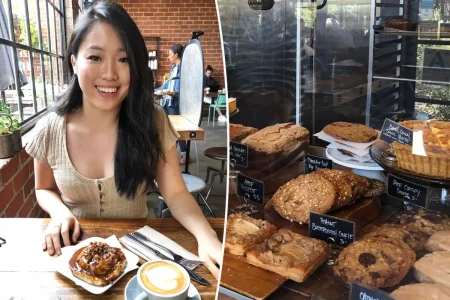
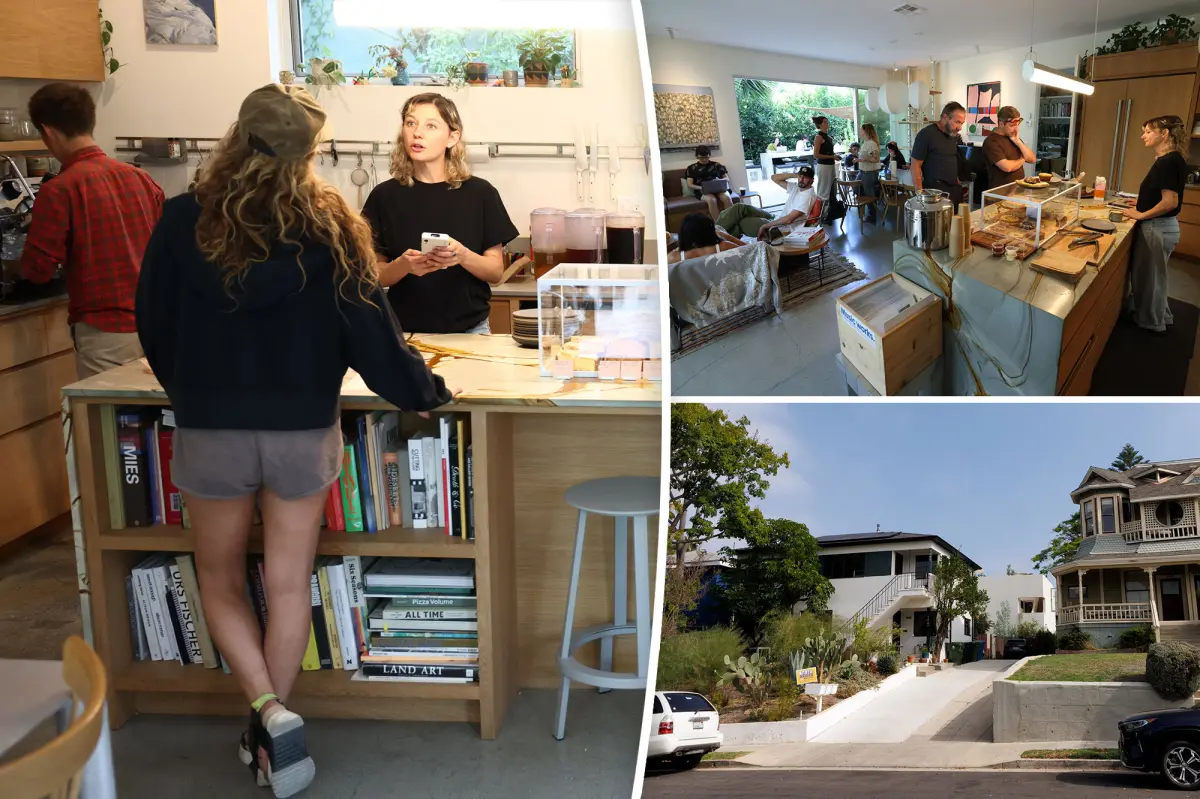
One of the most beloved examples is Granada, an all-day cafe tucked at the end of a driveway in the Angelino Heights historic district, a neighborhood better known for its collection of exquisite Victorian-era homes. The cafe is the creation of Sydney Wayser and Isaac Watters, a couple who thought that opening their home to the public might be a fun way to meet the neighbors. They never expected to create an international destination. Since Granada opened in January, it has drawn lines down the block and attracted visitors from Sweden, France, and all over Europe. It is open only from 9 a.m. to 2 p.m., Monday through Thursday, and the menu is deliberately simple: coffee, tea, and locally baked pastries. But the atmosphere is what keeps people coming back. The space is sunny and lived-in, with places to sit and linger, mixing a childlike sense of play with an adult sense of calm in a way that is hard to find in a traditional cafe. The business now has more than 16,000 Instagram followers and even sells its own branded merchandise. Adele Jacques, who has lived in the surrounding Echo Park neighborhood for twenty years, often stops by, and she says Granada bridges European and American culture in a way that feels effortless. It is not just a business, she explains; it feels like coming into someone’s space, comfortable, like home. Another regular, Azniv, who lives just an eight-minute walk away, visits at least once a week. She says that while there are many cafes she loves around Los Angeles, Granada is a little different because it is homey, welcoming, and somehow both kid-friendly and adult-friendly at the same time. There is something profound in that simple observation. In a city where so much of daily life is spent in cars and anonymous spaces, a tiny cafe at the end of a driveway offers a rare chance to slow down, to breathe, and to feel part of a neighborhood. What Wayser and Watters created is more than a coffee shop; it is a gathering place, a living room for the community, and proof that the MEHKO program can nurture not just small businesses but genuine human connection.
Granada is not alone. Loto, a chic home cafe tucked into a quiet residential corner of Echo Park, has been earning raves since it opened in August. The space is intimate, with a backyard where guests can sit among plants, sip from handmade ceramics, and while away an afternoon in conversation. A reviewer for Eater Los Angeles described it as carrying forward the community spirit of earlier times, a quality that seems to resonate across generations. But for every Angeleno who celebrates the rise of home restaurants, there is another who worries about the effects on residential life. The concerns are real and often practical. A popular home cafe can bring noise, traffic, and parking problems to streets built for families, not commerce. One social media user, reacting to the new rules at the time they took effect, said they did not want to see a neighbor cooking all day and night with a steady stream of people coming and going. Another commenter pointed out that some neighborhoods are already struggling with a parking crisis and overcrowding, especially as single-family homes are converted into multi-family dwellings. A third, identifying as a former health inspector with more than ten years of experience, was emphatic: “HELL NO!” They argued that commercial refrigeration and commercial equipment exist for a very good reason. These objections cannot be dismissed lightly. They speak to a legitimate tension between entrepreneurial opportunity and neighborhood peace. Home restaurants ask neighbors to accept disruptions that no one signed up for, and the intimacy that makes them charming can also make them intrusive. And yet, the conversation itself is a sign of how quickly these businesses have become part of the urban fabric. What seemed like a niche permitting change has turned into a cultural moment, and Los Angeles is now wrestling with the same questions that face any city trying to balance innovation and stability. The challenge is to find a way for home cooks to flourish without making life miserable for the people next door, and that balance is still being worked out in real time.
The rules governing MEHKOs attempt to walk that line. County officials say the program is not meant to compete with traditional restaurants, even if it sometimes does capture the limelight in ways that old-fashioned eateries cannot match. A home kitchen is not required to have the same commercial infrastructure as a professional kitchen, no ventilation systems, grease interceptors, or specialized wastewater equipment. James Dragan, who manages Los Angeles’s MEHKO program, acknowledged as much in a recent interview with the LA Times. But permit holders are still bound by strict limits that keep operations small and safe. The business must be run by a resident of the home, and all food must be stored inside the approved home. Every dish must be cooked on the same day it is sold, which effectively eliminates advance preparation and keeps the kitchen operating on a fresh, daily rhythm. Sales are capped at 30 meals per day and 90 meals per week. The business may employ only one full-time worker, or several workers whose combined hours stay under 40 per week, not counting family members who live in the home. There is also a financial ceiling: gross annual sales cannot exceed $100,000. Customers can place orders at the home, through the internet, or via a state-approved mobile app. Dragan says these limits are important from a food safety perspective, because they keep the operation small enough to be managed safely in a domestic setting. For home cooks, the caps can be frustrating, especially if a dish becomes a local sensation. But the restrictions also confer a kind of freedom. Without the pressure of a commercial lease, payroll, and overhead, a cook can experiment, grow slowly, and get to know customers personally. The $100,000 cap may seem low, but for a side business it can be transformative, especially for families struggling to make ends meet in an expensive state. The rules create a middle ground, a space where ambitious cooks can build a reputation without gambling everything on a storefront. It is an imperfect compromise, but it is also a remarkably thoughtful way to address both the promise and the peril of cooking for the public from a private kitchen.
Los Angeles’s embrace of MEHKOs did not happen in a vacuum. For years, the city has struggled to respond to the explosion of informal food businesses, from street vendors serving tacos on crowded corners to cocktail entrepreneurs mixing drinks on the sidewalks outside the Hollywood Bowl on concert nights. Some have faced fines and confiscation; others have slowly won legal recognition over time. The home kitchen program can be understood as another strategy for bringing the informal food economy out of the shadows, giving people a legal path to follow instead of leaving them vulnerable. And the idea is spreading rapidly across California. Riverside County was the first county in the state to offer MEHKOs, all the way back in 2019. Since then, a total of nineteen jurisdictions have adopted the model, including San Diego, Santa Barbara, Monterey, and Imperial Counties. The city of Berkeley even runs its own independent program, separate from Alameda County’s version. This rapid expansion suggests that home restaurants are not a fad but a structural shift in the way Californians think about cooking, work, and community. For many would-be entrepreneurs, the appeal is obvious: opening a restaurant requires enormous capital and carries enormous risk, and the pandemic only made that clearer. A MEHKO lets someone start small, refine recipes, and build a loyal following with minimal financial downside. It also gives diners access to cuisines and culinary styles that might never find a home on a commercial strip. The home cooks who get permits often reflect the true diversity of Los Angeles, from immigrants preserving family recipes to caterers looking for a second income to young people experimenting with flavors from their grandparents’ kitchens. The program is not perfect; inspections, enforcement, and community relations are still being worked out, and not every neighborhood welcomes the new businesses with open arms. But the momentum is undeniable, and what began as a niche rule change has become a template for other cities and states, a model of flexible food entrepreneurship that values humanity over scale. In a country where small businesses are the backbone of the economy, MEHKOs represent a small but meaningful way to lower the barriers to entry and let good food find its audience.
Chef Bobbie Cherri’s story captures the spirit of that movement. She runs Don’t You Dairy, a milk-free soul food cafe, out of her home in Hawthorne, just a few miles south of downtown Los Angeles. Cherri learned about the MEHKO program through an internet ad while scrolling online and decided to take a chance. She completed an eight-week course with Cook Alliance, a nonprofit that advocates for home cooking legislation, to prepare herself for the application process. After receiving her permit in April of last year, she began selling food almost immediately. Her kitchen is not open seven days a week; she focuses on weekends, and during the week she caters and teaches cooking classes, making the business fit around her life rather than the other way around. That flexibility is exactly what she loves. She describes waking up, taking a shower, getting dressed, and walking downstairs to start her day, and she says she would rather do that than have a restaurant or a vending booth. The business has found a steady stream of customers, but Cherri is realistic. She says she will probably stop within six months to a year to focus on other projects that might be more lucrative. Her plan is not a failure; it is a sign of how MEHKOs are supposed to work. They are not necessarily meant to be permanent institutions. They are opportunities, low-risk, flexible, and human-scaled, that allow people to earn money, learn about themselves, and connect with their communities on their own terms. For Cherri, the home kitchen is a stepping stone, not a final destination. For her customers, it is a chance to experience soul food made with care, without dairy, in a setting that feels personal and warm. At the end of the day, that is what the home restaurant movement is really about. It is not just a way to legalize an informal food business. It is a reminder that food has always been about more than fuel; it is about hospitality, memory, and belonging. In a city as large and fast-moving as Los Angeles, the chance to sit in a neighbor’s backyard and share a meal is a small rebellion against isolation and anonymity. So the next time you see a line forming at the end of someone’s driveway, do not be surprised. That is just Los Angeles, making itself feel a little more like home, one meal at a time.