





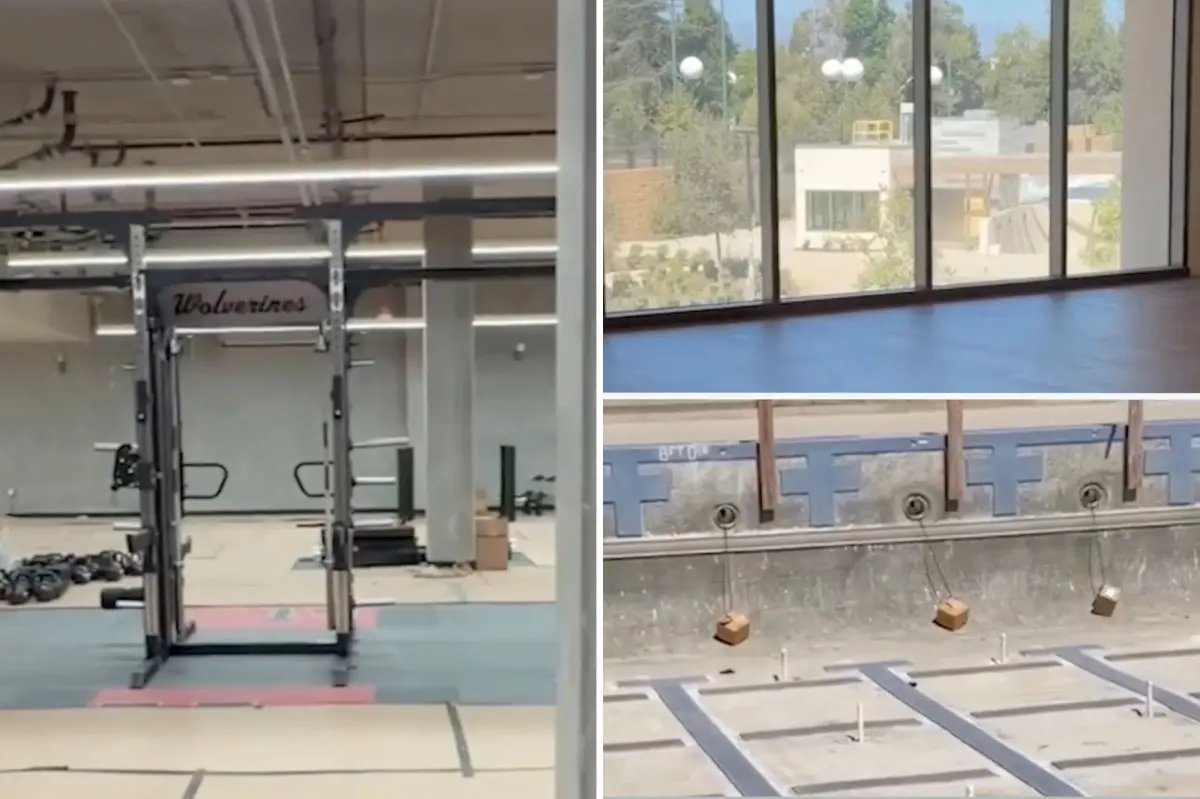
Under the shimmering warmth of the Southern California sun, where the concrete basin of the Los Angeles River winds through the San San Fernando Valley, a monument to athletic ambition is quietly taking its final shape. In the affluent neighborhood of Studio City, Harvard-Westlake School is putting the finishing touches on its sprawling, 16-acre River Park campus—a breathtaking, state-of-the-art sports complex with a jaw-dropping price tag of $200 million. Scheduled to open its gates in early 2027, pending the final bureaucratic blessings of city inspections and a certificate of occupancy, the facility is nothing short of an architectural marvel for secondary education. Once the bulldozers depart and the landscaping matures, the campus will boast a world-class 52-meter Olympic-sized swimming pool, two massive gymnasiums, eight pristine tennis courts, a high-tech weight room, specialized facilities dedicated exclusively to fencing and wrestling, and a sleek modern cafeteria to fuel its student-athletes. Yet, as the physical structures rise from the dust, they have cast a long, complicated shadow over the surrounding community, transforming what was meant to be a celebration of school pride into a fierce, polarizing debate about the soul of Los Angeles, the responsibilities of wealth, and the widening chasm between the city’s most privileged citizens and those struggling just to survive.
To understand the emotional friction surrounding this development, one must first look at what stood on this soil before the concrete was poured: the Weddington Golf & Tennis Center. For generations, Weddington was not just a business, but a sacred repository of local memory, a rare, unpretentious green sanctuary where ordinary Angelenos could escape the frenetic pace of city life. It was a place where grandfathers taught their granddaughters how to grip a golf club, where local high schoolers played affordable tennis under the evening floodlights, and where the air smelled of freshly cut grass and nostalgic simplicity. When Harvard-Westlake acquired the property and announced its plans for demolition, it triggered a wave of community grief and organized resistance that lasted for years. For many neighbors, the destruction of Weddington felt like a profound betrayal of the local heritage—a corporate-style extraction of a public-accessible treasure by an elite private institution where annual tuition exceeds $50,000. Although construction finally commenced in 2024 after a grueling gauntlet of permit acquisitions and tense community meetings, the physical transformation of the landscape has done little to heal the emotional wounds of residents who still mourn the loss of their beloved neighborhood anchor.
The latent tension surrounding the project erupted into a full-blown cultural conversation recently when the Los Angeles Times posted a video on Instagram showcasing drone footage of the nearly completed, ultra-luxurious complex. Almost immediately, the digital town square was flooded not with admiration, but with deep-seated resentment and ethical questioning from a public weary of systemic inequality. Commenters quickly pointed out the stark, painful juxtaposition of a single high school investing $200 million in athletic facilities while thousands of unsheltered people sleep on the streets of Los Angeles just miles away. One viral comment labeled the expenditure as “obscene,” arguing that an institution catering to the “one percent” should focus its massive resources on community-wide responsibilities, perhaps by partnering with underfunded public schools in the Los Angeles Unified School District. Another frustrated user lamented that while citizens starve and struggle to find affordable housing, society continues to tolerate and celebrate multi-million-dollar “presidential ballrooms” and private athletic sanctuaries, viewing the project not as an achievement of excellence, but as an extravagant, tone-deaf symbol of modern-day aristocracy.
In defense of the school and the project, a counter-narrative quickly emerged from parents, alumni, and advocates of private enterprise who argue that philanthropy should not be villainized. Supporters of the River Park campus emphasize that the $200 million was raised entirely through private donations, meaning that not a single cent of taxpayer money was used to fund the construction. From their perspective, individuals who have achieved financial success have every right to allocate their wealth as they see fit, particularly when investing in educational institutions that foster discipline, health, and leadership in young people. Proponents argue that criticizing a school for providing world-class opportunities for its students is counterproductive, and they ask why a privately funded project should be held responsible for systemic municipal failures like homelessness and urban decay. For these families, the complex represents a profound investment in the future of youth athletics, a training ground where young men and women can pursue their Olympic dreams in an environment designed to cultivate their highest potential.
In an effort to bridge the divide and appease local critics, Harvard-Westlake designed the River Park campus with a physical compromise: six of the sixteen acres will be permanently open to the general public. This shared space will feature beautifully landscaped walking and jogging trails, open plazas, and public-access tennis courts, theoretically reintegrating the neighborhood into the land they once lost. Furthermore, defenders of the school point out that Harvard-Westlake has a long history of community engagement, including academic tutoring and enrichment partnerships with local public charter schools. Yet, even this olive branch is viewed through a lens of skepticism by those who wonder if a public walking path alongside a private, gated Olympic pool is a genuine act of democratization or merely a strategic aesthetic concession. Critics argue that walking beside a fence while watching privileged children utilize state-of-the-art facilities serves as a daily, physical reminder of the class divide, highlighting the uneasy truce between the ultra-wealthy institution and the surrounding working-class neighborhood.
As the early days of 2027 draw closer, the River Park complex stands as a powerful microcosm of the broader American struggle to balance individual liberty with collective social welfare. When the gates finally swing open, the campus will undoubtedly be a place of joy, where student-athletes will dive into pristine waters and families will stroll along the newly constructed paths of the Los Angeles River. But the true legacy of the $200 million complex will not be measured solely by the medals won or the records broken on its fields; it will be defined by how the community reconciles the physical presence of such immense wealth with the human needs of the city surrounding it. Whether viewed as an inspiring testament to educational philanthropy or a heartbreaking monument to modern economic disparity, River Park ensures that the dialogue surrounding wealth, community, and privilege in Los Angeles will continue to flow as constantly as the river beside it.