


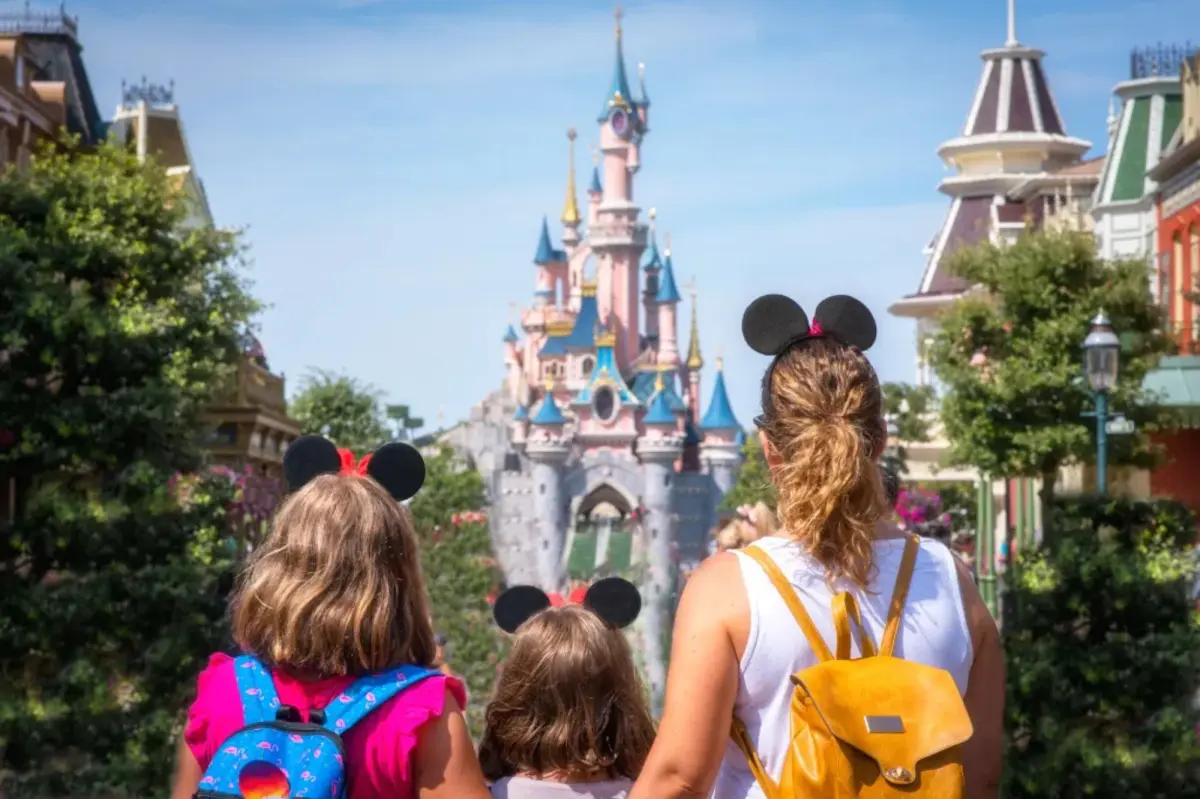
On Saturday, Oct. 3, Disneyland Paris was forced to slam its gates shut to last-minute visitors after both of its theme parks completely sold out. The day had begun like any other European morning, with families arriving from all over the world, clutching maps and Mickey Mouse balloons, ready for a fairytale. But by the time the turnstiles started spinning, the parks had reached capacity, and the mood outside shifted from excitement to disbelief. Disneyland Park and the newly revamped Disney Adventure World were officially full, and anyone without a date-specific ticket or a hotel package was turned away. Fan site ED92 reported that the official reservation calendars had been wiped clean, with no same-day passes available anywhere. For the families standing outside, the disappointment was almost unbearable. They could hear the music drifting over the walls, smell the popcorn from the Main Street carts, and see the castle sparkling in the distance, but they could not get inside. What made the scene truly striking was the sound of American accents in the crowd. Travelers from the United States have become the driving force behind Disneyland Paris’s recent surge, and they were arriving in waves, having booked transatlantic flights and European itineraries in the hope of combining the magic of Disney with the romance of Paris. The secret is out: Disneyland Paris is smaller, cheaper, and in many ways more charming than its American counterparts, and the bargain hunters have found it. For the resort, that success has created a strange kind of crisis—too much demand, not enough space, and a growing number of disappointed visitors who are learning that even magic requires a reservation.
The economics are almost too good to ignore. For generations, American families planning a Disney vacation have simply accepted that it will cost a small fortune. A week at Walt Disney World in Orlando can easily run close to $7,000 once you count airfare, hotels, tickets, meals, parking, and souvenirs. A similar trip to Disneyland in Anaheim can cost just as much, especially if you want to stay near the parks and experience both Disneyland and Disney California Adventure. But Disneyland Paris changes the math in a way that has caught the attention of savvy travelers everywhere. A complete family holiday that includes transatlantic flights, a comfortable hotel, and multi-day tickets to the French parks can be booked for under $6,700. That is not only cheaper than the American equivalent; it also comes with the kind of extras that no theme park in Florida can offer. You can spend the morning riding Space Mountain, then take the train into Paris, stroll past the Louvre, and watch the Eiffel Tower glitter as the sun goes down. The resort itself is also far more compact than its American cousins—roughly one-fourth the scale of the U.S. properties—which means less time waiting for monorails, buses, and shuttles, and more time actually enjoying the attractions. For families who want to feel that they have outsmarted the system, Disneyland Paris has become the ultimate vacation hack. One budget-conscious traveler revealed on Facebook that her family of four had scored flights, lodging, a rental car, and Paris park passes for around $1,400. That is a fraction of what the same family had paid for a comparable Florida getaway, which easily topped five figures. Stories like hers are spreading across the internet, and each one inspires another wave of American families to book their tickets before the secret gets any more crowded.
All this demand has forced Disneyland Paris to adopt some of the strictest ticket rules in the Disney universe. Under the current resort rules, annual passholders and guests holding open-date tickets must lock in their dates early, or they risk showing up on a sold-out day and being turned away. The only visitors who are guaranteed entry during high-volume spikes are those with date-specific tickets or hotel packages. The days of rolling up to the ticket booth, buying a pass, and walking into the park on impulse are gone. The resort has faced relentless overcrowding in recent months, reaching maximum capacity again in September and closing its gates completely in October. Disney officials say the entry caps are necessary to protect visitor safety and keep queue lines manageable, and that explanation makes sense. A Disney park that is too crowded stops feeling magical; it becomes a sea of shoulders, strollers, and impatient sighs, with hour-long waits for everything from coffee to Dumbo. But the secrecy surrounding attendance figures adds another layer of stress. Disneyland Paris does not publish its daily attendance numbers, and no one outside the company knows exactly how many guests are allowed inside at any given moment. Outsiders can only guess how many thousands of people are crammed into the walkways, how long the queues really are, and how much longer the sold-out trend will continue. For tourists who have traveled across an ocean, that uncertainty is nerve-wracking. You can have a valid ticket, a confirmed reservation, and a carefully planned itinerary, but until you pass through the gates, you cannot be entirely sure that the magic will let you in.
Much of the frenzy can be traced to the most dramatic transformation in the resort’s history: the rebranding of Walt Disney Studios Park into Disney Adventure World. For years, the second gate at Disneyland Paris was considered the weak link—a rather small collection of behind-the-scenes exhibits and a handful of rides that felt more like a working studio than an immersive park. That all changed on March 29, when the resort officially retired the old name and introduced Disney Adventure World with a spectacular new identity. The centerpiece is a blockbuster World of Frozen land that invites guests to step directly into the kingdom of Arendelle. The village looks as if it has been lifted from the film, with snow-dusted rooftops, Norwegian-inspired architecture, and the unmistakable sound of Elsa’s voice echoing through the paths. Visitors can ride through the story, meet Anna, Elsa, and Olaf, and feel as though they have entered the movie rather than simply watched it. The rebrand also introduced new entertainment hubs called Adventure Way and Adventure Bay, which are filled with restaurants, boutiques, and live performances that give the entire resort a vibrant, festival-like atmosphere. These additions have drawn travelers from around the world, including the passionate fans known as Disney adults. These are the people who plan holidays around seasonal events, limited-edition merchandise, and the chance to experience something brand new. They have flooded social media with photos and videos of the new land, and every image seems to trigger another round of flight bookings. The rebrand was a gamble that Disneyland Paris could become a more complete destination, and it paid off spectacularly. The only problem is that the park’s infrastructure was never truly designed to handle this level of worldwide obsession.
If there is one statistic that explains the American migration to Disneyland Paris, it is the price of admission. At Disneyland Paris, a standard one-day, one-park ticket starts at just €59 to €71, which is roughly $65 to $78. For guests who want to explore both parks in a single day, a park hopper ticket ranges from €84 to €130 or more, or about $92 to $142. Compare that with Disney World in Florida, where a standard one-day ticket costs between $119 and $209 before tax, and a Park Hopper jumps to $198 to $281. Out west at Disneyland in California, the prices are even steeper: one-day passes range from $104 to $224, while park hoppers can climb as high as $314 per day during peak seasons. The conclusion is impossible to avoid: Paris admission rates average roughly half the cost of American parks. The savings become even more staggering when you plan a longer stay. A family planning four days at Disney World can easily spend more than $3,000 just on tickets, while a family that wants two days at Disneyland Paris plus sightseeing passes for the Eiffel Tower and Versailles can purchase a package for about $1,150. That price includes two of the most iconic landmarks in the world, and it still leaves money for dinner. It is difficult to find a better deal in the entire theme-park industry. Of course, there are catch-all prices are dynamic, and the cheapest rates are available only on off-peak weekdays in late August and September. During Spring Break, Thanksgiving, and Christmas, costs soar at every Disney park, and the Paris bargain becomes less dramatic. But even at peak prices, Disneyland Paris tends to undercut its American counterparts while offering the irresistible bonus of Paris itself.
Choosing between Disneyland Paris and the American parks ultimately comes down to what kind of vacation you want. Walt Disney World in Florida is the giant, all-encompassing experience, with four parks, two water parks, endless resort hotels, and so many attractions that it can take weeks to see everything. Disneyland in California is the original, steeped in nostalgia and history, the place where Walt Disney once stood and dreamed. Paris is something different entirely. It is a Disney park that refuses to stay inside its own borders. The castle is real and beautiful, but just outside the gates is the rest of France—the cafés, the cathedrals, the cobblestone streets, the sense that you are not just a theme-park guest but a traveler in a wider world. One Reddit user summed up the choice in a way that has resonated with thousands of other visitors: “I’d say Paris is great if you’re wanting a shorter, cheaper or more spontaneous trip. Or if you just want to try something different. Florida is better if you want a bigger trip, are willing to spend more and are able to plan more and book further in advance.” That is the honest truth. Paris is not better because it is cheaper; it is better for people who want a compact, romantic, and culturally rich adventure that happens to include a dragon in a cave and a pirate ship on a river. But the crowds are no longer a surprise. The sold-out Saturday in October was a warning that the era of spontaneous Disneyland Paris visits is over. For now, the only safe strategy is to plan ahead, book your tickets as early as possible, and be prepared to share the magic with thousands of equally enthusiastic fans from every corner of the globe. The good news is that the bargain is still real. The castle is still glowing, the croissants are still warm, and the dream is still worth chasing. You just need to secure your place before the gates close, and then hold on tight to the memory of a Disney vacation that somehow also ended with a view of the Eiffel Tower.