



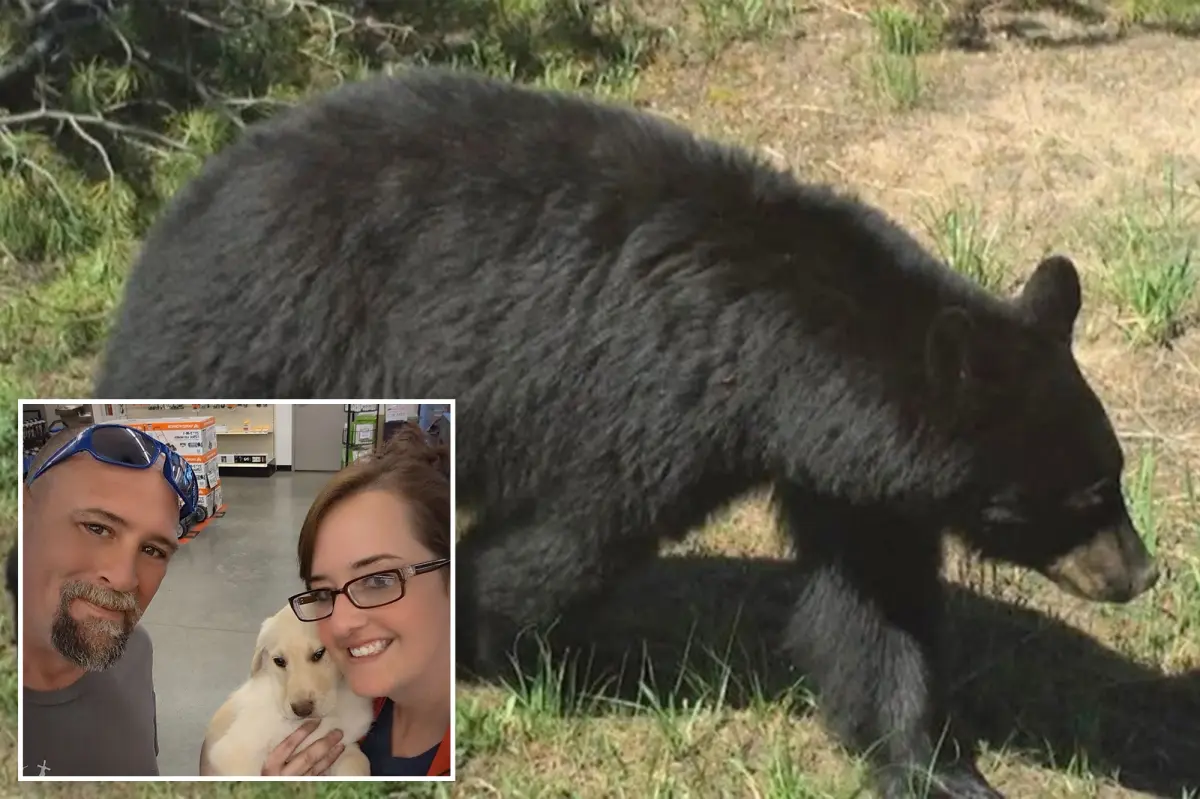
The stillness of a small Idaho town was shattered in the darkest hours of a Friday morning when a young bear attacked two people outside their home. The incident unfolded around 3:30 a.m. in the Sunset Heights subdivision near Salmon, Idaho, a tightly knit community of just over 3,000 residents where most people leave their doors unlocked and know their neighbors by name. It was precisely that sense of safety that was violently interrupted when the pair, standing on their own porch, were suddenly faced with a wild animal in the shadows. The attack was swift and terrifying, leaving both individuals injured, one seriously enough that a helicopter was summoned to transport them to Eastern Idaho Regional Medical Center in Idaho Falls. The sound of sirens and rotor blades at such an hour is not something residents of this mountain town are used to, and news of the mauling spread quickly, filling homes with a mixture of fear, concern, and confusion. For a place where wildlife is often seen from a distance as a beautiful part of the landscape, this attack was a stark reminder that the wild can come right to your doorstep, especially when the boundary between habitat and home becomes blurred. The victims, whose names were not released, were attacked outside their own residence, a place where they should have been safest, and the trauma of that moment will likely linger long after their physical wounds have healed. The early morning darkness, the sudden movement of the bear, the chaos of the encounter—all of it combined into a nightmare that the small community would struggle to understand in the days ahead.
In the aftermath of the attack, law enforcement and wildlife officials moved quickly, treating the incident with the seriousness it demanded. The Lemhi County Sheriff’s Office was the first to respond, and they immediately notified Idaho Fish and Game, which mobilized its Wildlife Human Attack Response Team to secure the scene. This specialized team is trained for exactly these emergencies, and their arrival signaled that this was not a minor nuisance call but a full-scale public safety crisis. Working alongside a professional houndsman, the team began the painstaking process of tracking the bear through the rugged terrain surrounding the subdivision. It did not take long for them to find the young bear responsible, but they also discovered that it was not alone. With the hounds’ help, they located its sibling and what they believed to be the mother bear, and in a decision that is never easy for wildlife officials, they euthanized all three animals. The decision to kill a bear family is always controversial and always heartbreaking, but in cases where a bear has attacked a human, the priority is preventing another attack. Officials understand that a bear that has lost its fear of people and has associated humans with food or territory is a danger to the community. Still, there is an undeniable sadness in the loss of life, both human and animal, as the conflict between two species sharing the same land reached its tragic conclusion. The bears were likely responding to natural instincts—hunger, curiosity, or protection—but in a residential area, those instincts become deadly. The removal of the entire family was a painful but necessary action to reassure frightened residents that their streets were safe to walk again, yet it also left many people asking whether something could have been done differently to prevent the encounter altogether.
This attack did not happen in a vacuum, and wildlife experts were quick to point out that bears are increasingly wandering into human settlements, especially in the late summer and early autumn when their bodies are demanding extra calories before winter hibernation. Salmon, Idaho, sits in a valley surrounded by national forests and wilderness areas, making encounters with bears, elk, deer, and other wildlife part of everyday existence. But as more people live and recreate in these habitats, the chances of a dangerous meeting rise. For a young bear, often pushed out of its mother’s range or unable to find enough natural food, the smell of a backyard barbecue, an unsecured trash can, or a pet food bowl left on a porch can be irresistible. Once a bear discovers that these human sources provide an easy meal, it begins to lose its natural wariness. It returns again and again, and eventually, it may approach people with boldness rather than fear. This is what makes managing attractants so critical. The bear in this case was a juvenile, and its sibling and mother were with it; it is possible that the family had been foraging near homes for days before the attack, perhaps emboldened by accessible garbage or ripened fruit trees. The porch where the victims stood may have had lingering food smells from cooking, or the bear may have simply been startled by their presence in the dark. Either way, the line between anecdote and tragedy is incredibly thin, and the entire community is now being urged to understand that keeping bears out of residential areas is a shared responsibility that requires constant diligence.
The advice coming from the sheriff’s office and Idaho Fish and Game echoes the same recommendations wildlife officials make across bear country, but they carry a new urgency in light of the attack. First and foremost, residents must remove outdoor food smells, which are like billboards advertising a free meal to a hungry bear. This means that trash should be locked up in bear-resistant containers and not placed on the curb until the morning of pickup, so bears do not have all night to investigate. Outdoor grills must be cleaned thoroughly after every use, with grease traps emptied and surfaces scraped, because even the remnants of a summer cookout can attract an animal from miles away. Bird feeders are another major draw, and officials recommend removing them entirely, especially during times of low natural food availability, because the seeds are high in fat and calories. Pet food should never be left outside, and fruit trees need to be managed carefully, with fallen fruit picked up immediately and low-hanging branches trimmed so bears cannot reach the fruit with ease. Beyond removing these attractants, homeowners are advised to secure all potential entry points into their homes, including crawl spaces, basements, and garages, because a bear can be surprisingly dexterous and persistent when it wants to get inside. Windows and doors should be kept shut and locked, especially at night, and deterrent mats can be placed on porches and entryways to create an uncomfortable surface for a bear to walk on. Electric fencing, motion-activated lights, and noise deterrents are also effective tools for those who live in high-risk areas. These measures may seem extreme, but they are designed to do something essential: teach bears that human spaces are not a source of food and that coming close to people brings unpleasant consequences, not rewards.
This incident is not isolated in the region, and it serves as a grim reminder that bear attacks, while rare, can happen anywhere wild bears roam. Just a few months earlier, in July, a jogger running with his dog in a state park in Fremont County, southeast of Lemhi County, was attacked by a bear. That encounter ended less severely—the jogger was able to walk out on his own, and his dog was unharmed—but it underscored the unpredictability of these animals. The bear in that case was never found, leaving state park visitors on edge for the remainder of the season. Such incidents, while terrifying, are also a powerful lesson about coexistence. Bears are not inherently malicious; they are intelligent, powerful animals trying to survive in a landscape that is increasingly fragmented by human development. When we build homes in the middle of their habitat, we must accept that we are visitors in their territory and act accordingly. That means hiking in groups, carrying bear spray, making noise on trails, and being especially cautious at dawn and dusk when bears are most active. It also means respecting the wildness of these creatures and not feeding them, approaching them, or treating them like oversized pets. The bear that attacked the couple in Salmon was likely just as frightened as the humans were, at least in the beginningcars, but fear and confusion can quickly turn to aggression when a bear feels cornered or threatened. The outcome was tragic for everyone involved, and it highlights the need for ongoing education and proactive measures that protect both people and bears.
As the community of Salmon begins to heal, there will be difficult conversations about how to move forward. Some residents may call for increased hunting quotas or more aggressive removal of bears near town, while others will advocate for better waste management and stricter enforcement of attractant ordinances. Both perspectives stem from a desire to protect human life, but they also reflect differing beliefs about humanity’s relationship with nature. What is certain is that this small Idaho town will not soon forget the early morning when a bear attack turned their quiet neighborhood into a scene of emergency response. The victims will recover physically, but psychological scars may take much longer to fade, and every rustle of leaves in the dark will now carry a hint of anxiety. Yet within that fear there is also an opportunity for resilience and understanding. By coming together as a community, sharing information, and committing to the simple but vital practices of securing food, trash, and potential entry points, residents can reduce the risk of another attack. They can create an environment where humans and bears can coexist with a healthy distance, remembering that the wild landscape around Salmon is one of its greatest treasures. The bears that were euthanized are gone, a tragedy born of circumstances that might have been avoided. But their loss can serve as a somber reminder of the consequences we all face when boundaries are crossedcars—both by bears exploring too close to homes and by humans failing to maintain the boundaries that keep everyone safe. In the end, this story is not just about an attack; it is about the delicate, often heartbreaking dance between two species sharing one beautiful, complicated, and sometimes dangerous land. The hope is that by learning from this painful moment, the people of Salmon and all those who visit bear country will find ways to live with greater awareness, compassion, and respect for the wild neighbors among them.