


Paragraph 1: The Announcement and the Scale of the Hub
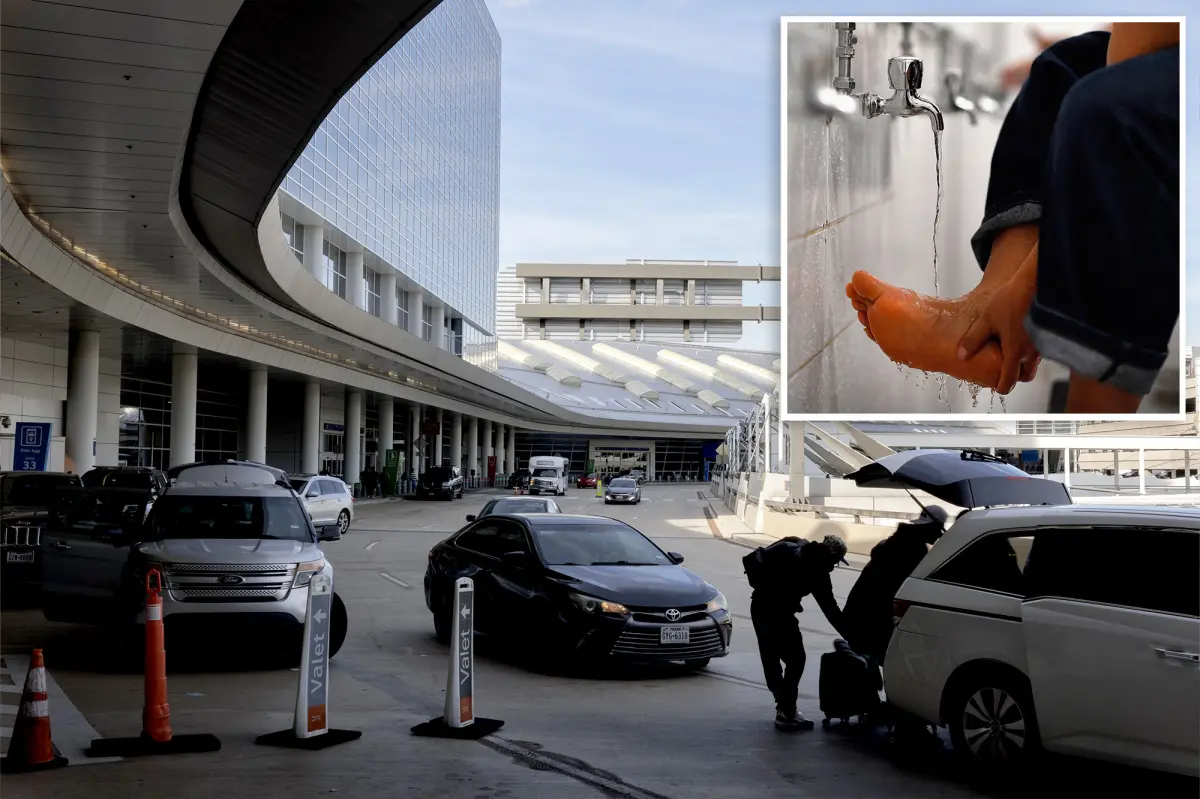
Dallas-Fort Worth International Airport, often colloquially referred to as DFW, is not merely a transportation facility; it is a sprawling, self-contained universe. Spanning nearly thirty square miles—an area larger than the island of Manhattan—it functions as a massive, humming crossroads for the entire planet, processing over eighty million passengers annually through its five massive terminals. Within this ceaselessly churning ecosystem of jet bridges, automated trams, and baggage carousels, a quiet yet significant infrastructural adjustment recently captured the attention of the public and the political sphere. According to official filings registered on July 31st with the Texas Department of Licensing and Regulation, the airport has embarked on a project to add dedicated Islamic foot wash stations, formally known as Wudu ablution stations, to the restroom facilities located within Terminal D. The project documentation outlines a precise, unglamorous scope of work: one station for men and one for women, added to the existing concourse-level restrooms. It is anticipated to cost a modest $300,000, a sum that is notably entirely privately funded, rather than drawing on public taxpayer money or airport operational fundschers. The expected completion date is set for the end of the current calendar yearcc. On its face, this initiative represents nothing more than a practical plumbing upgrade. Yet, as the bureaucratic paperwork surfaced into the public domain, it ignited a fiery and deeply polarized debate across social media, demonstrating how even the most objective, engineering-based decisions become cultural flashpoints in a politically fragmented nation. To grasp the true nature of this project, one must look beyond the sensational headlines and delve into the everyday, physical realities of a megahub where cultures, faiths, and logistical demands collide with astonishing regularity.
Paragraph 2: The Technical Specifics and Pragmatic Rationale
The precise details embedded in the regulatory filing strip away any sense of overt religiosity and expose the pure, utilitarian logic behind the construction. The documents specify that the “Project consists of adding Ablution stations to existing concourse-level restrooms in Terminal D, one Men’s ablution station in existing men’s restroom and one Women’s ablution station in the existing women’s restroom.” The language is dry, structural, and focused entirely on capacity and infrastructure. Crucially, the filing explicitly articulates the purpose behind the update: to “prevent water on standard restroom floors and protect sink counters.” This is an acknowledgment of a very real, recurring operational nuisance that janitorial and maintenance staff have likely dealt with for years. When a traveler attempts to wash their feet in a standard, high-mounted bathroom sink, the geometry is entirely wrong. Splashing occurs, water cascades over the countertops onto the floor, and the structural integrity of cabinets not designed for such submersion is compromised. The result is a perpetually wet, dangerously slippery floor that poses a slip-and-fall hazard to every passenger—athletic, elderly, or simply rushing to a connecting flight. The installation of low-level Wudu basins, which are essentially wide, gently sloping troughs placed inches from the floor with a large integrated drain, solves this engineering dilemma completely. By providing a dedicated space designed for the task, the airport ensures the water goes where it belongs. This move aligns DFW with a broad consensus found at other major international gateway hubs across the nation, including Chicago O’Hare and Indianapolis, which have long integrated such facilities to accommodate the physical reality of international travel, treating them as standard infrastructure rather than ideological statements.
Paragraph 3: The Human Dimension of the Traveler’s Journey
To truly humanize this construction project, one must step away from the blueprints and into the shoes of the millions of people who pass through Terminal D each year. This terminal handles a disproportionate share of long-haul, international arrivals, bringing in a rich tapestry of nationalities from the Middle East, South Asia, Southeast Asia, and Africa. For the practicing Muslim traveler, the ritual of Wudu—a meticulous cleansing of the hands, mouth, nostrils, face, arms, head, and feet—is a non-negotiable prerequisite before performing the five daily prayers. In a bustling airport environment, this spiritual act becomes a profound logistical challenge. Standard sinks are designed for handwashing, not foot washing. Imagine a weary traveler, weary from an eighteen-hour flight, attempting to hoist a leg into a shallow porcelain basin, turning the faucet on with an elbow, and awkwardly fumbling to rinse while trying to avoid soaking their clothing or splashing water across the mirror. The result is a source of immense embarrassment and physical discomfort. The floors become slick with tracked water, creating a genuine hazard for fellow passengers who follow. For the airport’s amenities team, this translates into constant mopping and a higher risk of maintenance calls for broken fixtures. Installing a low-level basin—one that allows a person to sit or crouch naturally and simply allow running water to cleanse their feet—transforms this stressful experience into a moment of quiet dignity. It acknowledges that a global hub must adapt to the diverse cultural habits of its users, not the other way aroundched. It signals an understanding that passenger comfort and safety are tethered to respecting the small, intimate requirements of daily life that travelers bring with them from home.
Paragraph 4: The Firestorm of Outrage and Political Anxiety
Despite the overwhelming logic of safety, sanitation, and passenger convenience that motivated the project, the announcement was met with a loud and fierce backlash from a segment of the American conservative online ecosystem. When the news circulated, reactions ricocheted across X (formerly Twitter) and various conservative news aggregators, with many users expressing visceral outrage. The rhetoric commonly accused the airport of pandering to a specific religion, or worse, of laying the groundwork for the encroachment of Sharia law into American public institutions. The comments sections filled with accusations of cultural surrender and the displacement of Western traditions. This conflagration of anger, however, stemmed from a fundamental misreading of the situation. The critics saw a religious insignia being erected; the airport saw wet tiles and a smashing sink counter. This disconnect between symbolic perception and practical reality is a hallmark of the modern culture war, where every gesture of accommodation is filtered through a lens of perceived group conflict. The outrage also ignored the critical fact of the funding: this was not an imposition of tax dollars to build a religious facility, but a privately funded initiative to solve an operational nuisance. The intensity of the rage indicated a broader societal anxiety about demographic change and the shifting character of public spaces, but it was also deeply inequitable, ignoring that these stations cater to a basic physical need that is intertwined with, but not exclusive to, religious practice.
Paragraph 5: The Voice of Reason Within the Movement
Amid the cacophony of alarmist posts, a moderating voice emerged from an unexpected source: conservative activist Ryan Fournier, known for his generally combative political commentary. In a series of social media posts, Fournier urged his followers to step back from the brink and examine the undeniable facts. “People are freaking out over foot-washing stations at DFW, but let’s look at the actual facts before jumping to conclusions. This isn’t about pushing an ideology—it’s basic airport management,” he wrote. Fournier systematically dismantled the conspiracy theories by highlighting two irrefutable elements: safety and precedent. He pointed out the obvious physical law that washing feet in a shallow sink results in soaked, slippery floors that break counters, creating a liability for the airport and a danger for all passengers. He then cited the standardization of infrastructure, noting that DFW, as one of the busiest travel hubs on the planet, is simply catching up to where places like Chicago O’Hare and Indianapolis have already been for years, which host interfaith rooms and these basins seamlessly to handle international traffic. His conclusion was a triumph of common sense over hysteria: “It’s just about keeping the bathrooms clean and preventing people from slipping on wet tiles. Plain and simple.” By framing the decision through the lens of conservative principles—efficiency, private funding, and operational bottom lines—Fournier effectively stripped the issue of any religious degree and reframed it as a smart business decision to prevent lawsuits and preserve infrastructure.
Paragraph 6: The Larger Reflection on Practical Humanity
The noisy controversy surrounding the DFW foot wash stations ultimately serves as a powerful reminder of the chasm between public perception and administrative reality. Airports are uniquely pragmatic institutions. They operate on strict schedules, tightly measured budgets, and a relentless focus on throughput and safety. They cannot afford the luxuries of ideological rigidity; they live or die by their operational efficiency. In this mercilessly practical environment, a Wudu basin is about as controversial as a drinking fountain or an accessible restroom stall. It is a piece of design that solves a specific problem—preventing wet floors, reducing maintenance loads, and offering a cleaner, more dignified experience for a significant portion of the traveling public. The furor reveals a deep-seated unwillingness by some to accept that accommodating diversity does not mean erasing one’s own identity; it simply means making shared spaces function better for a wider array of people. The real human story here is not one of religious conquest or cultural dilution, but rather one of adaptation. When a society’s shared infrastructure quietly adjusts to meet the needs of its global neighbors—funded by private generosity to solve a safety issue—it demonstrates a functional, mature ability to coexist. A civilization that can construct a low-level basin to prevent a person from slipping is a civilization that respects nuance, prioritizes collective well-being, and understands that unity is not found in uniformity, but in the graceful management of our differences. In the grand scheme of human interaction, a wet floor is a more profound source of friction than a difference in theology, and rightly solving the former is a small, beautiful victory for practical humanity.