



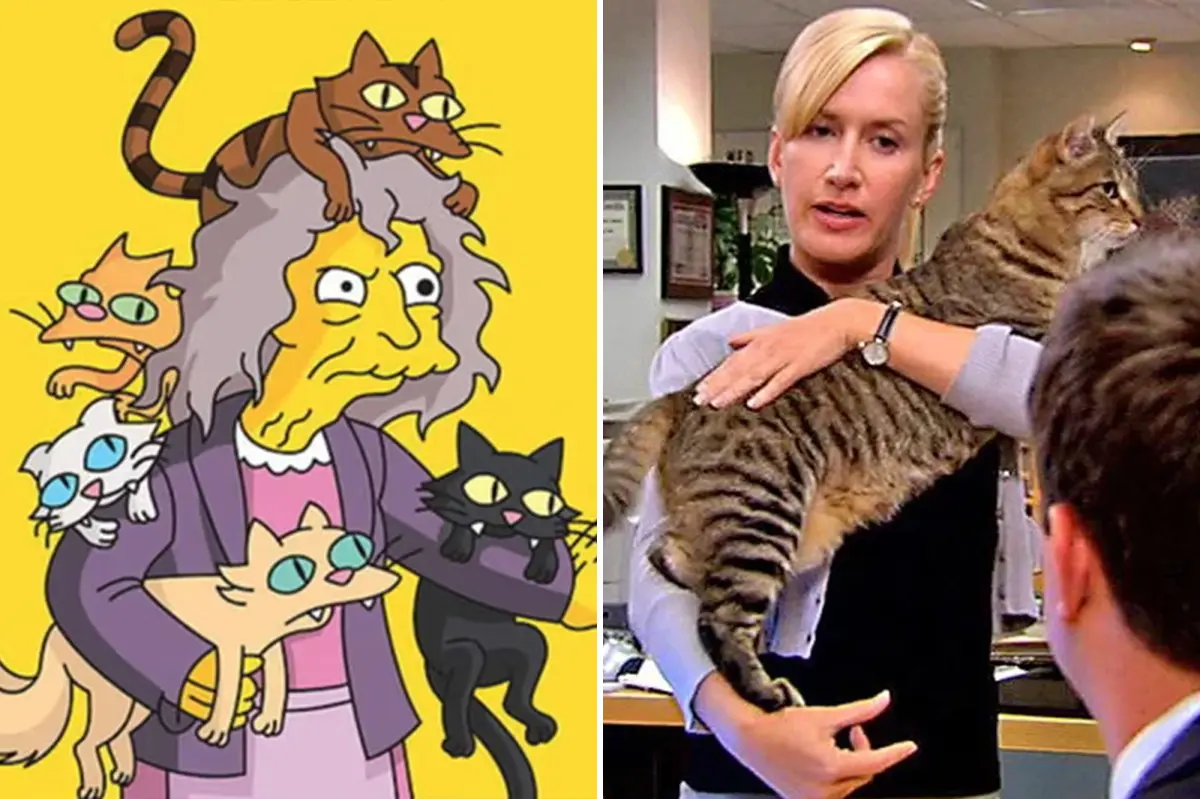
For generations, the cultural archetype of the “crazy cat lady” has lingered in the public consciousness as a cautionary caricature—a portrait of an isolated, eccentric woman who, unable to navigate the complexities of human relationships, retreats into a cluttered home filled with meowing felines. This persistent stereotype has long been used to police women’s independence, implying that a life spent without traditional family structures is inherently lonely, unfulfilled, and slightly unhinged. However, modern scientific inquiry is finally stepping in to challenge these deep-seated cultural biases and shed a reassuring, objective light on the true nature of our relationships with our domestic companions. A groundbreaking study conducted by researchers at the University of Lucerne in Switzerland has turned these archaic assumptions on their head by examining the lives of over 2,300 Swiss adults from diverse backgrounds. The researchers sought to understand the invisible, complex emotional threads that bind humans to their pets, examining how variables like gender, lifestyle, and animal type shape these profound attachments. What they discovered was a deeply nuanced tapestry of connection, proving that while gender does indeed play a role in how closely we bond with our animals, it does not do so in the negative, pathological way that society has long assumed. Humanizing this research means recognizing that our deep desire to connect with animals is not a symptom of psychological failure or social isolation, but rather a beautiful expression of our innate human capacity for empathy, love, and nurturing. The warmth of a dog resting its head on your lap after a difficult day, or the soothing, rhythmic purr of a cat curled up beside you in the quiet of the night, are not mere substitutes for human touch; they are vital, therapeutic interactions that enrich our emotional lives in ways that traditional societal metrics often fail to recognize or measure. By shifting the conversation from mockery to understanding, science is helping us appreciate that these bonds are a testament to our shared need for connection.
While we often long for science to offer simple, heartwarming fairy tales about how animals instantly heal our broken hearts and solve our physical ailments, the reality uncovered by the Swiss researchers was far more complex, vulnerable, and beautifully human. Surprisingly, the study found no evidence to suggest that simply owning a pet acts as an automatic, magical cure-all for life’s physical, mental, and emotional challenges. In fact, pet owners surveyed in the study reported poorer overall physical health outcomes and a higher likelihood of smoking cigarettes compared to those who lived without any animal companions. Furthermore, participants who reported relying most heavily on their pets for emotional support also tended to report higher levels of loneliness and lower overall psychological well-being. At first glance, these statistics might seem discouraging, but looking at them through a lens of empathy reveals a much deeper, more compassionate truth about the role animals play in our lives. Pets do not cause our struggles, nor do they drive us toward unhealthy coping mechanisms; rather, they serve as gentle, non-judgmental anchors during our darkest times when human support systems might feel out of reach or overwhelming. When chronic illness limits our social lives, when the heavy weight of grief sets in, or when the anxiety of modern life becomes too much to bear, we naturally turn to animals for comfort because they demand nothing from us but our simple presence. A dog does not care about our career achievements or physical limitations, and a cat does not judge us for our struggles with mental health, offering instead a safe harbor of unconditional acceptance in a world that constantly demands perfection. Therefore, the higher levels of distress observed among deeply attached pet owners are not a sign of a dysfunctional bond, but a testament to the pet’s invaluable role as an emotional lifesaver for those who need it most. By acting as steady anchors in the storm, our pets offer a unique form of quiet companionship that helps us survive our hardest seasons, proving that their value lies not in curing our pain, but in sharing it.
To truly understand the depth of the human-pet bond, we must look past the simple label of “owner” and explore the daily, living reality of these relationships, which are as diverse and intricate as any human friendship. The Swiss researchers highlighted that two people might share their lives with the exact same breed of dog, yet their psychological and emotional connections to those animals could be entirely different. The study found that the strongest, most resilient bonds were consistently reported by women, individuals who dedicated significant portions of their day to interacting with their animals, and those who kept dogs as companions. These highly attached owners do not view their pets as property, status symbols, or mere hobbies, but as unique, sentient individuals with whom they share a profound, non-verbal emotional language. Building such a connection is an active, deeply engaging process that requires patience, vulnerability, and a genuine willingness to learn and adapt. Anyone who has ever welcomed an animal into their life knows the unique mixture of joy and bewilderment that comes with decoding another species’ habits, preferences, and personal boundaries. It is a slow, rewarding dance of mutual understanding—learning to recognize the subtle difference between a playful nudge and a request for quiet space, or figuring out the exact spot behind the ears that coaxes out a sigh of pure contentment. This process of mutual adaptation is highly humanizing; it teaches us to listen with our eyes, to be patient with silence, and to respect boundaries that are different from our own. As pet owners frequently share in lighthearted anecdotes online, getting to know a new animal companion is guaranteed to present us with baffling quirks that stump us, yet it is precisely these eccentricities that make the bond so deeply personal, irreplaceable, and ultimately transformative. By dedicating time and heart to understanding our pets, we build a bridge of empathy that spans the species divide, transforming our homes into spaces of shared respect.
Perhaps no animal companion has been as unfairly maligned throughout history, or as deeply tied to negative psychological stereotypes, as the domestic cat, which has long been unfairly associated with anti-social behavior and emotional fragility. The image of the solitary cat owner, supposedly retreating from society due to an inability to form healthy human relationships, is a cultural myth that has persisted for centuries, tracing its roots back to medieval superstitions. Fortunately, modern psychological research is actively dismantling this harmful narrative, showing that a deep love for felines is in no way a marker of mental instability, social deficiency, or an inability to connect with other humans. A comprehensive 2019 study, which analyzed the lives of over 500 pet owners, explicitly looked for links between cat ownership and psychological distress, finding absolutely no evidence that cat lovers suffer from higher rates of depression, anxiety, or relationship difficulties than dog owners or those without pets. To understand why this stereotype is so profoundly misguided, one must understand the unique, consent-based nature of the feline bond, which is built entirely on trust, respect, and mutual autonomy. Unlike dogs, who are often naturally eager to please and easily socialized, cats are famously independent creatures who require us to earn their affection slowly, consistently, and entirely on their own terms. This means that a close relationship with a cat is not a sign of a person who has given up on social connection, but rather a reflection of someone who appreciates subtlety, values independence, and finds deep peace in quiet, low-demand companionship. The gentle weight of a purring cat on a quiet evening offers a unique form of daily mindfulness, providing a soothing grounding mechanism that helps quiet the stressful noise of the modern world and reminds us of the beauty of quiet connection.
This scientific vindication of pet owners aligns perfectly with broader, liberating shifts in how we define a happy, successful, and complete life in the modern world. For generations, societal expectations dictated that adulthood must follow a single, rigid path centered around marriage and human parenthood, and those who chose a different trajectory—particularly women—were often viewed with a mixture of pity and suspicion, dismissed as lonely eccentrics who used animals to fill an empty void. Today, however, a growing body of sociological research paints a dramatically different, far more empowering picture of childfree pet owners, revealing that many of these individuals report high levels of financial freedom, substantial personal savings, and a profound lack of regret regarding their life choices. Far from being a tragic, desperate compromise or a sad consolation prize, choosing to share one’s life with animal companions rather than raising children is increasingly recognized as a deliberate, joyful, and deeply liberating lifestyle decision. This choice allows people to channel their nurturing instincts, experience the immense emotional rewards of companionship, and build warm, vibrant homes, while simultaneously maintaining the personal freedom to pursue demanding careers, travel the world, and invest in their own self-care without the monumental, lifetime pressures of human parenthood. This demographic of proud, modern pet parents is actively rewriting the cultural definition of what constitutes a family, demonstrating that a home filled with the laughter, play, and unconditional love of a pet is entirely complete, nurturing, and emotionally whole. By proving that childfree pet owners are often thriving financially, socially, and psychologically, modern research is helping to dismantle the outdated, patriarchal myth that a woman’s worth and happiness are tied solely to motherhood, instead celebrating the diverse and beautiful ways in which people are consciously designing lives of autonomy, abundance, and genuine peace.
Ultimately, the science surrounding our relationships with our animals reveals that the “crazy cat lady” caricature is not only outdated, but fundamentally disconnected from the beautiful, complex reality of the human experience. When we look past the lazy cultural punchlines, we find that the human-animal bond is a powerful testament to our capacity for empathy, showing that our hearts are large enough to form deep, life-affirming attachments across species boundaries. Whether we are seeking the exuberant, loyal companionship of a dog or the quiet, independent grace of a cat, our pets do not isolate us from the world; rather, they ground us, teach us patience, and provide us with a safe space to be entirely ourselves. As the research from Switzerland and beyond reminds us, we must stop pathologizing the deep emotional connections people form with their animals and instead recognize them as a healthy, vital source of comfort in an increasingly stressful and fragmented society. In a world that can often feel cold, demanding, and hyper-critical, the unconditional warmth of a pet is a rare and precious gift that deserves to be celebrated rather than mocked. By embracing the diverse ways humans find love, solace, and meaning—whether that is through traditional families, chosen social circles, or the quiet companionship of our furry friends— we can build a more compassionate, understanding society that values connection in all of its wonderfully diverse forms. The next time we see someone deeply devoted to their animal companions, we should not see loneliness or eccentric behavior, but rather a profound display of love, resilience, and the enduring human spirit finding peace in the natural world. In doing so, we honor the ancient partnership between humans and animals, recognizing that our lives are infinitely richer, kinder, and more complete when we share them with the creatures who walk, run, and purr alongside us.