





What was supposed to be a routine, peaceful afternoon drive through the scenic expanse of West Virginia quickly turned into a highly terrifying medical emergency that one distraught family will never forget. Kim Staggs had recently picked up her teenage daughter, Natalee, from a very pleasant, quiet visit at her grandparents’ cozy home, enjoying the comforting, familiar rhythm of their daily routine together. Unbeknownst to either of them, a silent, volatile threat lay waiting in the back seat of their car: a small, popular, gelatinous squishy toy that had been accidentally left behind. As the hot afternoon sun beat down, the vehicle acted like a solar oven, heating the interior to hazardous, extreme levels. They had not even traveled a single mile down the road when the peaceful silence was shattered by a sudden, blood-curdling scream from the back, a sound so agonizing that it instantly sent a chill deep into Kim’s soul. In that instant, Kim’s heart sank entirely as she realized something was terribly, catastrophically wrong with her sweet child. The sheer panic of the moment hung heavily as Kim desperately sought a safe place to stop, her thoughts racing through various nightmares. She could not comprehend how an ordinary, cheap toy could cause such intense, immediate harm, transforming an otherwise beautiful summer afternoon into a scene of shocking, unexpected physical trauma and deep parental terror. Her mind spun wildly as she looked back to see her daughter writhing in intense discomfort. Little did she know that this minor, everyday household item had evolved into a dangerous, pressurized bubble of boiling liquid. This terrible event stands as a vivid, painful reminder of why we must remain vigilant about what we store within the closed, hot spaces of our family vehicles. No parent expects a simple, soft object to inflict such sudden, agonizing damage upon their child, yet here they were, facing a horrifying situation that threatened to scar their lives deeply in ways they never could have possibly imagined before this day.
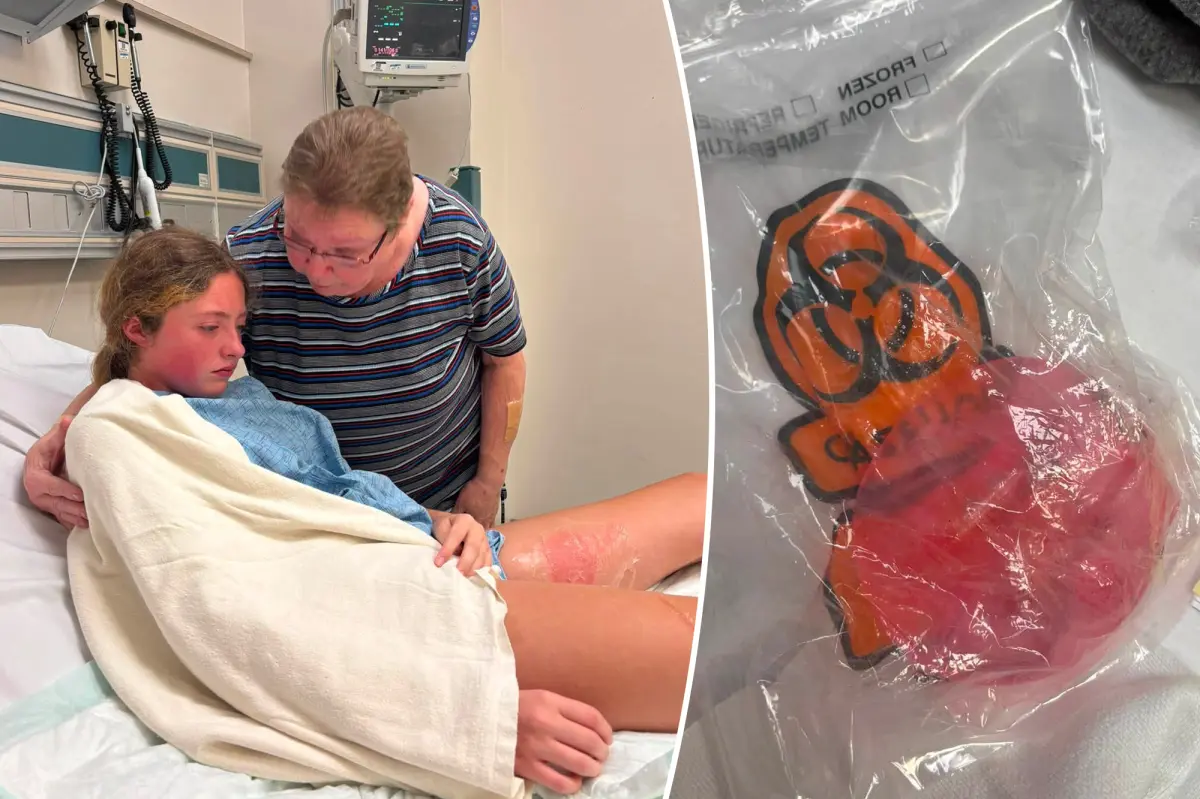
The culprit behind this shocking incident was a highly popular, modern sensory novelty toy, very similar to the famous viral mystery dumplings or NeeDoh stress cubes, which have become widely beloved by young children around the world for their incredibly soft, squishy, and highly satisfying elastic textures. Unfortunately, the chemical components that make these products so pleasingly tactile—primarily their delicate, synthetic outer skins and incredibly thick, viscous silicone-based gel interiors—are exceptionally prone to severe structural changes when exposed to high temperatures. Under the extreme, concentrated heat of the locked car, the fluid inside the toy began to expand dangerously, stretching the outer membrane past its limits. When Natalee climbed in and sat down, her movement triggered the eruption of this pressurized bubble, spraying boiling-hot, toxic gel all over her exposed legs. When Kim looked back, she was absolutely horrified to see her daughter coated in a translucent, sticky liquid that she later described as resembling hot, melted taffy. Unlike cooler, lighter liquids that run off easily, this dense, glue-like silicone clung tenaciously to Natalee’s delicate skin, effectively sealing the extreme heat against her flesh and causing deep, immediately painful chemical and thermal burns. Every second that the thick gel remained in contact with her legs, it continued to scorch the tissue, making it profoundly difficult to clean or soothe without specialist intervention. The sight of the girl’s thighs, visibly blistered and glistening as though thick oil had been poured onto them, sent a wave of pure adrenaline through Kim, who knew she had to reach a critical care facility as fast as humanly possible. She immediately navigated her car toward the hospital, praying that the damage would not lead to permanent scarring or long-term mobility issues for her suffering daughter, whose painful cries continued to echo throughout the cabin as they raced desperately down the highway, hoping for some instant relief from this bizarre, completely nightmare situation that had suddenly fallen upon their peaceful, ordinary afternoon in their native West Virginia countryside home.
Upon arriving at the emergency room, medical staff immediately assessed the situation, recognizing the unique and highly dangerous chemical nature of the hot silicone residue. The team worked tirelessly to cleanse Natalee’s legs using sterile saline solutions and specialized cooling agents designed to draw the residual heat away from her damaged skin tissues and carefully peel back the lingering, gluey substance. Fortunately, their rapid efforts were successful, and they managed to treat the severe thermal burns before they converted into third-degree, life-threatening injuries. As the immediate danger passed, an experienced nurse pulled Kim aside to deliver a profound message, telling her that she was not merely lucky to have avoided worse, but deeply blessed. The nurse explained that if the squishy toy had contained a different, more reactive chemical mixture, or if the explosion had occurred higher up, the outcome could have been incredibly grim. A burst of that scale, had it occurred near her head, could have easily hit Natalee in her face, causing permanent blindness, devastating scarring, or direct inhalation burns. This realization shook Kim to her very core, transforming her immense relief into a passionate, urgent determination to warn other parents about the deceptive, hazardous nature of these seemingly innocent items. Determined to prevent another family from suffering a similar tragedy, she decided to share her story widely, highlighting how a simple, common plaything left in a vehicle on a warm day can morph into an explosive, dangerous threat within minutes. Her public warnings resonated with parents everywhere, shedding light on a hazard that few had ever considered before. Kim’s goal is to ensure that every household understands that checking the backseat of the car for these thermal hazards is not merely a recommendation, but an absolute, non-negotiable safety requirement to protect our children from suffering, emphasizing that a quick scan of the car’s interior can save a child’s life and spare a parent from witnessing the heart-wrenching horror of a completely preventable, terrifying, and painful physical trauma this way.
Sadly, Natalee’s painful experience is not an isolated occurrence, but rather coordinates with a highly dangerous global trend involving squishy sensory toys that has recently been fueled by popular online media applications, most notably the platforms like TikTok. In search of virtual entertainment, millions of young viewers participate in viral challenges, one of which encourages kids to place these highly synthetic, fluid-filled shapes directly into household microwaves. The visual goal of this reckless trend is to watch the squishy items swell up into massive, bloated proportions for a satisfying video, totally disregarding the fact that doing so creates a highly pressurized, unstable physical hazard. When subjecting a gel-filled silicone structure to rapid, intense thermal energy, the chemical compounds inside are spoiled past their natural threshold, turning the playful fidget item into a volatile, explosive projectile. Many innocent children have suffered severe bodily harm as they attempt these dangerous digital stunts, unaware of the fundamental physical and chemical principles that dictate how locked pressure and heat react within closed, elastic structures. This alarming situation has sparked heavy criticism from safety experts, who are urging manufacturers to issue clear, permanent safety warnings on all product packaging to deter such hazardous experimentation. Millions of these cheap, unregulated toys are sold worldwide without any dynamic labeling, leaving parents in the dark about the potential chemical dangers lurking within their children’s Toyland. As long as popular social media networks continue to broadcast and reward these hazardous viral challenges, the likelihood of more young children sustaining agonizing burns remains extremely high, highlighting an urgent need for robust supervision, enhanced parental involvement, and aggressive educational efforts to thoroughly teach youth that the virtual magic shown online can have catastrophic, scarring, and life-changing real-world physical consequences for their bodies, their safety, and their long-term health if they choose to blindly follow these incredibly dangerous trends without thinking about the severe hazards that these unstable and highly pressurized toys present when subjected to any direct form of extreme thermal heat exposure today.
To understand the vast global scope of this danger, one only has to look across the Atlantic to the United Kingdom, where another innocent child fell victim to this exact viral phenomenon. In May, a bright ten-year-old girl named Bella had her life turned upside down by a tragic accident involving a NeeDoh squishy toy. Intrigued by the viral videos she had observed on social media, Bella decided to microwave the soft cube in her home, eager to watch it swell up in size. However, the moment she opened the microwave door, the highly pressurized toy exploded with incredible force, showering her face with scalding, molten chemicals. The ensuing scene was completely direct out of a horror film, with her mother, Charlotte, describing her daughter’s face as looking like it had been violently shattered or assaulted. Bella was left with traumatizing, painful burns, and her long road to physical recovery has been mirrored by severe psychological trauma, leaving her deeply afraid of the microwave and other basic household items. Charlotte has joined the fight to demand that these products carry explicit, permanent warning labels, arguing that no household item designed for kids should carry such a devastating, life-altering risk. The horrifying parallels between Bella in the United Kingdom and Natalee in West Virginia highlight a crucial, undeniable truth: whether the heat is applied actively through a home microwave or passively through a greenhouse-like parked car, the chemical results are identical. These popular silicone products, when heated, transform from soft, satisfying stress relievers into dangerous, molten chemical weapons that can ruin a child’s life in an instant. By stepping forward to share their painful private tragedies, both Charlotte and Kim hope to build a strong defensive shield of active awareness, ensuring that no other parents have to experience the dreadful, heartbreaking sight of seeing their beloved child suffer from such a catastrophic, completely preventable, eye-opening, and terrifyingly explosive accident in their daily lives ever again. This is a critical shared mission for both moms.
As global temperatures continue to rise during the peak summer months, the lessons we must draw from these stories become absolutely non-negotiable for families everywhere. Inside a car locked under direct sunlight, temperatures can climb past a sweltering one hundred and seventy degrees, creating a space hot enough to compromise the structural integrity of almost any synthetic material. It is imperative that parents establish a rigorous, daily habit of searching their vehicles for any stray sensory items, plastic toys, or drink containers before locking up. Furthermore, toy manufacturers must face stricter industry accountability, requiring prominent, warning labels that explicitly warn consumers against leaving these objects inside vehicles or exposing them to high heat. Until such laws are mandated, the responsibility remains with parents and guardians, who must actively educate their children about chemical issues. No child should ever have to their health compromised by toys that are meant to bring laughter and comforting play. By understanding the science of these thermal incidents and actively dismantling dangerous social media trends, parents can protect their little ones from hidden dangers. Ultimately, the stories of Natalee and Bella serve as a beautiful call to action, urging us to look past the colorful, satisfying skin of modern playthings and always evaluate the real physical realities that exist beneath. Through steady vigilance, shared parenting knowledge, and safety awareness, we can make sure our cars remain safe and our children’s play stays purely joyful. After all, the true worth of any sensory toy is not found in its viral appeal on a screen, but in the clean, happy, and safe memories it leaves behind for our precious families, ensuring that childhood remains sweet and free from such physical horrors. Let us commit to keeping our eyes open, our hearts alert, and our hands ready to remove any potential dangers before they strike, since the protection of our children will always be our single most important and sacred duty, a daily promise that we must never fail to uphold for them always.