




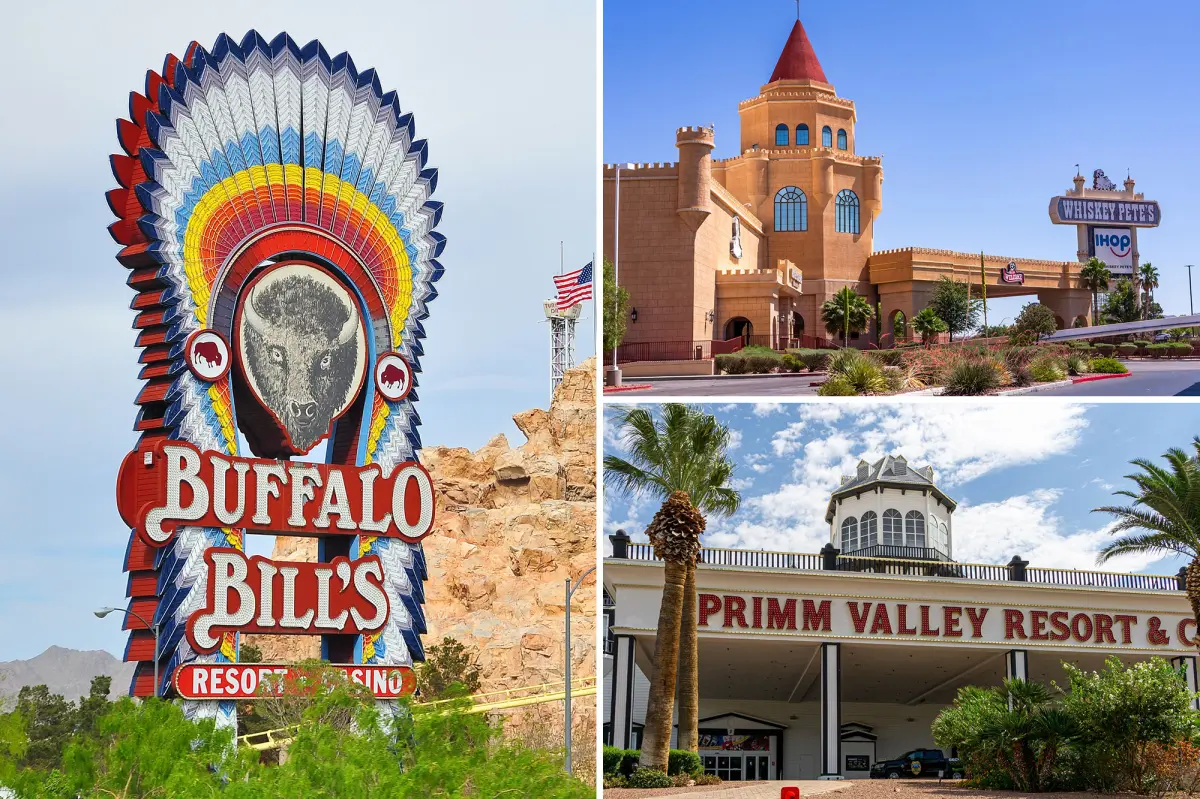
For generations of Southern Californians, the grueling, sun-scorched journey through the barren expanse of the Mojave Desert along Interstate 15 has been defined by a singular, glittering milestone rising like a mirage from the shimmering heat of the dry lake beds: Primm, Nevada. Once known to old-timers simply as State Line, this dusty border outpost has long served as a crucial psychological and physical threshold—a vibrant neon oasis where weary travelers can finally stretch their legs, indulge in a cheap prime rib dinner, and hear the exciting clatter of their physical slot machines before making the final, impatient push toward the glowing horizon of the Las Vegas Strip. To many who make this regular pilgrimage, Primm is far more than just a convenient refueling stop; it is a rich repository of cherished road-trip memories, a place where families gather, and where hopeful gamblers test their luck under the blazing desert sun. The iconic, towering silhouette of the Desperado roller coaster at Buffalo Bill’s and the rustic, castle-like facade of Whiskey Pete’s have stood for decades as proud, nostalgic sentinels of Nevada’s gaming heritage, welcoming millions of travelers who cross the border with high hopes and empty cups. However, this beloved gateway and historical landmark was recently pushed to the absolute edge of financial ruin, facing a sudden and catastrophic shutdown that threatened to plunge the entire community into complete and permanent darkness. Just when it seemed that the neon lights would flicker out forever on the highly symbolic date of Independence Day, a dramatic, eleventh-hour rescue operation engineered by the founding family breathed new life into the destination, sparing Primm from becoming another forgotten ghost town of the American West.
At the absolute heart of this terrifying crisis were the everyday human lives that give Primm its warmth and heartbeat—most notably the 344 dedicated local employees who faced the sudden, devastating prospect of losing their livelihoods with almost no warning. When a cold, official corporate termination notice was distributed on May 5th, declaring that the Primm Valley Resort, Buffalo Bill’s, Whiskey Pete’s, the Primm Center, and the Flying J truck stop would all close their doors permanently, a wave of shock and profound anxiety washed over this tight-knit desert community. For these hard-working individuals, many of whom have spent decades polishing brass, waiting tables, dealing blackjack under the neon lights, and maintaining these massive properties, the announcement was not just a sterile economic data point, but a personal tragedy that threatened their homes, families, and geographic survival in an isolated region. Sensing the impending doom of the town that bears his family’s proud name, Cory Clemetson—the grandson of Primm’s legendary and colorful founder, Ernie Primm—stepped forward with a fierce sense of ancestral duty, personal pride, and determination. Refusing to let his grandfather’s hard-won desert dream dissolve into the dusty winds of corporate abandonment, Clemetson mobilized a frantic, highly complex campaign to secure a new management agreement, keeping the preservation of these 300-plus local jobs at the absolute forefront of his negotiations, proving that in Primm, loyalty to the people always comes before profit.
The impending collapse of Primm was the culmination of years of shifting economic tides, changing consumer behaviors, and unprecedented industry challenges that have slowly eroded the traditional roadside resort model. For over fifteen years, the sprawling properties had been kept on life support under the corporate stewardship of Affinity Gaming and its principal owner, Z Capital, but the rapidly evolving landscape of West Coast gambling had slowly chipped away at Primm’s competitive edge. The explosive growth of luxurious, state-of-the-art tribal casinos throughout Southern California meant that travelers no longer had to embark on a multi-hour desert drive to experience the thrill of a casino floor, gradually transforming Primm from an essential, bustling weekend destination into a quick, transactional refueling station. This deeper structural shift was dramatically accelerated by the unprecedented global catastrophe of the COVID-19 pandemic, which completely shut down international and domestic tourism, severely altered regional travel patterns, and left Primm struggling to recapture its former glory in a hyper-competitive, modernized market. Representatives from Affinity Gaming openly acknowledged that the remote outpost had become a significant, unsustainable cash drain and a constant management distraction for the corporation, sparking their sudden decision to cut their losses, issue layoffs, and shut down operations. This corporate departure forced the Primm family to race against a rapidly ticking clock, desperately searching for a visionary and courageous partner willing to look past the immediate red ink on the balance sheets.
In a stunning, cinematic plot twist that defied all pessimistic expectations, Cory Clemetson triumphantly shattered the growing sense of dread by revealing that a highly respected, unnamed gaming operator had officially stepped forward to take over, guaranteeing that the lights would stay on. The timing of this miraculous breakthrough could not have been more poetic or emotionally charged; what was originally scheduled to be a day of quiet surrender, professional mourning, and mass unemployment on July 4th was instantly transformed into a joyous celebration of community resilience and economic survival. The immense wave of relief that swept through the small valley was instantly visible on the faces of the workers, who went from packing up their lockers in despair to preparing for a bright, stable future under enthusiastic new leadership. This eleventh-hour reprieve illuminated the deep, unbreakable bond between the unique desert landscape and the courageous people who choose to build their lives within it, proving that local solidarity can successfully triumphs over corporate apathy. By standing firm and refusing to let the town go dark, the advocates for Primm demonstrated that even in an era dominated by cold spreadsheets and corporate consolidation, the human element—the shared memories of travelers, the legacy of a pioneering family, and the dedication to protecting working families—can still steer the course of history and save a town from ruin.
While the precise identity of the incoming operator remains a closely guarded secret during the delicate, final stages of the transition, the feverish speculation surrounding the deal has injected an unprecedented level of excitement into the regional gaming and hospitality sectors. In the early stages of the crisis, rumors had swirled around LV Petroleum, a major Las Vegas-based company that operates a massive network of eighty-four truck stops across thirty-four states, leading many to fear that Primm would be stripped of its whimsical casino charm and converted into a sterile, corporate logistical truck stop. However, Clemetson quickly clarified that while initial discussions did occur with the petroleum giant, the search rapidly expanded to include several highly respected, deeply experienced groups with specialized expertise in running full-scale casinos, resort hotels, and high-volume retail hubs. This deliberate strategic pivot reassures the public that the revitalized Primm will not lose its soul or its historic identity, but will instead continue to offer the unique, multi-faceted entertainment experiences that have drawn travelers for decades. The incoming operator will face the grand challenge of breathed fresh air into these classic properties, finding innovative ways to modernize retro landmarks like Whiskey Pete’s, reinvesting in family attractions like the iconic roller coaster, and crafting a vibrant marketing campaign that convinces a new generation of high-speed highway drivers to pull over, slow down, and experience the nostalgic magic of classical Nevada hospitality.
As the dust finally begins to settle on this highly dramatic chapter of desert history, the miraculous survival of Primm stands as a powerful, inspiring testament to the enduring magic of the American road trip and the stubborn, unyielding resilience of Nevada’s gaming pioneers. The long, lonely highways of the American West are famously littered with the decaying ghost towns of yesteryear—places that failed to adapt and were quietly reclaimed by the desert sands—but Primm has fiercely resisted that tragic fate, proving that its position at the gateway to the Silver State is far too culturally significant to be abandoned. The brightly colored neon signs of Primm Valley, Buffalo Bill’s, and Whiskey Pete’s will continue to pierce the vast, starry Mojave night sky, serving as a welcomed beacon of comfort for millions of future travelers and a proud monument of triumph for the local community that fought so hard to save it. Ultimately, this hard-won victory guarantees that Ernie Primm’s original, mid-century dream of a welcoming, oasis-like sanctuary at the state line remains vibrantly alive, serving as a poignant reminder that behind every spinning slot machine, fast-food counter, and neon light are real human lives, deep-seated traditions, and a shared history that is worth fighting for. With a new operator poised to guide Primm into a bold new era, the residents, workers, and travelers who love this unique desert outpost can look toward the horizon with profound hope, knowing that the ultimate pit stop will continue to sparkle for decades to come.