


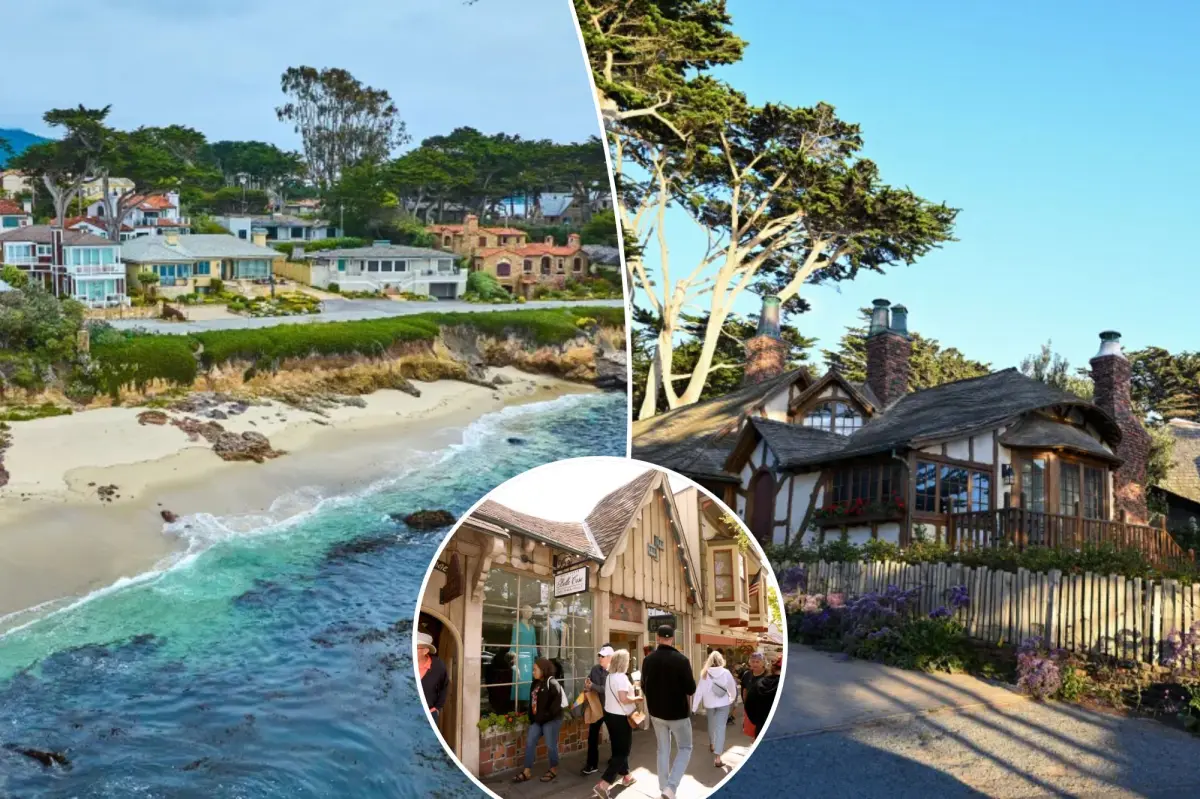
California has never lacked for beautiful places. From the jagged cliffs of Big Sur to the sun-bleached beaches of Malibu, from the towering redwoods of the north to the desert blooms of the south, the Golden State is practically a catalog of natural wonders. So when Architectural Digest set out to name the prettiest town in California, the competition was fierce. Yet the magazine ultimately crowned a tiny, misty enclave on the Monterey Peninsula: Carmel-by-the-Sea. With its sugar-white sand beaches, the painstakingly restored Carmel Mission, and a downtown that looks like it was lifted from the pages of a fairy tale, Carmel is the kind of place that makes visitors slow down, lower their voices, and simply stare. Architectural Digest explained that it had looked for one standout town, “especially drawn to those that are both stunning and abundant in culture.” Carmel, with a permanent population of only about 3,000, somehow packs an extraordinary amount of both into a few square miles. There are cobblestone alleys, gingerbread cottages, art galleries tucked into every corner, and the endless soundtrack of waves crashing against the shore. But what makes the honor feel so right is that Carmel is not just a pretty face. It is a place with a stubborn, artistic, wonderfully quirky soul, and that soul has been attracting dreamers, painters, writers, and celebrities for more than a century.
That celebrity magnetism is impossible to ignore. Architectural Digest noted that Carmel has lately become a favorite hideaway for high-profile couples, including Taylor Swift and Travis Kelce and Bradley Cooper and Gigi Hadid, who have been spotted enjoying the town’s quiet streets and dramatic coastline. But the star-studded history goes back much further. Brad Pitt and Betty White both called Carmel home at different points in their lives, and Clint Eastwood, now in his nineties, has been synonymous with the town for decades. Eastwood did more than just live there; he served as mayor from 1986 to 1988, proving that even Hollywood royalty could roll up their sleeves and govern a small town. In 2024, his former Spanish-revival mansion in Carmel was listed for sale at $21 million, giving fans and wealthy buyers alike a chance to own a slice of cinematic history. For a village with a population smaller than many apartment buildings, that level of star power is remarkable. Yet Carmel wears its fame lightly. It has also been named the top spot in the country to propose, celebrated for its abundant art galleries and fine dining, and included in WorldAtlas’ list of the best weekend escapes on the West Coast, thanks in part to the breathtaking Point Lobos State Natural Reserve and the pristine white sands of nearby Carmel Beach. Last year, HGTV put it on its list of the 50 Best Small Towns in America. The accolades keep coming, but locals seem less impressed by the awards than by the simple rhythms of fog, tide, and the seasons.
Perhaps the most endearing thing about Carmel is its refusal to be like everywhere else. For decades, the city’s municipal code required homes and parcels to be identified not by conventional street numbers but by their location relative to the nearest cross-street intersection. A typical address might read something like “Between 11th & 12th on Camino Real,” which sounds charming in a storybook kind of way but becomes less charming when you are trying to deliver a package, find a friend’s house in the fog, or, more urgently, direct an ambulance. The Sea View Inn, for example, was known simply as the inn “Between 11th & 12th on Camino Real.” For years, residents and visitors navigated by landmarks, intuition, and a willingness to get lost. That romantic approach to geography worked fine for a while, but it created real challenges for emergency crews trying to save precious minutes in a crisis. It also made life harder for delivery drivers, ride-share passengers, and anyone who has ever tried to explore a new town after dark. The debate over whether to introduce standard addresses became one of the defining conversations in Carmel’s modern history, pitting preservationists who cherished the town’s quirky tradition against pragmatists who simply wanted to be able to find their way home.
In the end, convenience and safety won out. After years of research, public feedback, and what the city described as spirited debate, Carmel finally opted in to a standardized address system. The overhaul was designed to help emergency crews locate homes faster and to make navigating the storybook town easier for residents and visitors alike. It was a decision that many saw as inevitable, especially in a community where the median age is 68.5, nearly double that of California as a whole. In a rapidly aging population, the difference between a response time of four minutes and eight minutes can be enormous, and a street number on a house can save a life. The move did not erase the town’s charm; the fairy-tale cottages, the cobblestone lanes, and the winding ocean views all remain exactly where they were. But it did bring Carmel a little more in line with the practical realities of the modern world. Some longtime residents mourned the loss of yet another tradition, while others quietly welcomed the change, relieved that they no longer had to explain to visiting grandchildren how to find the house with the blue shutters near the crooked cypress tree. It is a familiar story in small towns across America: the tension between preserving character and embracing progress can be agonizing, but sometimes the right answer is simply to make life safer and a little less confusing.
The town’s older demographic helps explain some of its more recent decisions, including one that made national headlines in 2025: Carmel voted to ban pickleball over noise complaints. The sport, beloved across the country for being accessible and social, produces a distinctive, rhythmic popping sound that some find cheerful and others find maddening. In a quiet coastal community where many residents prize peace and solitude, the sound of pickleball paddles echoing across the morning air was too much to bear. The ban was met with a mix of laughter and understanding. To outsiders, it seemed like the ultimate sign of a town that had officially become too precious for its own good. To locals, it was simply common sense: Carmel has always been a place that favors calm over chaos, and if that means forgoing a noisy sport, so be it. The decision also reflected the town’s famously independent streak. This is, after all, a place that long refused to number its homes and has a median age nearly double the state average. It is a community that values tradition, quiet, beauty, and above all, the right to do things its own way. The pickleball ban was less an act of grumpiness than a declaration of identity: Carmel by the sea, where the loudest thing you should hear is the waves.
So is Carmel-by-the-Sea truly the prettiest town in California? Architectural Digest certainly thinks so, and it is hard to argue with the evidence. But what makes Carmel special is not just its postcard-perfect scenery. It is the way the town balances beauty with character, fame with privacy, and tradition with necessity. It can charm tourists and celebrities while still maintaining the close-knit feel of a tiny village. It can hold on to its fairy-tale cottages and cobblestone alleys even as it installs standardized addresses to help emergency responders. It can ban pickleball and still welcome millions of visitors eager to walk its beaches and explore its galleries. Carmel is a living, breathing community, not a museum piece, and that is precisely why it has endured so gracefully. Whether you come for the art, the architecture, the celebrity sightings, or simply the chance to stand on white sand and watch the Pacific roll in, you leave with the sense that you have stepped into another world. In a state full of stunning towns, Carmel remains the fairest of them all, not because it is perfect, but because it knows exactly what it is and refuses to be anything else. And in California, where everything seems to change at lightning speed, that quiet, stubborn, beautiful refusal is the most precious luxury of all.