

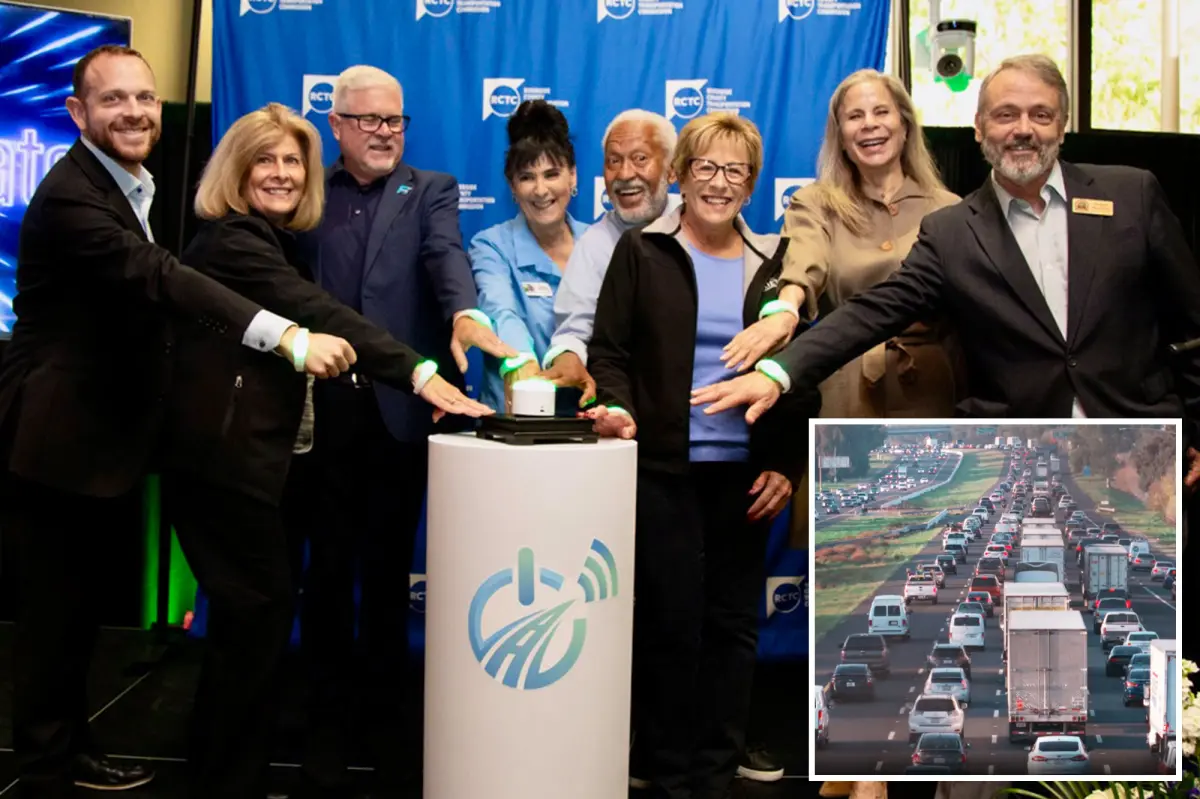
The daily commute along Southern California’s Interstate 15 is more than just a drive; for thousands of residents, it is a demanding, soul-taxing ritual. Each morning and evening, the stretch of highway running through the growing communities of Temecula and Murrieta, right where the San Diego and Riverside County lines blur, transforms into a sprawling parking lot of brake lights. For decades, the standard response to this regional bottleneck followed a predictable, brute-force formula: bring in the heavy machinery, pour millions of tons of concrete, and widen the highway. Yet, as urban planners have long realized, building more lanes often invites more cars in a self-defeating cycle known as induced demand. Recognizing that they can no longer simply pave their way out of gridlock, transportation planners have pivoted toward a radical new philosophy that prioritizes intellectual infrastructure over physical expansion. The Riverside County Transportation Commission has officially activated a pioneering $33 million “smart freeway” pilot program along an eight-mile stretch of northbound I-15. This initiative represents a milestone in regional planning, attempting to cure one of the area’s most stubborn transit headaches not with bulldozers, but with bytes, algorithms, and real-time data integration.
To grasp the scale of this technological transformation, one must look at how the highway has been fundamentally redesigned to function as a unified, living organism. Rather than leaving individual drivers to battle for space, the Smart Freeway Pilot Project establishes a dense network of artificial intelligence, advanced physical sensors, dynamic speed advisory signs, and interconnected ramp meters. Traditionally, ramp meters operate on rigid, pre-set mechanical timers, releasing vehicles onto the freeway at fixed intervals regardless of how congested the main lanes actually are. This new system throws out those outdated clocks in favor of a synchronized, cooperative network that communicates continuously. By reading the highway’s real-time velocity and volume through sensors embedded in the asphalt, the AI can instantly calculate the precise rate at which the arterial roads should feed cars into the main corridor. When the freeway is moving smoothly, the ramp lights green-light vehicles in rapid succession; when a bottleneck begins to form ahead, the system automatically slows down the incoming flow, gently dampening the shockwaves that typically cause jarring, stop-and-go gridlock.
However, this transition into a high-tech future comes with an immediate, counterintuitive challenge that is bound to test the collective patience of local commuters. To keep the freeway moving at a steady clip, drivers must adapt to a system that deliberately delays them at the on-ramps. It is a tough psychological pill to swallow: sitting at a red light on a ramp, watching the main lanes of the freeway finally starting to clear, and being forced to wait. Transportation officials are being entirely transparent about this initial friction, warning the public that motorists attempting to access the northbound I-15 will experience noticeable delays during the system’s calibration phase. This design prioritizes the overall health of the entire corridor over the immediate desire of individual drivers to merge as quickly as possible. By metering the volume of vehicles entering the highway, the system prevents the sudden influx of cars that causes merging friction, which is the primary catalyst for the phantom traffic jams that ripple backward for miles. If the mathematical models prove accurate, the extra minutes spent idling on the on-ramps will be returned to drivers with interest through faster, uninterrupted travel times once they actually merge onto the mainline.
This shift in strategy highlights a larger, necessary reckoning within modern urban planning: the era of unrestrained highway expansion is drawing to a close. Raymond Gregory, Chair of the Riverside County Transportation Commission, emphasized this reality by noting that building our way out of congestion is no longer a viable option. Instead, the focus must shift to maximizing the utility of the roads we already have through creative engineering and technological adaptation. The benefits of this approach extend far beyond shaving a few minutes off a morning commute. Temecula city officials point out that stabilizing traffic flow has a profound impact on commuter safety and public health. Stop-and-go driving is a major contributor to rear-end collisions, which are the most frequent accidents on congested freeways. By smoothing out these abrupt speed transitions, the smart freeway system aims to dramatically reduce these collisions. Furthermore, by keeping vehicles moving at consistent speeds rather than constantly idling and accelerating, the project promises to improve fuel efficiency and cut greenhouse gas emissions, bringing cleaner air to an Inland Empire basin long plagued by poor air quality.
The realization of this ambitious project is the result of close collaboration between several public entities, including Caltrans, the Western Riverside Council of Governments, and the City of Temecula. Over the next two years, these partner agencies will closely monitor and analyze the data harvested from this eight-mile stretch of the I-15. This pilot program serves as a critical local study, but its outcomes will also resonate far beyond Riverside County. Cities across the nation, struggling with rapid suburban growth, limited budgets, and strict environmental regulations, are watching this Southern California experiment with keen interest. If this $33 million digital facelift succeeds in keeping traffic moving without the need for destructive, multi-lane construction projects, it could serve as a blueprint for modern suburban transit design, demonstrating how technology can help maximize existing infrastructure.
Ultimately, the true measure of the smart freeway’s success will depend on the cooperation of the human beings behind the wheel. For generations, Southern California car culture has championed a spirit of rugged individualism, where the highway represents personal freedom and the commute is a competitive sport. This new AI-driven system asks drivers to adopt a more cooperative mindset, trusting that a brief delay at an on-ramp serves a collective purpose that ultimately benefits everyone on the road. It represents a shift from navigating a passive concrete road to participating in a responsive, organic network that intelligently adapts to human behavior. As commuters on the I-15 adjust to these new digital rhythms over the coming months, they are participating in a major experiment in modern transit. The road ahead may require a little extra patience at the start, but if this partnership between technology and human behavior succeeds, it will pave the way for a safer, smoother, and more sustainable journey home.