



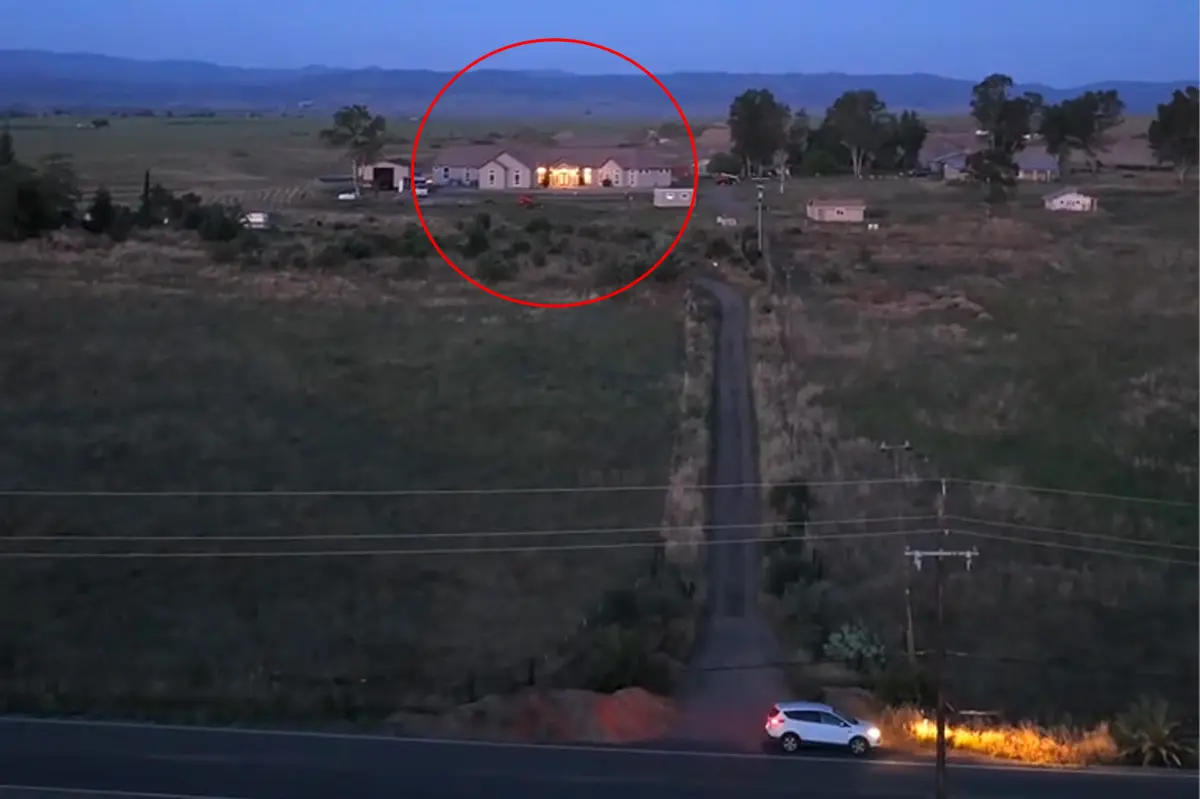
Living in the quiet, rural outskirts of Linden, California, Tom BetGeorge had grown weary of the endless parade of bewildered delivery drivers who treated his home like a game of directional roulette. Picture this: a sleepy street lined with identical-looking driveways, each one a potential pitfall for someone relying on a glitchy GPS or sheer bad luck. Tom, a straightforward guy with a family to care for, had tried everything short of waving a neon sign. He’d posted clear markers, even painted arrows on the road, but nothing deterred the stream of confused visitors barreling into the wrong property. Frustration mounted with each honk, each sheepish reversal, and each package shoved at a puzzled neighbor. It wasn’t just inconvenience; it chipped away at his peace of mind. Days blended into nights filled with polite but futile conversations about “just following the map.” Tom, ever the problem-solver, refused to let this become his life story. He yearned for a fix that could turn confusion into clarity without him having to play traffic cop every hour. Little did he know, his high-tech workaround would soon make him a household name, proving that sometimes, the sky’s the limit for solving everyday annoyances. In a world of stubborn algorithms and human error, Tom’s tale reminds us that creativity often lies in the skies above.
But Tom wasn’t your average Joe with a drone hobby; he was a visionary who painted with lights for a living. After countless failed attempts to reroute wayward drivers—think homemade signs that blew away in the wind and road paint that faded under the sun—he decided to deploy his professional arsenal. Entering his backyard setup, a command center of buzzing drones loaded with LED lights, Tom choreographed a digital symphony that would rewrite the rules of navigation. The setup was no slapdash effort; it involved precise programming to detect approaching vehicles via sensors, triggering the aerial ballet at just the right moment. He imagined the satisfaction of drivers’ faces lighting up, mirroring the glow of his drones. This wasn’t just about convenience; it was a testament to his skills, transforming a mundane problem into an awe-inspiring spectacle. Neighbors might laugh at first, but Tom saw potential in every bug-eyed stare, turning potential chaos into a moment of pure delight. The drones, humming like guardian angels, waited patiently in the wings, ready to intervene when need be. It was a blend of technology and tenacity, proving that passion for innovation could extend beyond parties and events into the fabric of daily life.
As a car crept perilously close to the wrong driveway one fateful evening, the show began in earnest. The video captured it all: a fleet of drones erupting into formation like fireflies on steroids, spelling out a no-nonsense message in the darkening sky—”Wrong driveway—back up.” The words pulsed with urgency, their neon brilliance cutting through the twilight. Tom watched from his window, heart pounding, as the driver paused, then reversed with a burst of realization. Smiling to himself, Tom triggered the next phase: the statement morphed into warm encouragement—”There you go—keep going”—as if cheering on a lost soul finding their way. Finally, a glowing arrow materialized, arrow-straight and unmistakable, pointing like a celestial beacon directly to his front door. The driver, now a part of this theatrical rescue, navigated correctly, parked, and presumably delivered the goods without incident. It was flawless, a ballet of bytes and rotors that turned potential disaster into triumph. Tom felt a swell of pride, knowing he’d created something magical from mere frustration. The footage, shared online, tugged at heartstrings—here was humanity at its most inventive, using tools of wonder to aid the bewildered.
Reactions poured in from every corner of the internet, turning Tom’s innovation into a viral sensation that sparked both laughter and admiration. “Telling you have money without telling you have money,” quipped one commenter, nodding to the extravagant yet quaint solution, while another joked, “Could have used the money to build a better driveway path,” highlighting the overkill charm of it all. Viewers were simultaneously entertained and envious, sharing stories of their own navigational woes, from cross-country treks gone awry to suburban mix-ups that ended in tears. Tom read each one with a chuckle, appreciating how his skywriting saga resonated—reminding folks that sometimes, problems aren’t just hurdles but opportunities for whimsy. Families debated whether they’d invest in such gadgets, neighbors vowed to adopt similar tactics, and even skeptics admitted it was impressively effective. The comments section became a tapestry of human connection, where strangers bonded over shared absurdities, turning a simple fix into a global conversation. For Tom, it was validation, a reminder that brilliance often hides in the everyday, and that a little light can illuminate the darkest of detours.
Behind the curtain of creativity stood Tom BetGeorge, the mastermind of Magical Light Shows, a company that turned nights into wonders through dazzling drone displays. Far from a novice, he ran the operation with the precision of an artist, his website brimming with portfolios of weddings beamed in lights, birthday spectacles, and holiday extravaganzas that left audiences breathless. Tom’s social media was his gallery, where he dubbed himself a painter of light, weaving narratives with glow and motion. He did this for a living, crafting emotions from electricity, and his driveway dilemma was just another canvas. People often underestimated the hours of fine-tuning, the coding trials, and the weather dependencies that made each show a masterpiece. But for Tom, it was fulfilling work, blending technology with storytelling. In interviews, he spoke with infectious enthusiasm about how lights could evoke joy, guide lost souls, or celebrate life’s milestones. His background in tech and performance lent him an edge, making him not just a drone operator but a poet of the skies. When Google Maps failed, Tom didn’t fault the machine; he simply rewrote the directions with his signature flair.
In the end, Tom’s inventive aerial signage wasn’t just about addressing a problem—it was a celebration of human ingenuity in a digital age, proving that perseverance paired with passion can skyrocket even the smallest irritation into something extraordinary. He continued to monitor his setup, tweaking it here and there, always ready for the next confused traveler. The community loved it, neighbors sharing tips on how to optimize their own homes, turning one man’s brainstorm into collective inspiration. Downloads of educational resources on drones surged, and Tom found himself fielding queries from afar, eager to share his craft. It humanized technology, showing that behind the screens and algorithms were real people solving real dilemmas with flair. As the sun sets on another day in Linden, Tom’s drones stand ready, not just as guides, but as ambassadors of creativity. If you’re lost, look to the stars—or in this case, the skies spelled out in light. Tom’s story encourages us all to think bigger, dream louder, and perhaps invest in a few LED-equipped flyers when life throws obstacles our way. Stay tuned for more tales from California, where innovation never stops soaring. To keep up with the latest buzz, download The California Post App, and follow us on social media: Facebook, Instagram, TikTok, X, YouTube, WhatsApp, and LinkedIn. For sports enthusiasts, check California Post Sports on Facebook, Instagram, TikTok, YouTube, and X. Dive into opinions at California Post Opinion. Subscribe to our newsletters here, and get the app now! Sign up for home delivery or Page Six Hollywood alerts too—we’ve got you covered.