



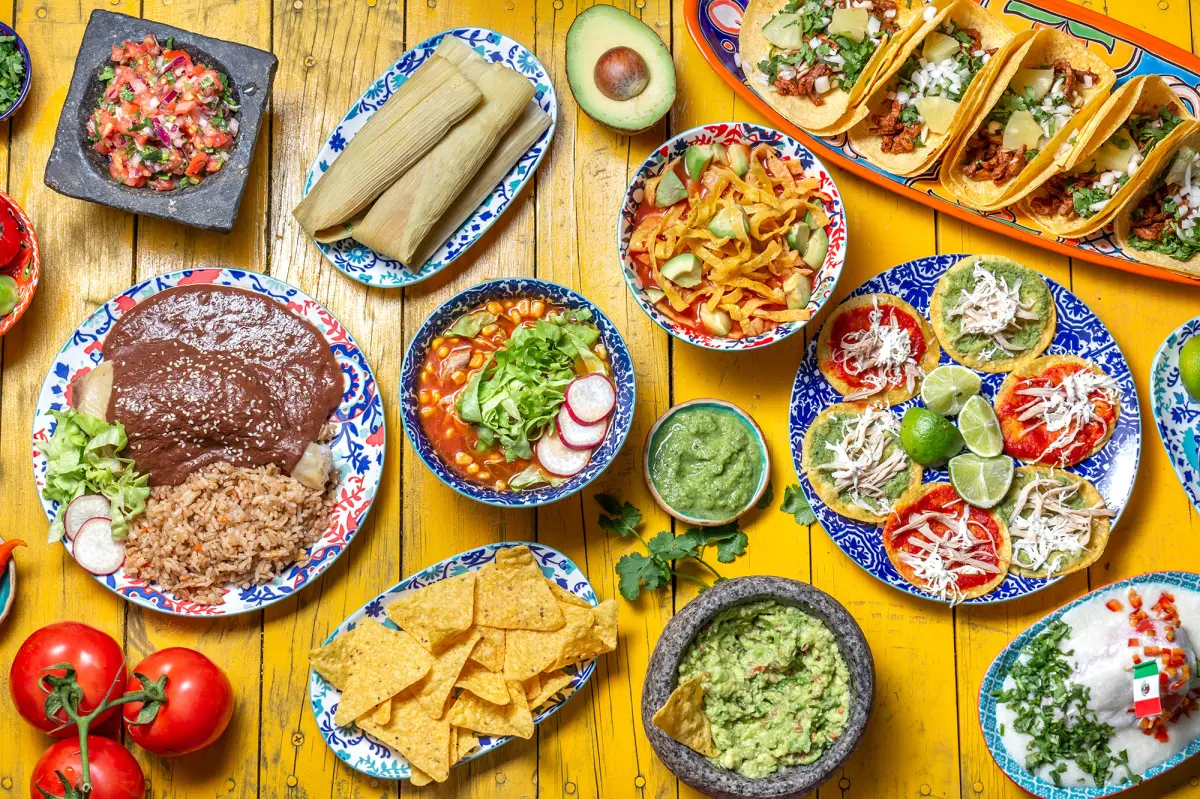
The tamale was once a comfortable, familiar presence on Mexican restaurant menus across the United States. It shared space with tacos, burritos, and enchiladas, and it did not require much explanation. You knew what it was, you knew how to unwrap it, and you knew the soft, steamed bite that awaited you inside the husk. It felt like a small, edible tradition. But something has shifted. Tamale entrées have dropped 7.8 percent from restaurant menus over the past five years, according to Technomic’s Ignite Menu data comparing the second quarters of 2021 and 2026. That may not sound like a massive number, but in the careful, competitive world of menu engineering, it is a clear sign that tamales are becoming an exception rather than an expectation. The dish is not disappearing because people have stopped loving it. The tamale still carries warmth, memory, and flavor. It is disappearing from menus because of the unromantic math that runs behind every restaurant kitchen: how much time a dish takes, how much money it can bring in, and whether a busy kitchen can afford to make something that demands patience. The tamale, it turns out, asks for more patience than most restaurants are willing to give. And yet the people who still make them speak about them with a kind of tenderness that menu statistics cannot capture. This is the story of a food that is leaving some places only to become even more precious in others.
At the heart of the tamale’s decline is a simple restaurant calculation. Robert Mahon, director of operations for Mahon Hospitality Group, runs Amor Loco and Toro Loco in New York City. Neither restaurant serves tamales. Mahon enjoys them himself, and he says his restaurants have talked about adding them. But the economics do not work. “Even though the ingredients might not be so costly, it’s more the labor,” he told Fox News Digital. “It’s so labor-intensive.” That sentence explains almost everything. Tamales are not like tacos. A taco can be thrown together in seconds. A tamale is an investment. It starts with ingredients that are simple, but the process is anything but simple. The masa must be made, the filling prepared, the wrappers cleaned, and every tamale must be assembled by hand, then carefully folded and tied so that it holds together during cooking. In a restaurant kitchen, labor is money. Every hour spent spreading masa and wrapping leaves is an hour that could be spent on faster, more profitable dishes. Tamales are also expected to be inexpensive. Diners who have grown up with tamales may remember buying them from street vendors or at community gatherings for a dollar or two. That memory makes it difficult for restaurants to charge what a tamale actually costs to produce. You can price a taco at four or five dollars and diners will accept it. You can price an enchilada plate at fifteen dollars and diners will understand. But a tamale, humble and unassuming, does not command that same respect. So restaurants look at the labor, look at the price, and quietly decide it is not worth it.
To see what that labor really looks like, you only need to visit Taquería Picoso in Alexandria, Virginia, where executive chef Elio Gomez keeps tamales on his menu. Gomez does not take shortcuts. His process takes about three days. He sources corn from Mexico, then cooks it through an overnight nixtamalization process, an ancient technique that transforms dried corn into something more nutritious and more flavorful. After that, the corn is ground into masa, the soft dough that forms the soul of a tamale. Meanwhile, the fillings are prepared, and banana leaves are cleaned and made ready. The masa must then be mixed with fat, broth, and salt, and aerated until it reaches the right consistency. Only then can the tamales be assembled, each one carefully spread, filled, folded, and wrapped. If the wrapper is too loose, the tamale will dry out. If it is too tight, the masa cannot expand as it cooks. There is no machine that can do this work properly. There is no shortcut around the feeling of the masa under your hands. Even with a recipe, Gomez said, a cook must learn how the masa should feel and how to wrap each tamale so that it stays moist and tender. That kind of knowledge does not come from reading instructions. It comes from repetition, from trial and error, from months of working beside someone who already knows the rhythm. Gomez spent months training the employee who now makes his tamales. That is not just training a cook. That is passing on a craft.
And all of that craft goes into an item that still does not generate the same demand as a taco. “No, definitely it’s not the same demand as a taco, for example,” Gomez said. Mahon put it even more bluntly. His customers are not standing at the door demanding tamales. “They’re not walking out of our restaurants if they don’t have a tamale,” he said. “It’s not expected as a staple anymore.” That is a striking change for a dish that once sat comfortably on menus next to tacos and burritos. The tamale has become something else. It has become a specialty, a festive item, a dish that people associate with Christmas, with family gatherings, with memories rather than daily habits. This creates a difficult position for restaurants. A tamale is not a dish you can offer as a daily special and expect to sell dozens of them. It is not something people crave with the same frequency as a burrito or a bowl of guacamole. Customers may be happy to see a tamale on the menu, but they will not always order it. When a restaurant looks at its menu and decides what to keep, it asks whether the dish earns its place. The tamale earns a certain kind of love, but not always a reliable profit. At Taquería Picoso, Gomez charges six dollars for a tamale. To him, that is inexpensive, given the three-day process and the skill involved. But some customers remember much cheaper versions, and they compare their memory against the price. That gap between memory and economics is hard to reconcile.
Yet the tamale’s declining presence on restaurant menus does not mean the food itself is disappearing. In fact, the opposite may be true. Gomez grew up in Mexico City, where he remembers tamales as an everyday breakfast food, sold by street vendors in the morning. They were part of the rhythm of ordinary life, something you grabbed on the way to work or school, something you ate with your hands while the steam rolled off the wrapper. In the United States, he sees tamales being treated differently. Here, they are often reserved for holidays and family gatherings. They appear at Christmas parties, at Day of the Dead celebrations, at birthday dinners, and at events where people want to do something special. That is not a loss. It is a transformation. When a dish becomes a special-occasion food, it becomes even more meaningful. The work involved in making tamales becomes a form of love. Families gather in kitchens, sometimes for hours, and make enormous batches together. There is a division of labor: someone soaks the husks, someone spreads the masa, someone places the filling, someone folds and ties each tamale, someone manages the steamer. It is communal, exhausting, and joyful all at once. The tamale that was once sold on a street corner has moved into the home kitchen, and there it has become a gift. A dozen tamales wrapped in foil and handed to a neighbor may be worth more than anything money can buy. The restaurant menu may have lost a line item, but the culture has kept the dish alive in a more intimate way.
If you asked Elio Gomez what he would tell someone eating a tamale for the first time, he would not start with the recipe. He would start with the feeling. He describes the masa as fluffy, the dish as rich, and the overall experience as deeply comforting. “You feel like you’re getting a hug when you’re eating a tamale,” he said. That is the perfect way to understand what tamales really are. They are not just food. They are warmth, memory, and patience, all wrapped up together. They are the end result of a long process that cannot be rushed. The tamale will not be the fastest thing on the menu, and it will not be the cheapest thing to make, and it will not always be the easiest thing to find. But when you do find a properly made tamale, you know it. The masa is soft and moist, the filling is rich and seasoned with care, and every bite feels like someone took the time to give you something good. That is why the tamale matters, even as it slips off mainstream menus. It does not need to be on every restaurant menu to survive. It lives in home kitchens, in family traditions, in the careful hands of cooks who learned from the people before them. It lives in the moment when someone unwraps a tamale and feels, even for a second, like they are receiving a warm embrace. So if you see a tamale on a menu, order it. You are not just buying a meal. You are supporting a tradition that asks for patience and gives back comfort. You are eating something that took days to make and a lifetime to learn. And you are reminding yourself that the best food is not always the fastest food. Sometimes, it is the food that makes you feel loved.