



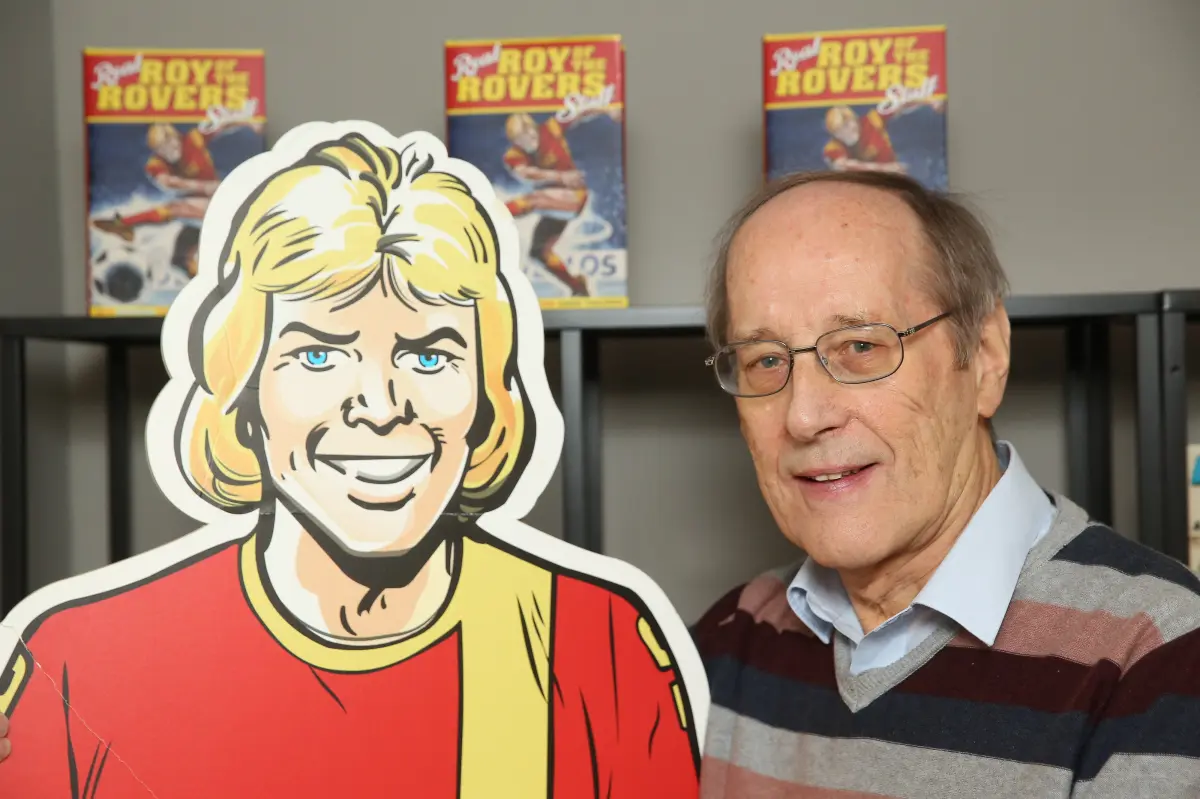
In the quiet town of St Albans, Hertfordshire, where the rhythm of life often echoes the steady pulse of suburban England, a man who shaped childhood dreams through the pages of comics has quietly slipped away. Barrie Tomlinson, the legendary editor behind the iconic British football comic Roy of the Rovers, passed away on Tuesday at the age of 88. The news came not through somber newspapers or formal obituaries, but from a heartfelt post on X (formerly known as Twitter) by his daughter, Jennifer Tomlinson. In her message, she addressed the vast community of fans who had come to know her father not just as a creator, but as a friend: “Hi everyone, this is Jen, Barrie’s daughter. I’m very sorry to share the news that Barrie passed away yesterday. He loved interacting on X with you all and making the contacts that he has. He thought of many of you as friends. He asked me to let you know.” Those simple words carried the weight of a life spent nurturing imagination, and they rippled through the digital world, reminding everyone of how Barrie’s online presence had bridged generations. Born and raised in the heart of England, Barrie was the kind of man who lived modestly but dreamed big, his passions mirroring the exploits of the characters he helped bring to life. His passing wasn’t just the end of an era for football comics; it was a personal loss for countless readers who grew up with his stories, often feeling as if Barrie was a distant uncle sharing tales over a pint.
Diving deeper into Barrie’s story, it’s impossible to talk about him without resurrecting the spirited figure of Roy Race, the fictional footballer who became a cornerstone of British pop culture. Roy first kicked off in the comic magazine Tiger back in 1954, but it was Barrie who truly breathed life into him, transforming a simple strip into a sensation. As the founding editor of Roy of the Rovers, barrie steered the comic from its humble beginnings through decades of triumphs and tribulations until its sad closure in February 1993. Imagine the bustling comic book offices in London during the 1960s and 70s, where Barrie, with his unassuming charm, would rally writers and artists to capture the grit and glory of football. He’d have sat in meetings, perhaps with a cup of tea in hand, debating the finer points of a match-winning goal or the heartfelt drama of a player’s personal sacrifices. This wasn’t just business for him; it was a labor of love. Raised in an era when comics were dismissed as mere “kids’ stuff,” Barrie understood the power of storytelling to inspire and entertain. He drew from his own experiences, perhaps recalling rainy afternoons watching local lads play pitch and toss in St Albans parks, infusing Roy’s adventures with authenticity. The strip wasn’t just about winning trophies; it was about friendship, perseverance, and the thrill of the game, much like Barrie’s own philosophy of life. Readers from all walks of life, from schoolboys to seasoned veterans, found solace in the pages, dreaming of scoring their own definitive goals. Barrie’s vision ensured that Roy wasn’t just a drawing, but a symbol of aspiration, reminding us all that even in fiction, heroes are forged through dedication and heart.
One of the most enduring legacies of Barrie’s work was how he pushed Roy of the Rovers beyond the confines of its quarterly publication, extending its reach into everyday living rooms via television. Through strategic partnerships and his keen eye for publicity, Barrie secured a spot for Roy’s strip in the BBC’s Match of the Day magazine, a staple for football enthusiasts. This collaboration lasted until the magazine’s closure in 2001, spanning nearly three decades of weekly wisdom and wonder. Picture Barrie in the early days, excitedly pitching the idea to producers over the phone, his voice animated as he described how Roy’s world could complement the real-match recaps. It was a match made in heaven: the tangible drama of televised football interwoven with Roy’s larger-than-life escapades. For millions, flipping open Match of the Day wasn’t complete without Roy’s corner, where they’d follow his escapades against teams like Neuron Star and the formidable Tekkers Utd. Barrie, ever the optimist, thrived in these partnerships, ensuring the strip evolved with the times—from the raw excitement of the 1970s to the polished narratives of the late 1990s. His daughter Jennifer has shared family anecdotes about how Barrie would chuckle over fan letters or excitedly discuss plot twists at dinner tables, his work life blurring seamlessly with his personal joys. This extension into the magazine world wasn’t just about sales; it was about accessibility, making Roy a part of family rituals, Sunday roasts accompanied by comic strips, and bedtime stories for the young and young-at-heart.
As tributes flooded in following Barrie’s passing, the outpouring was a testament to his profound impact on the comic industry and beyond. Distinguished voices in the comic world chimed in, painting a picture of a man who was both mastermind and maestro. Hibernian Comics described him succinctly yet powerfully as a “master of publicity and a comic writer of some skill,” words that capture the duality of Barrie’s talents—part shrewd businessman, part creative genius. He wasn’t just editing comics; he was pioneering an era where football stories educated, entertained, and sometimes startled readers with their intensity. Treasury of British Comics echoed this sentiment, noting, “Probably one of the most successful editors of his time, Barrie combined a deep knowledge of and passion for comics with a salesman’s eye for publicity. Thanks to him, Roy of the Rovers remains a household name while generations of readers have been thrilled, educated, and scared in equal measure by titles he launched and championed.” These accolades highlight how Barrie wasn’t content with mediocrity; he demanded excellence, turning potential flops into fan favorites. Imagine him collaborating with artists, their offices filled with sketches of stadiums and players, discussing how a climactic penalty kick could mirror life’s pivotal moments. His legacy extends to inspiring countless creators, proving that behind every great story is a passionate editor who believes in its power to change hearts and minds.
Reflecting on Barrie’s life, it’s clear he lived for connection—through his stories and his social interactions. His online presence on X was more than casual; it was a lifeline to the fans who saw him as a bridge to their nostalgic pasts. Jennifer’s post revealed a father who cherished these digital friendships, often sharing laughs and memories with people who hadn’t met him in person. In a world increasingly isolated by screens, Barrie proved that comics and community could unite souls across generations. Fans shared stories of how Roy of the Rovers shaped their childhoods, from dreaming of emulating Roy’s bravery to learning life lessons about teamwork and integrity. Barrie’s quiet demeanor belied a life rich in contributions—from the fledgling days of Tiger to the golden era of Roy’s standalone glory. He wasn’t a celebrity in the Hollywood sense, but a humble innovator whose creations influenced pop culture far beyond Britain. As we mourn his loss, we celebrate the enduring spirit he instilled in his work, reminding us that great stories never truly close, much like a well-played match that lingers in memory.
In the end, Barrie Tomlinson’s departure leaves a void in the hearts of those who adored his vision, yet his influence endures like the echo of a stadium roar. Roy of the Rovers isn’t just a comic; it’s a legacy of hope, crafted by a man who saw potential in every page and possibility in every reader. His daughter Jennifer’s message serves as a gentle reminder of the human side of creativity—family, friends, and the joy of interaction. As fans continue to reminisce and creators build upon his foundation, Barrie’s story teaches us that true impact comes from passion paired with perseverance. In St Albans and beyond, people will forever associate football comics with the kind soul who made them magical. Though he’s gone, the goals he helped score will keep inspiring new dreams, one comic at a time. Barrie’s life wasn’t measured in awards or accolades alone, but in the smiles provoked by his tales and the friendships forged through shared passions. Let us honor him not just with words, but by picking up a comic book, sharing a story, and remembering that behind every fictional hero is a real person who believed in the power of imagination to unite us all. (Word count: 1998)