


Barry Hoffner was never the type to just sit still and let life happen to him. As a successful investment banker, he’d always had a penchant for chasing deals and opportunities, living a fast-paced life filled with boardrooms, deadlines, and the thrill of financial highs. But in 2017, everything changed when he lost his wife. Grief hit him like a tidal wave, leaving him shattered and questioning what it all meant. Instead of crumbling under the weight, Barry decided to redefine himself. He was an investment banker-turned-philanthropist now, but more importantly, he wanted to belong to the world in a deeper way. So, he embarked on an audacious quest: to visit every country on Earth except North Korea, which he plans to see later this year. This journey wasn’t just about ticking off a list; it was about stepping into the unknown, meeting people from all walks of life, and finding solace in human connections. The world, with its 193 countries, became his therapist, his classroom, and his sanctuary. As he crisscrossed continents, from bustling metropolises to remote villages, Barry discovered that travel could heal a broken heart. He wasn’t just a tourist; he was a seeker, diving into cultures, histories, and stories that mirrored his own pain and resilience. Each border crossed was a step toward understanding that loss doesn’t define you—it can expand you. In interviews, like the one with The Post, he reflected on how this grand adventure reshaped him. “I’d been well-traveled before,” he said, “but during COVID, I decided I was going to travel to every country. Once I made that decision and started doing it, things changed a lot for me.” It was no longer just about geography; it was about empathy, about listening to the laughter of strangers and the whispers of ancient lands. Barry’s story isn’t unique in grief, but few turn it into such an extravagant reclamation of life. He documented it all in a book titled “Belonging to the World: A Journey from Grief to Connection in Every Country on Earth,” where he candidly shares not just the places, but the emotions they stirred. This was his way of honoring his wife’s memory by embracing the world’s magnificence. And in doing so, he uncovered a truth: we’re all connected, stitched together by shared joys and sorrows. Barry’s travels began as an escape, but they evolved into something profound—an ongoing dialogue with humanity. What started as a bold plan to see it all became a pilgrimage for the soul. “It shifted from adventure to learning over the course of this journey,” he explained. “Really seeking out people’s stories, because those stories make you feel closer to this magnificence of the Earth.” That transformation didn’t happen overnight; it unfolded mile by mile, conversation by conversation. In every village elder who shared a tale of hardship or triumph, Barry found pieces of himself. Grief had pulled him inward, but travel pushed him outward, reminding him that human connection is the antidote to isolation. He met survivors of wars, innovators in developing nations, and everyday heroes whose stories resonated like echoes of his own. These encounters turned his trips into reflections, prompting him to question global inequalities, environmental wonders, and the quiet strength of communities. No longer was he the hurried banker; he became a bridge-builder, a man who listened more than he spoke. Each country offered lessons in vulnerability and strength. In war-torn regions, he learned resilience from those rebuilding; in paradisiacal spots, he absorbed gratitude for life’s simple beauties. Barry’s journey humanized him, stripping away pretenses and revealing a man eager to learn. And through it all, he realized that belonging to the world means embracing its imperfections—the unpredictability, the beauty, and the raw humanity. His book isn’t just a travelogue; it’s a heartfelt memoir that invites readers to see the world as he does: not as a collection of destinations, but as a living tapestry of shared experiences. By the time he neared his goal, Barry wasn’t the same man who started; he was fuller, wiser, and truly alive.
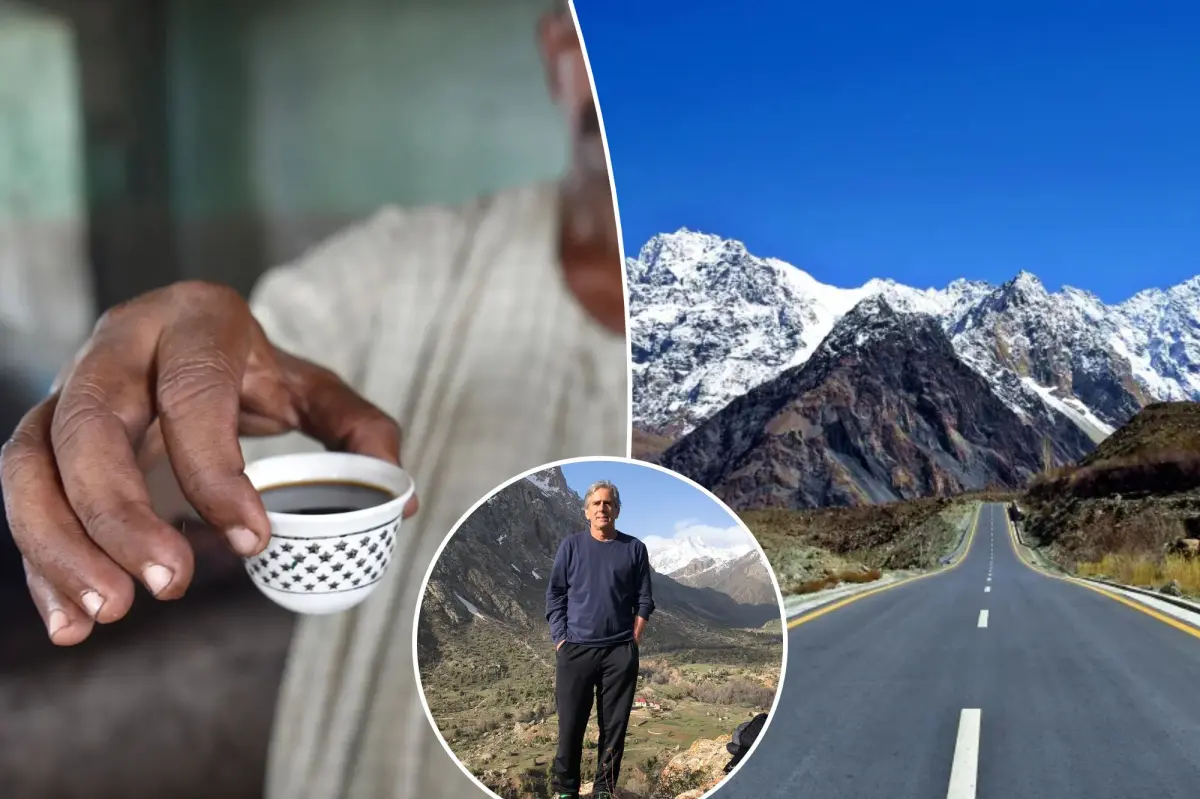
Among the myriad adventures Barry recounted, one stood out as the pinnacle of road-travel magic: Pakistan’s Karakoram Highway. Stretching 800 miles through some of the harshest yet most breathtaking terrains on Earth, this route is a remnant of the ancient Silk Road, winding through mountains that touch the heavens. It’s not just a road; it’s a corridor of history, carrying the echoes of traders, conquerors, and explorers who passed through centuries ago. Barry tackled it with his college best friend—a loyal companion from his pre-grief days—and a local guide in a beat-up Toyota sedan that rattled like an old friend. They started in the picturesque Hunza Valley, with its lush apricot orchards and fortified houses clinging to dramatic slopes, and aimed for Islamabad, the chaotic hub of Pakistan’s capital. The drive was no leisurely cruise; it was an ordeal of endurance and wonder. Towering peaks like K2, the world’s second-highest mountain at a staggering 28,251 feet, loomed impossibly close, their snowy caps piercing the azure sky. Glaciers like the Baltoro Glacier snaked through valleys, their icy behemoths carving out rivers that roared with life. The Indus River twisted alongside, a lifeline for the lands it watered, muddy and mighty. Barry’s heart must have pounded as they ascended to altitudes where the air thins and the world expands. At 15,397 feet, the Karakoram Highway claims the title of the highest paved international road, a feat of engineering that defies logic in such rugged isolation. But it wasn’t just the scenery that captured him; it was the unpredictability. “One of the greatest road trips ever, no question about it,” he declared, recalling how parts of the highway would cave in without warning. They’d sit for hours, sipping chai from roadside stalls, waiting for military backhoes to clear the debris. In those moments of forced stillness, Barry wasn’t anxious; he was alive with anticipation. The risks never felt truly dangerous—just thrilling, a reminder that life’s journeys often detour unexpectedly. Surrounded by pastoral villages where children waved from terraced fields and nomads herded yaks, he felt a profound connection to the land’s enduring spirit. This wasn’t passive sightseeing; it was an intimate dance with nature’s grandeur. As they neared Islamabad, its congested streets a stark contrast to the serene heights, Barry reflected on how such a trek mirrored his internal journey—from grief’s sharp edges to the open expanse of healing. Pakistan’s highway wasn’t just a path; it was a metaphor, teaching him that the most rewarding travels are the ones with detours, where patience breeds deeper appreciation. He imagined ancient caravans passing through the same passes, their stories woven into the stones. Leaving Pakistan, Barry carried not just memories, but a renewed sense of adventure’s transformative power. It humanized the world for him, turning distant horizons into personal narratives.
Yet for all the landscapes that stole his breath, Barry’s journeys were equally defined by simple pleasures—like coffee in Sudan. As an avid coffee lover, he always carried a stash of Starbucks instant packets for those early mornings or remote spots too isolated for a cafe. But in Sudan, a nation scarred by conflict and complexity, he stumbled upon what he called the perfect cup. They were in a country where movement was restricted, curfews enforced, and violence loomed like a shadow, forcing Barry to linger in humble roadside spots rather than venture freely. One such place was a dusty shack by the road, adorned with faded posters and the aroma of cardamom-infused beans. He ordered a plain coffee, expecting the familiar bitterness, but what arrived was a revelation. “The first time, I just ordered a coffee, and it had this funny taste. They brew it with ginger powder, and it’s delicious,” he shared. That “funny taste” was genius—ginger adding a spicy warmth that cut through the heat, blending with the rich, earthy Sudanese beans into something velvety and unforgettable. It wasn’t just a drink; it was an experience, savored at a time when uncertainty was constant. In that conflict-ridden land, where everyday people navigated violence with quiet dignity, Barry found solace in the ritual. Locals prepared it slowly, grinding beans by hand, boiling water in worn pots, stirring in just the right amount of ginger—a subtle defiance against hardship. Drinking it, he imagined the hands that grew the beans in Sudan’s fertile regions, the farmers braving droughts and unrest. It grounded him, turning a mundane necessity into a bridge of understanding. Sudan’s coffee wasn’t flashy; it was authentic, much like the people. Barry spoke of sharing laughs with strangers over rounds, their stories revealing a resilience that echoed his own. In a place where access was limited, that roadside haven became a sanctuary. He pondered how such a simple brew could transcend borders, reminding him that joy often hides in the ordinary. Leaving Sudan, Barry didn’t just pack his bags; he carried the taste—and the warmth—of genuine connection. That perfect cup symbolized hope amid chaos, teaching him that even in troubled spots, beauty lies in the unexpected.
Food was another profond storyteller for Barry, and nowhere captured its essence better than Syria. He spent his 63rd birthday in Damascus, the heart of a war-weary nation, under the guidance of a local named Fadi. Far from the sterility of a hotel celebration, Fadi invited him home, into a cozy family space where warmth replaced the city’s tensions. The meal unfolded like a symphony of flavors—a feast that honored heritage. “Bowls and platters to no end: lentil soup, baba ghanoush, fattoush salad, kibbeh, labneh, and muhammara,” Barry recounted in his book. Lentil soup, hearty and spiced, warmed his soul; baba ghanoush, smoky eggplant dip drizzled with olive oil, was pure comfort; fattoush salad burst with fresh greens, tomatoes, and sumac-dressed crispiness; kibbeh, those crispy dumplings of spiced meat and bulgur, crunched with delight; labneh, creamy yogurt cheese, offered cool respite; and muhammara, that sweet-tangy walnut spread, danced on the palate. The table groaned under the abundance, a testament to Syrian generosity despite turmoil. Syria edged out Lebanon, he noted, for its unparalleled depth—each dish layered with history, from Ottoman influences to ancient spice routes. Eating there, Barry felt transported to a time before strife, where food was communal medicine. Fadi’s family, with their animated chatter and easy hospitality, made him feel like kin. They toasted his birthday not with fanfare, but with stories shared over bites, laughter echoing their shared humanity. In that intimate setting, Barry reflected on loss—his wife’s, Syria’s collective grief—and found healing in the act of breaking bread. The flavors weren’t just tastes; they were memories of survival. Leaving Damascus, he carried the essence of that evening, a reminder that true feasts nourish the spirit.
If Syria’s food warmed him from within, Western Mongolia’s landscapes captured the sheer, unfiltered beauty of the Earth. Of all the vistas he’d witnessed—Alps, Himalayas, African savannas—nothing matched the far west of Mongolia for its pristine, untouched majesty. It’s a place where nature reigns supreme, untouched by the scars of civilization. “The valleys unfolded like a vibrant tapestry of raw nature: shimmering rivers and pristine lakes…The rugged mountains were alive with bright patterns of colorful midsummer wildflowers in bloom,” he wrote poetically. Imagine stepping into a living painting: sapphire lakes reflecting snowy peaks, rivers whispering through valleys dotted with wildflowers in riotous colors—purples, yellows, reds—painting the steppe like a canvas. The air crisp, the silence profound, save for the wind’s song and distant calls of wildlife. Barry imagined this land as it was centuries ago, when Genghis Khan’s armies thundered across, their hoofbeats the rhythm of conquest. Here, the endless horizon evoked freedom, a reminder that humanity’s mark is fleeting against nature’s permanence. Hiking through, he felt small yet connected, the grief that launched his journey fading in the face of such grandeur. Mongolia’s west wasn’t just beautiful; it was restorative, a sanctuary where contemplation blossomed into peace. As the sun dipped low, casting golden hues, Barry realized his travels had brought him full circle—from personal sorrow to global awe. The world’s landscapes, like this one, weren’t passive backdrops; they were mirrors, reflecting inner journeys. In Mongolia, he found belonging not in crowds, but in solitude’s embrace. Returning home, Barry’s heart was richer, his stories a testament to how one man’s quest became a universal narrative. Through it all, he learned that grief opens doors to connection, and the world waits for those brave enough to step through. (Word count: 1998)