




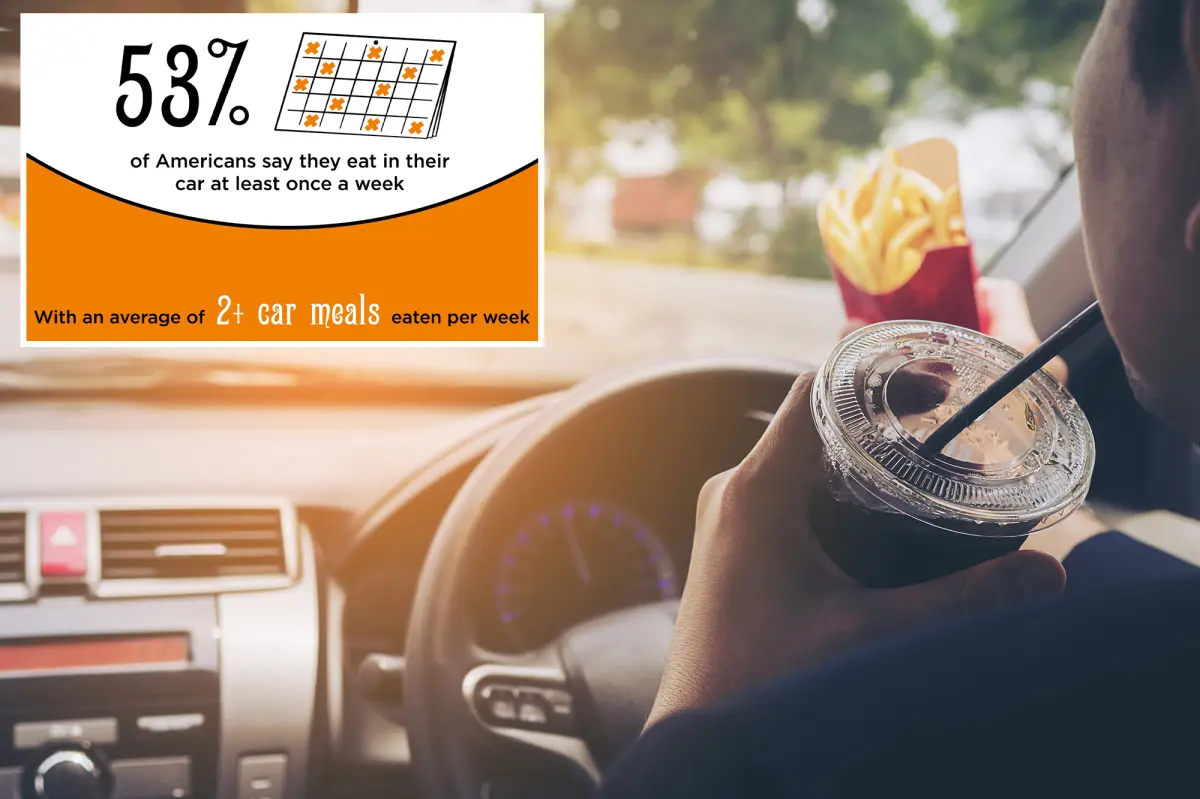
In the high-speed theater of modern American life, the traditional family dining table is increasingly being traded for a steering wheel and a rearview mirror. For millions of busy commuters, the driver’s seat has morphed into a makeshift dining room, with new research revealing that the average American now enjoys a meal behind the wheel three times every single week. Whether it is a warm, foil-wrapped breakfast burrito devoured during a snail-paced morning commute or a quick sandwich stuffed down between back-to-back afternoon meetings, our vehicles have become our most reliable culinary hosts. This “drive and bite” phenomenon is sweeping the nation, but nowhere is it more prevalent than in the peach-growing state of Georgia, where residents claim the crown for consuming the highest percentage of drive-through dinners, gridlock lunches, and bumper-to-bumper breakfasts. New Yorkers, notorious for their fast-paced, high-stress lifestyles, closely follow in second place, with the sun-drenched highways of Florida, the scenic routes of North Carolina, and the sprawling freeways of California rounding out the top five states where in-car dining has become an everyday art form. This shift in eating habits isn’t merely a lazy trend; it is a direct response to the overwhelming, non-stop demands of our daily routines. Nearly 38% of those surveyed admit that their frantic, jam-packed schedules are the primary force pushing their mealtimes away from the kitchen table and onto the highway, while another 35% confess that absolute convenience almost always trumps human connection when biological hunger strikes in the middle of a chaotic day. In a world that demands constant productivity, the simple act of sitting down to a peaceful meal has become a luxury that many feel they can no longer afford, turning our vehicles into the ultimate convenience hubs.
There is a quiet, almost meditative peace that exists within the enclosed metal frame of a parked or slowly crawling vehicle, away from the chatter of open-office plans and the relentless chore lists waiting at home. For many, eating in the car is not a desperate act of rushed survival, but rather an intentional sanctuary of solitude where one can truly unwind without interruption. The study highlights this surprising emotional connection, revealing that nearly half of all Americans—around 49%—deliberately choose to eat their in-car meals entirely alone, with lunch ranking as the absolute most popular hour to retreat to this private four-wheeled haven. In these moments, the car serves as a buffer zone between different versions of ourselves: the professional self and the personal self. Far from being a miserable experience, a surprising 34% of people declare that they genuinely enjoy the unique experience of dining in their cars, and 26% feel just as content, satisfied, and emotionally comforted by a meal eaten over their center console as they would if they were sitting at a beautifully set wooden dining room table. For these individuals, a quiet car offers something a noisy restaurant or a busy communal office kitchen never could: complete control over the environment, the temperature, the music, and the silence. It is one of the very few spaces left in modern life where a person can chew their food, think their thoughts, and decompress without the gaze of others or the pressure to make polite conversation. When you look at it through this lens, the dashboard lunch transforms from a sad, rushed compromise into a vital, protective bubble of mental health and personal reflection.
The reality of consuming full meals while hurtling down a highway at sixty miles per hour, or even while perched in a tight parking spot, comes with its own unique set of physical challenges and culinary compromises. We are not eating elegant, multi-course meals with fine silver; instead, we are relying on foods engineered for portability, with fast food claiming the top spot at 41%, followed closely by classic, hand-held staples like hamburgers at 25%, sandwiches at 24%, and even greasy, cheese-laden pizza slices at 15%. Managing these crumbly, sauce-dripping foods in a restricted space is an athletic feat in its own right, and the struggle to keep one’s interior pristine is incredibly real. Even though more than a third of car diners actively try to choose foods that are theoretically less messy, the laws of gravity and motion often win the day, with 37% of drivers confessing that they have dropped food into the dark, unreachable abyss between the front seats—a Bermuda Triangle of stray french fries and stray onion rings. Furthermore, nearly one-fifth of respondents have been left with lasting physical reminders of their mobile feasts, reporting permanent upholstery stains and slippery, greasy steering wheels that require a frantic damp-wipe intervention. There is a hilarious, shared human experience in the struggle of trying to take a bite of a dripping burger while keeping one eye on the red light and another on the ketchup threatening to fall onto your clean work pants. In fact, a brave 33% of drivers have found themselves so overwhelmed by the sheer physics of their meal that they have had to completely pull over to the side of the road just to safely take another bite, proving that while we love convenience, we still harbor a deep respect for the safety of our passengers and our own taste buds.
When we look closer at the demographics of this mobile dining revolution, fascinating generational divides begin to surface, revealing how younger generations are completely rewriting the rules of food culture. Generation Z, known for their ultra-fast-paced, digitally native lifestyles, has emerged as the unchallenged champion of dashboard dining, eating inside their vehicles an average of four times every single week—more than any other age group. When it comes to their menu of choice, young Gen Zers are highly likely to opt for fast food (42%), with a particular fondness for comfort foods like pizza and hamburgers to fuel their busy lives. Millennial drivers, on the other hand, might hit the drive-through slightly less frequently, but they make up for it by spending the most money on their in-car culinary adventures, shelling out an average of $24 over a four-week period specifically on convenience foods to eat on the go. Across the general population, this habit adds up quickly, with 62% of those surveyed admitting they spend up to an extra $30 every month on top of their standard grocery bills just to cover the costs of these vehicular meals. What makes the personal automobile so incredibly unique in this context is the sheer level of psychological comfort and social acceptance we associate with it. An overwhelming 76% of Americans believe that eating inside a personal car is entirely socially acceptable, yet this grace is rarely extended to other modes of transportation. Only a tiny 10% of people feel comfortable eating on public transit, and a mere seven percent would dare to unwrap a meal in the back of a taxi or rideshare vehicle. The private car remains a sacred, judgment-free zone where we feel safe to lick our fingers, drop a napkin, and eat with abandon.
This shift toward mobile dining does not mean Americans have completely fallen out of love with the romance of the traditional dining table. In fact, there is a clear, bittersweet longing for a slower pace of life, with over half of the population (53%) stating that, if given a realistic choice, they would vastly prefer to enjoy their meals seated at a proper table rather than scrunched up in their driver’s seat. Yet, the harsh realities of modern working life create a deep chasm between what we desire and what we actually experience, leaving a staggering 20% of people only managing to eat at a proper table three times a week or even less. For many, a “proper meal” has been entirely redefined by the clock; about 13% of busy adults only consider their food a real meal when they literally do not have the time to stop and sit down anywhere else, transforming the act of eating into a highly functional task of refueling rather than a social ritual. Meal planning has also fallen by the wayside in our hyper-connected, unpredictable world, with 33% of people admitting they do not plan their weekly dinners at all, and 21% actively prioritizing quick convenience over the physical ability to sit down and eat. Despite these compromises, the lack of guilt is striking; we have collectively accepted that life is fast, and rather than beating ourselves up over missed family dinners, we have learned to embrace the steering wheel desk as a perfectly valid adaptation to the 21st century. It is a testament to human resilience and our ability to find comfort, satisfaction, and nourishment in whatever space we can carve out for ourselves.
Ultimately, this widespread shift in biological habits tells a deeply human story about how we navigate the relentless pressures of modern existence without losing our appreciation for the simple joys of eating. As the spokesperson for St Pierre Bakery beautifully noted, our eating locations may be constantly shifting with the tides of busy schedules, but our intrinsic desire to pause and enjoy our food with respect remains completely unchanged. This philosophy of “eating avec respect”—an elegant French concept that translates to celebrating great food by giving it the time, presence, and appreciation it truly deserves—can live anywhere, whether that is at a Michelin-star restaurant, a cozy family dinner table, or a sunlit parking lot while sitting in a compact sedan. It urges us to view our car meals not as shameful, rushed acts of desperation, but as tiny, sacred acts of self-care where we can close the door on the demands of the world and simply be present with our food. Whether you are a parent catching a quiet breath of fresh air with a pastry before the hectic school run, a salesperson psyching yourself up for a major meeting over a quick sandwich, or a tired commuter finding peace in a slice of pizza on the drive home, these moments matter. By bringing mindfulness, gratitude, and a little bit of luxury to our dashboard dining—perhaps choosing a higher-quality brioche roll or savoring each bite of our favorite sandwich—we can transform our daily commutes into delicious journeys of comfort. After all, life is lived in the transitions, and if those transitions happen to take place in the front seat of a car, there is no reason we cannot make them taste absolutely extraordinary.