






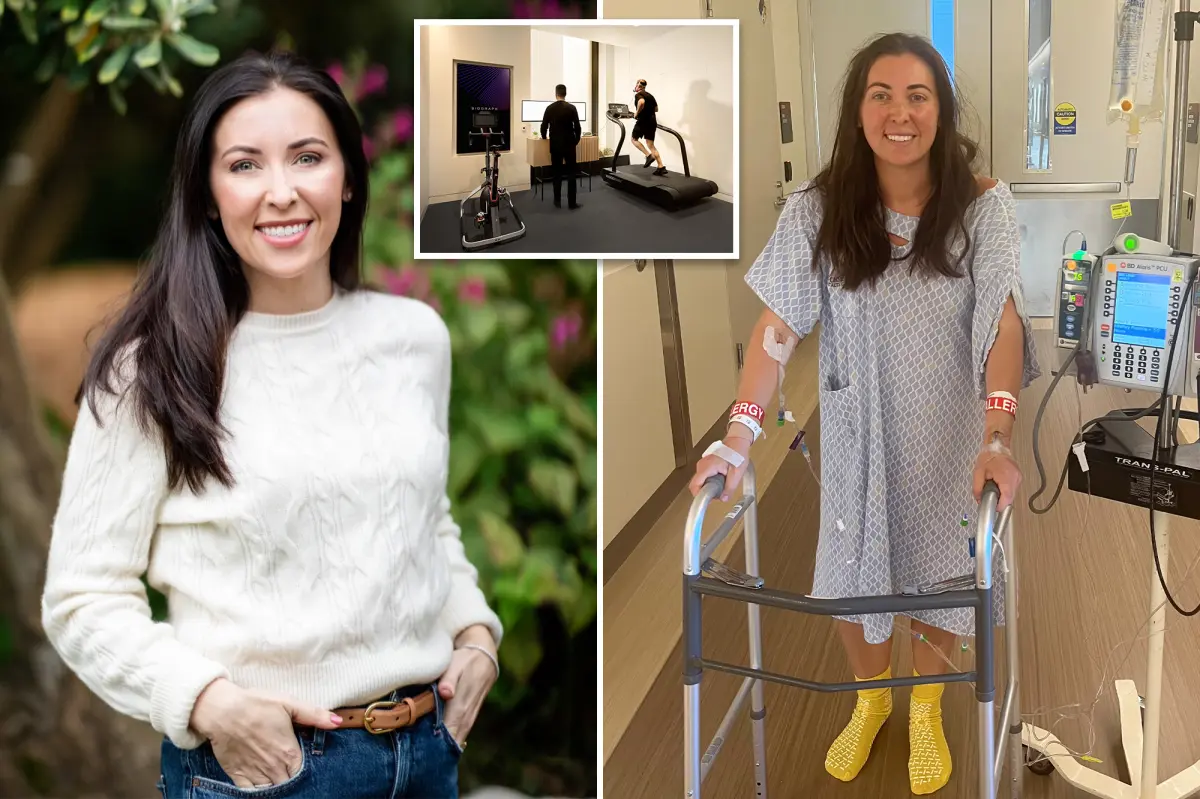
Maggie Hott represents the absolute pinnacle of modern physical vitality and professional success. At thirty-eight years old, she is a high-achieving executive at OpenAI, a dedicated mother of two young girls, and an elite endurance athlete who has conquered the demanding finish lines of two grueling Ironman triathlons and twenty-one marathons. Throughout her life, Hott viewed herself as a structurally indestructible and “very, very, very healthy person,” possessing a deep, earned trust in her body’s natural resilience. It was this confidence, paired with a recommendation from a close friend, that initially prompted her to explore the diagnostic possibilities at Biograph. Co-founded by the renowned anti-aging expert and longevity advocate Dr. Peter Attia, Biograph is an ultra-premium health optimization and preventive clinic operating out of state-of-the-art facilities in both San Mateo, California, and New York City. For Hott, the decision to undergo their comprehensive clinical screening in 2024 was not fueled by latent illness, physical symptoms, or paranoia, but rather by proactive curiosity. She entered the clinic fully expecting to receive a stellar biological report card, viewing the extensive six-hour diagnostic battery as an exciting opportunity to optimize her longevity. The testing process was incredibly exhaustive, encompassing a DEXA scan to evaluate bone density and skeletal health, targeted cognitive assessments, comprehensive flexibility and range-of-motion trials, detailed blood work panels, a grueling cardiovascular VO2 max test, and a fateful whole-body magnetic resonance imaging (MRI) scan. This routine exercise in luxury self-care would completely shatter her reality and ultimately save her life, demonstrating how quickly a baseline assumption of perfect health can be undone by the silent, unseen genomic and cellular developments unfolding beneath our skin.
The shocking shift from elite athletic champion to terrified oncology patient began just a few days after her visit, when Hott received a sudden, urgent phone call from the San Mateo clinic. The medical team’s tone was grave, informing her that the whole-body MRI had detected a highly suspicious, potentially dangerous mass on her pancreas that required immediate, specialized intervention. Receiving news of a pancreatic tumor is universally terrifying, as the pancreas is situated deep within the abdominal cavity, meaning its malignancies are notoriously difficult to routinely screen for or palpate, often remaining entirely asymptomatic until they have spread aggressively and reached terminal stages. This insidious nature is why pancreatic cancer carries a devastating overall five-year survival rate of just thirteen percent. Driven by maternal urgency and a refusal to panic, Hott leveraged her existing patient status in the Bay Area to secure immediate diagnostic follow-ups at the University of California, San Francisco (UCSF). An official MRI and painful tissue biopsy confirmed she was harboring a solid pseudopapillary neoplasm, an exceedingly rare pancreatic tumor that characteristically emerges in the body or tail of the pancreas in young women. Astonishingly, Hott had never experienced a single symptom—no persistent pain, no unexplained digestive distress, no sudden fatigue—and she had zero family history of the disease. Caught purely by chance at Stage 1, her specific tumor carried an encouraging survival rate of over ninety-five percent, illustrating the life-and-death difference made by catching a silent killer before it has the opportunity to migrate to other vital organs.
In May of 2024, Hott underwent a complex and highly delicate surgical procedure at Stanford Medicine, where talented surgeons successfully removed the 2.5-centimeter tumor along with approximately twenty-five percent of her pancreas. Remarkably, they were able to preserve her spleen—a crucial blood-filtering organ that sits in direct contact with the tail of the pancreas and is frequently sacrificed during standard, late-stage pancreatic cancer surgeries. In the wake of her life-altering procedure, Hott sought out community and information by joining a specialized Facebook support group comprising roughly five hundred other patients diagnosed with solid pseudopapillary neoplasms. This group provided a sobering reality check regarding how unique her situation truly was: nearly every other woman in the digital community had not discovered their pancreatic tumors until they had grown to ten centimeters or larger, and Hott was the only individual in the entire group who had managed to save her spleen. Because her tumor was caught so early, her recovery did not require aggressive systemic chemotherapy, radiation, or ongoing maintenance medications. Her post-operative checkups at Stanford have already transitioned from a bi-annual schedule to a single yearly visit, her local lymph nodes remain completely clear of cancer cells, and she has been officially declared entirely cancer-free. While she still occasionally manages some residual pain in her stomach, she views this minor discomfort as a small price to pay for her complete physical restoration, marking a triumphant corner turned in her recovery.
While Hott’s story is a triumph of early detection, it also highlights the stark financial realities and socioeconomic dynamics at play in the emerging, high-tech landscape of longevity and preventive medicine. The comprehensive six-hour diagnostic appointment at Biograph carried a hefty price tag of $7,500, a massive sum that was not eligible for health insurance coverage under her commercial plan, which only kicked in to cover her actual, million-dollar cancer treatments and surgical team at Stanford. However, Hott asserts that the out-of-pocket investment was worth every single dollar, especially since Biograph continued supporting her post-surgical recovery with ongoing, personalized physical fitness coaching and tailored nutritional guidance that introduced her to an optimized daily regimen of vitamins and supplements. Biograph, which launched its flagship location in San Mateo in 2020 before expanding into New York City’s bustling Financial District last year, offers consumers two distinct levels of membership. The core tier, which Hott purchased for $7,500, offers over twenty diverse clinical assessments, while the ultra-premium “black tier,” priced at an astronomical $15,000 for the first year, includes everything in the core package plus advanced features like continuous glucose monitoring, clinical at-home sleep apnea testing, and cutting-edge, artificial intelligence-driven dementia and cognitive decline risk assessments designed to proactively catch neurological degeneration.
This dramatic, life-saving experience has transformed Hott into an incredibly passionate advocate and informal ambassador for early diagnostic imaging, sparking a major health awareness movement among her personal and professional networks. By sharing her journey with vulnerability, she has successfully convinced more than fifty of her friends, family members, and OpenAI colleagues to undergo the expensive screenings themselves, leading to several unexpected and crucial diagnoses. For instance, one female colleague on her close-knit work team discovered a previously unnoticed, critical lump in her breast, while Hott’s own husband identified a small issue that they are now actively monitoring on an annual basis under specialized care at Stanford. While the sudden rise of ultra-expensive, luxury longevity clinics has ignited a furious national debate among public health officials—many of whom argue that whole-body scans foster clinical over-diagnosis, generate unnecessary physiological anxiety, and lead to invasive surgeries for benign abnormalities—Hott strongly believes that access to structured personal data is a fundamental human superpower. Biograph itself stands firmly behind its proprietary methodology, with a company spokesperson revealing that its extensive preventative screening protocols have helped directly save the lives of roughly one in six of its active members by catching silent, life-threatening pathologies before physical symptoms can ever manifest.
Beneath the elite athletic achievements, high-profile corporate responsibilities, and expensive clinical technologies, the true emotional core of Maggie Hott’s journey centers on the quiet, irreplaceable daily routines she shares with her family. As the mother of two young daughters—a four-year-old and a six-year-old—she is constantly haunted by the chilling thought of what would have happened if she had opted out of that private, high-end screening back in 2024. Had she lived under the traditional reactive healthcare model, her silent, slow-growing pancreatic tumor would have inevitably expanded over the subsequent five years, likely spreading throughout her body and eventually leaving her young daughters to navigate their childhoods and lives without a mother. For Hott, any medical debate regarding clinical anxiety or the potential for diagnostic over-testing completely pales in comparison to the simple, profound joy of being alive to read bedtime stories, attend school plays, and watch her children grow. Her life-altering journey serves as an incredibly powerful, deeply human testament to the transformative potential of proactive health tracking and self-advocacy, illustrating how courage, state-of-the-art predictive science, and the luck of early intervention can combine to rewrite a potentially tragic narrative into a beautiful story of survival, hope, and precious extra decades of life with the people she loves most.