



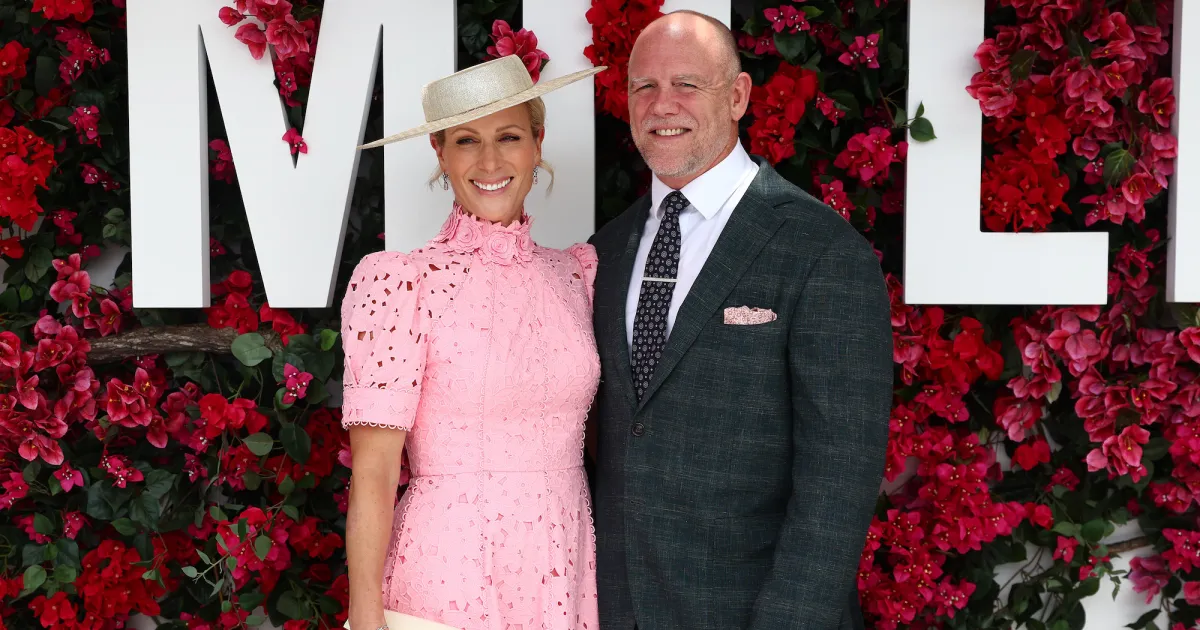
There is something wonderfully grounding about hearing two people who live inside the orbit of royalty talk about marriage the way most of us would talk about it at the kitchen table, with honesty, humor, and a little bit of weariness. Princess Anne’s daughter, Zara Tindall, and her husband, Mike Tindall, recently opened up on the Talk Horse podcast about the highs and lows of their relationship, and the conversation felt less like a polished royal interview and more like a genuine, sometimes messy, look at what it takes to make a life with someone. Mike, a former rugby professional, was candid about the fact that communication in their marriage is not a one-size-fits-all thing. He explained that some conversations come easily, especially those around the shared passions that have always connected them, whether that is sport, their animals, or their children. But he was quick to admit that other conversations, the more nuanced, emotional, or difficult ones, are not so simple. “I don’t think either of us necessarily chase out confrontation until it happens,” he said, acknowledging that neither he nor Zara is naturally drawn to conflict. When confrontation does arrive, though, they are both capable of sitting with it and talking things through. He described their approach as one of trying to “muddle your way through,” which is perhaps the most relatable phrase in the entire interview. There was no false claim of perfect communication, no insistence that they have it all figured out. Instead, there was a quiet acceptance that marriage is often just a matter of two flawed people doing their best, missing the mark sometimes, and then finding their way back toward each other when it matters.
The Tindalls have been married since 2011, and that is long enough to accumulate a real history of shared moments, both joyful and challenging. Together they have raised three children: Mia, who is twelve, Lena, who is eight, and Lucas, who is five. Raising young children is hard for anyone, and it becomes even harder when both parents are trying to hold onto identities and ambitions that existed long before the children came along. Mike was honest about this tension in their own lives. He noted that Zara is still deeply involved in the equestrian world, competing at a high level while also being a mother, and he acknowledged that the balance between those roles is not easy. “Sometimes life is hard,” he said, “and when kids come along, and you’re trying to still compete, fortunately.” He explained that when Mia was born, it was his final year playing rugby, so he has not had to navigate being a professional athlete and a father at the same time. But he has watched Zara try to do exactly that, and he has seen how difficult the juggling act can be. The demands of parenthood, the pressure of competition, and the sheer logistics of getting everyone where they need to be can weigh on any couple. According to Mike, most of their disagreements are not about grand philosophical differences or deep emotional rifts. They are about the everyday stuff, the children, the schedule, and the impossible task of being in two places at once. There is something almost comforting in that, a reminder that even for a couple connected to the royal family, marriage is largely about figuring out who is picking up the kids, who is going to the school event, and how to make sure nobody feels left behind.
The logistics of life with children were thrown into sharp relief when Mike told a story about a weekend where he wanted to take their kids to a college football game. Zara, meanwhile, was planning to run a cross-country race, and she pointed out that if he took the children to the game, he would not be there to watch her compete. Mike’s response was quick and playfully pragmatic, and it perfectly captured the way he tries to navigate the push and pull of supporting a partner while also making space for his own priorities. He reminded Zara that the last time he did not watch her run, she won the British Open for the first time. His joke, delivered with a wink apparently, suggested that maybe his absence, and the absence of the kids, had actually helped her focus and perform better. It is the kind of playful reasoning that couples use when they are trying to find a way out of a scheduling conflict without making anyone feel unimportant. Underneath the humor, though, there is a real understanding. Mike was not dismissing Zara’s desire to have him there. He was simply offering an alternative interpretation of what support looks like, one that recognizes that sometimes the best way to help someone is to give them space. He acknowledged that he does not always get it right, but he tries. “I don’t get it right all the time, by the way, but you’ve got to try and do it whatever ways you can,” he said. That willingness to admit imperfection, while still showing up and making the effort, is exactly the kind of realistic approach that sustains marriages through the years. It is not about being flawless. It is about being present, even when you are not entirely sure what the right move is.
When it comes to Zara’s race days, Mike has developed a kind of personal code of conduct. He tries to “stay out the way” on cross-country day, giving her the room she needs to focus and prepare. He understands, because he was once a professional athlete himself, that before a competition, the mind needs to be clear and the body needs to be ready. He knows when to push, when to joke, and when to simply disappear into the background. His role, as he describes it, is to try to make her laugh every now and again, just to remind her that life does not have to be so serious, that even in the midst of high-stakes competition, there is room for lightness. But he also knows that humor has a time and a place. After the event is over, he reads the room and reacts appropriately. He said, “Either it could go really bad, but you know it’s the time to have a joke, or it could have gone really well where you can go, ‘Well, you almost f***ed up there,’ or ‘You did this.’” This ability to feel out the emotional moment, to know when to lean in and when to lean out, is at the heart of why their marriage works. It is not just about telling jokes. It is about understanding the other person’s state of mind, respecting it, and responding to it with the right energy. Mike called it “nuances,” and that is exactly the right word. Marriage is full of delicate moments where the difference between a helpful comment and a hurtful one is almost invisible. Knowing how to navigate those moments takes time, patience, and a genuine desire to understand the person you are with. Mike seems to have that desire, and it is clear that he has learned a great deal about Zara over the years, about what she needs when she is under pressure and how to be the kind of partner she can rely on.
What emerges from this conversation is a portrait of a marriage that is built not on grand romantic gestures or flawless harmony, but on compromise, humor, and a shared understanding of what really matters. Neither Mike nor Zara seems interested in pretending that their relationship is easy. They both acknowledge that life with children, careers, and all the ordinary pressures of existence can be overwhelming. But they also seem to have found a way to move through the hard moments together, often by not taking themselves too seriously. Mike’s willingness to joke about the British Open, his admission that he is not always watching from the sidelines, and his honest confession that they do not chase confrontation until it happens all point to a relationship that has matured beyond the need for perfection. They have learned that sometimes the best thing you can do for your partner is give them space, and sometimes the best thing you can do is crack a joke to break the tension. They have learned that disagreements about schedules and children are not signs of a broken relationship but simply the natural texture of a shared life. And they have learned that even when you do not get it right, you keep trying, because the alternative is giving up on something that is worth fighting for. There is a deep wisdom in Mike’s approach, even if he presents it with a shrug and a laugh. He understands that marriage is not a problem to be solved but a process to be lived, and he seems willing to embrace the messiness of that process with open eyes and a good-natured spirit.
At the heart of it all, the Tindalls’ story is a reminder that love is not just about how you feel on the easy days. It is about how you show up on the hard ones, how you handle the disappointments, the scheduling conflicts, and the moments when you would rather be doing something else. It is about staying at the kitchen table and talking through the difficult things, even when you would rather let them sit in silence. It is about knowing your partner well enough to know when they need a laugh and when they need silence, when they need you beside them and when they need you out of the way. Zara and Mike have built a partnership that seems to hold up under the weight of royal expectations, public scrutiny, demanding careers, and the ordinary chaos of raising three young children. They have done it not by being perfect, but by being real with each other, by keeping their sense of humor, and by remembering that they are on the same side even when they disagree. Mike’s candid comments on the podcast felt like a gift, not because they revealed anything sensational, but because they revealed something true. In a world where so much of public life is carefully managed and polished, it is refreshing to hear a couple talk about the unglamorous reality of marriage with such warmth and honesty. Their relationship is not a fairy tale. It is something better: a real, living, breathing partnership, full of love, laughter, and the willingness to muddle through together, no matter what comes their way.