





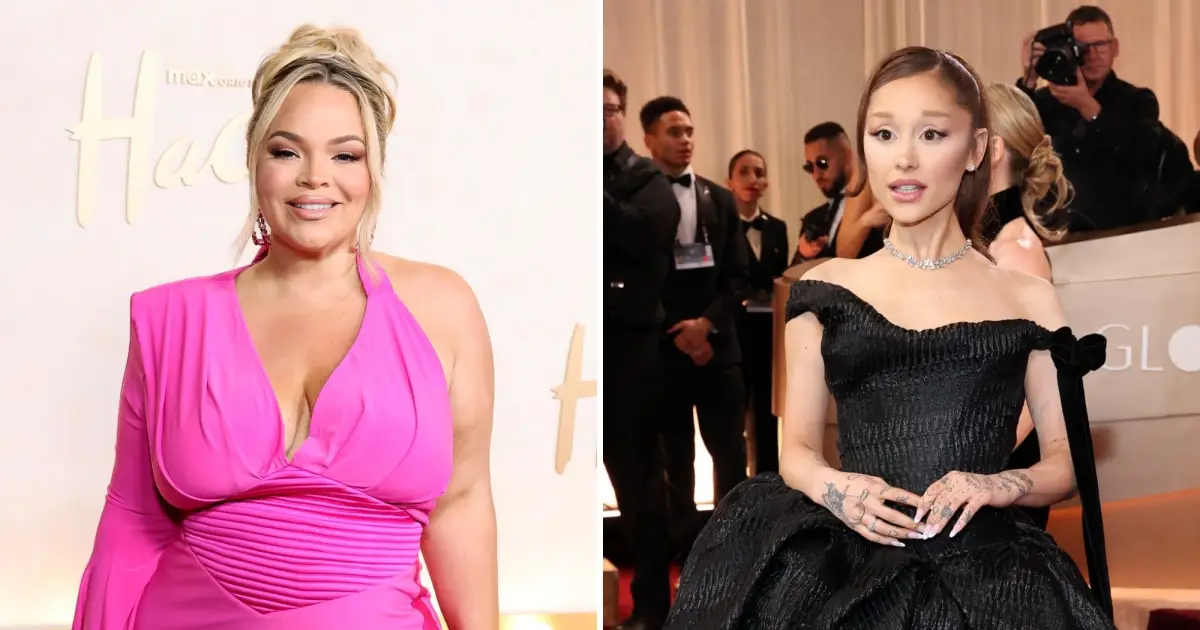
The modern landscape of social media has fostered an environment where public figures are routinely dissected frame-by-frame, turning their physical appearances into topics of casual, daily public debate. Recently, prominent internet personality Trisha Paytas took to TikTok to voice her deep frustration with this trend, specifically focusing on the relentless online scrutiny directed at pop icon Ariana Grande. Paytas, who has spent over a decade navigating the volatile, often unforgiving waters of internet fame, expressed profound concern over how incredibly comfortable social media users have become with talking about women’s bodies. This defense came in the wake of the announcement that Grande would be stepping back from her planned role in the West End production of the musical Sunday in the Park With George, a career shift that immediately triggered a deluge of speculative commentary about her physical health and stamina. Paytas observed that while historically, plus-size, midsize, or larger individuals have borne the brunt of relentless societal body-shaming, there is a newly intensified and deeply concerning phenomenon of “body-checking” and extreme surveillance targeted at individuals with very petite frames. The public discourse reached a fever pitch following the release of Grande’s evocative music video for her song “Petal,” where many viewers began pointing out the visibility of her collarbones and chest bones, using these visual markers as evidence of a deeper issue. While Paytas did not shy away from acknowledging that such physical changes can feel startling or alarming to the average viewer, she questioned the necessity and the ethics of the public’s obsessive need to comment on these details so aggressively. Her commentary highlighted a growing disconnect in our digital culture, where genuine human concern is frequently weaponized as an excuse for invasive voyeurism, leaving the subject of the scrutiny feeling isolated, judged, and fundamentally misunderstood by the very people who claim to appreciate her art.
To fully understand the gravity of Paytas’s critique, one must examine how the internet has transformed the act of “body-checking” from a private, psychological struggle into a highly collaborative, public sport. In the early days of celebrity culture, body-shaming was often a one-way street dominated by tabloid magazines that mocked public figures for gaining weight or failing to fit into unrealistic aesthetic molds. Today, however, social media has democratized this cruelty, allowing millions of users to participate in the micro-analysis of a person’s frame under the guise of pseudo-scientific observation and “concern-trolling.” When an artist like Grande releases a video, viewers do not merely consume the music or the performance; they freeze frames, zoom in on skeletal structures, and post side-by-side comparisons to track weight loss, creating a toxic feedback loop that is highly damaging to watch. Paytas argues that this constant visual policing serves no beneficial purpose whatsoever, as it strips public figures of their basic humanity and turns their physiological states into public spectacles. By shifting the conversation from a place of genuine, private support to public ridicule and debate, the internet reinforces the dangerous notion that a woman’s body is public property, open for perpetual evaluation and judgment. This hyper-focus on thinness and physical changes does not foster a supportive environment for anyone; instead, it establishes a culture of constant surveillance that forces both celebrities and everyday users to view their own bodies through a lens of perpetual deficiency, anxiety, and harsh criticism. This collective obsession with scanning others for perceived flaws ultimately desensitizes us to the real, human emotions of the person behind the screen, replacing empathy with a cold, analytical curiosity that does nothing to promote healing or understanding.
One of the most compassionate and humanizing elements of Paytas’s argument lies in her deep understanding of the internal psychology of those who struggle with severe weight loss, body dysmorphia, and eating disorders. There is a persistent, incredibly naive belief among social media commentators that by pointing out someone’s extreme thinness, they are somehow performing a public service or offering a helpful wake-up call that the individual is otherwise unaware of. Paytas vigorously dismantles this assumption, asserting that individuals who are dealing with drastic physical changes are acutely, agonizingly aware of exactly what is happening to their bodies. For someone battling an eating disorder or deep-seated body dysmorphia, their physical form and their weight are often the singular, obsessive focus of their entire mental existence, meaning they do not require a chorus of millions of strangers on the internet to point out their bones or comment on their fragile appearance. Furthermore, Paytas warns that public commentary of this nature—even when framed as gentle worry or well-meaning concern—can have a devastatingly counterproductive effect on the individual’s mental health. In the complex, highly distorted cognitive framework of an eating disorder, being told “you look too thin,” “you look sick,” or “we can see your bones” can easily be processed as a form of success, validation, or encouragement to continue harmful behaviors. Far from motivating someone to seek professional help or make healthy changes, this constant, repetitive feedback loop can entrench them deeper into their illness, proving that the internet’s obsession with discussing these struggles is not only unhelpful, but actively dangerous and enabling. By choosing to voice these thoughts publicly, commentators are not offering a lifeline; they are merely participating in a harmful spectacle that feeds the very disorder they claim to oppose.
The real-world consequences of this relentless, microscopic public evaluation are vividly illustrated by Ariana Grande’s recent professional decisions, which highlight the immense psychological and emotional toll that fame can take on an artist’s life. Following the wave of intense commentary surrounding her “Petal” music video, Grande’s representative officially announced that the Grammy-winning singer would be taking a significant step back from the public spotlight after the conclusion of her Eternal Sunshine Tour on September 1 in London. This decision to take a prolonged, much-deserved break from public-facing work and appearances was directly attributed to the “endless, ongoing public scrutiny” that has plagued her career and personal life for years. By walking away from her highly anticipated role in the West End production of Sunday in the Park With George, Grande has made a clear, definitive statement about the necessity of protecting her own peace, mental health, and physical well-being over the demands of her career. For someone who has spent the majority of her life under the glare of global stage lights, retreating from the public eye is an act of profound self-preservation, demonstrating that even the most successful and beloved artists have limits to what they can endure. The tragedy of this situation lies in the fact that an incredibly talented artist has been driven to step back from her passions simply to escape the toxic noise of a public that refuses to allow her the simple grace of being a human being who goes through natural physical and emotional fluctuations. This withdrawal highlights the severe lack of safe spaces for public figures, forcing them to choose between their art and their sanity in a world that demands constant visibility.
This ongoing controversy also exposes a much larger, systemic issue within our contemporary culture’s relationship with celebrity bodies, particularly in an era dominated by the rapid rise of GLP-1 weight-loss medications, cosmetic transformations, and the commodification of wellness. We currently live in a digital society where the traditional boundaries of privacy have been completely demolished, leading many to believe that they are entitled to unrestricted access to a public figure’s medical history, personal struggles, and physical choices. Paytas proposes a simple, highly ethical boundary to help navigate this complex moral landscape: if a person does not actively choose to talk about their weight loss, medical treatments, surgeries, or personal health journeys, then their body is simply not up for public consumption or discussion. When the public demands that a celebrity explain, justify, or defend their physical appearance, they reduce a multi-dimensional human being to a mere object of curiosity, stripping away their basic right to bodily autonomy and dignity. Speculating about whether a celebrity is using weight-loss drugs, undergoing surgery, or struggling with physical illness only serves to feed an insatiable, highly profitable gossip industry that values engagement over human empathy. By adopting Paytas’s rule of respecting silence, we can begin to rebuild a healthier, more respectful boundary between creators and their audiences, acknowledging that no one owes the world an explanation for the skin they live in. This shift in perspective is crucial if we hope to dismantle the toxic culture of objectification that turns human lives into fodder for entertainment and judgment.
Ultimately, the conversation surrounding Trisha Paytas’s defense of Ariana Grande is a powerful, urgent reminder of the need for greater kindness, empathy, and humanity in our interactions within the digital space. It challenges us to look beyond the dazzling spectacle of celebrity culture and recognize the vulnerable, fragile human beings who exist beneath the carefully crafted public personas we consume daily. Stepping away from the spotlight to heal, rest, and escape the relentless judgment of the internet is not a sign of weakness, but rather a courageous declaration of self-worth that we should support and respect without reservation. As consumers of media, we have a collective responsibility to foster a more compassionate online culture—one that prioritizes the mental and physical well-being of individuals over our own curiosity and desire for gossip. If this situation teaches us anything, it is that the pressure to maintain an image of perfection under the constant gaze of millions is an exhausting, unsustainable burden that no one should have to bear alone. For anyone reading this who may be fighting their own silent, difficult battles with body image, eating disorders, or self-esteem away from the public eye, please know that you are not alone, and that your value is independent of your physical appearance. If you or someone you know is struggling with an eating disorder, compassionate, professional support is always available through the National Eating Disorders Association (NEDA), which can be reached by visiting their website or calling their dedicated, confidential hotline at (800) 931-2237 to find the path toward healing and peace. By choosing empathy over judgment, we can create a world where everyone feels safe in their own skin.