





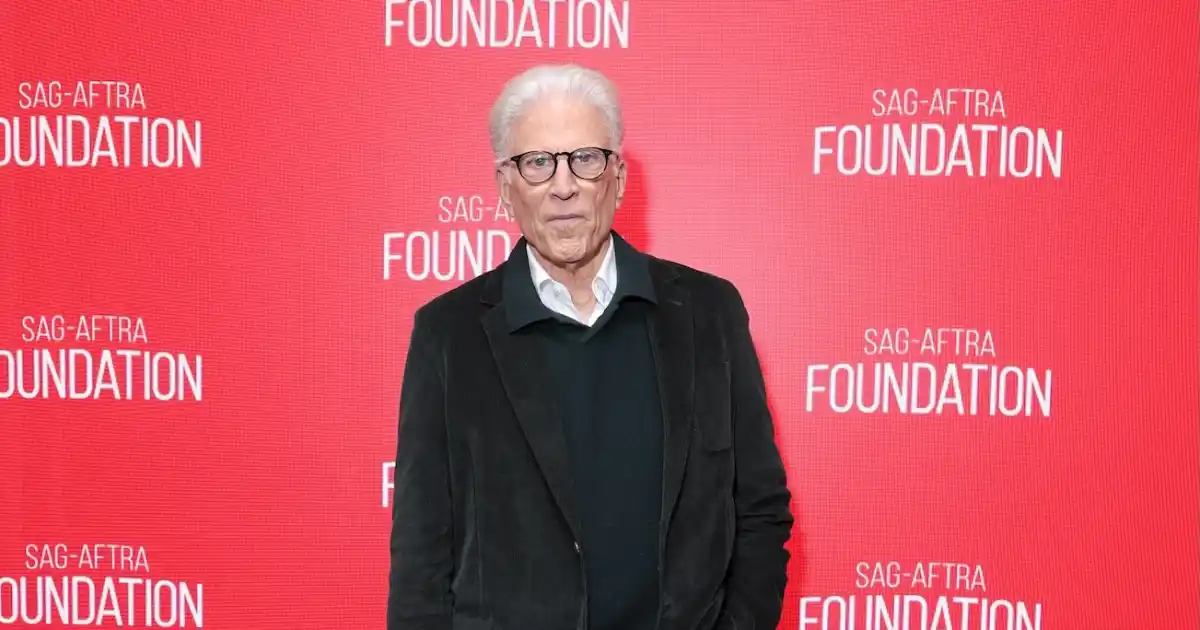
The passage of time does not always dilute the stinging regret of our worst public decisions, especially when those choices are preserved forever in the digital amber of the modern internet. For seventy-eight-year-old actor Ted Danson, a single, disastrous evening in 1993 remains a source of profound, lifelong remorse—a mistake so severe and culturally insensitive that he feels a deep, moral obligation to apologize for it indefinitely. Appearing recently on W. Kamau Bell’s insightful and reflective podcast, Who’s With Me, the veteran television star did not shrink from his past; instead, he stepped directly into the discomfort of his own history with a level of vulnerability rarely seen in contemporary Hollywood. Danson addressed his infamous decision to perform in blackface during a Friars Club roast for his then-partner, Whoopi Goldberg, an event that has lingered over his decades-long career like an immovable shadow of shame and controversy. Rather than offering a standard, publicist-approved apology aimed at putting the issue to rest, the Man on the Inside star spoke with raw transparency, expressing an active desire to carry and voice his contrition for the rest of his days. He candidly acknowledged that the nature of the digital world means his decades-old failure is constantly brand-new to unsuspecting viewers; any young person scrolling through the vast, unfiltered archives of pop culture today might stumble upon images of that night and feel a sudden, jarring sense of betrayal, anger, and pain. By choosing to voice his deep remorse on a platform hosted by a prominent Black comedian and social commentator, Danson sought to demystify the thought process behind his actions while refusing to excuse them, recognizing that the heavy emotional weight of racial caricature does not diminish just because thirty years have flown by.
To truly understand how such a catastrophically misguided moment came to fruition, one must look back at the unique social, professional, and personal pressures enveloping Danson in the autumn of 1993. At the time, he and Goldberg were one of Hollywood’s most talked-about couples, navigating a high-profile, interracial romance that was routinely scrutinized, dissected, and sensationalized by the mainstream media. Behind the scenes, however, their relationship was beginning to fracture under the weight of public pressure, and the emotional strain of their impending breakup was compounded by their heavy obligation to participate in the legendary, notoriously unfiltered Friars Club roast. Danson explained that both he and Goldberg sensed the impending disaster of their situation and tried desperately to get out of the booking, but they ultimately found themselves locked into their commitments by contract and expectation. As the date of the roast approached, Danson, who had spent years playing the charming but safe, middle-of-the-road bartender Sam Malone on the clean-cut sitcom Cheers, felt a paralyzing sense of inadequacy. He was not a stand-up comedian, and he lacked the lightning-fast reflexes, the thick skin, and the sharp rhetorical weapons required to survive a live roast, let alone to playfully mock one of the most brilliant, boundary-pushing Black female comedians of the era. The sheer panic of having to “run with the bulls” alongside seasoned comedy veterans drove him into a defensive state of overthinking, as he desperately searched for a conceptual hook that would allow him to match Goldberg’s own legendary capacity for outrageousness, leading him down a dangerous path of creative desperation.
This creative desperation ultimately led Danson to make a profound intellectual error, where he mistook a deeply offensive historical relic for avant-garde performance art. Convinced that his standard, mild-tempered comedic persona would fall utterly flat on the highly anticipated roast stage, he began to study old tapes of provocative, boundary-pushing comedy, searching for a way to break through the polite boundaries of his public television image. In a moment of high-concept self-delusion, his mind formulated a disastrous equation: he believed that if he were a Black performer, he would have the cultural license to utter the most shocking, taboo, and transgressive jokes imaginable. Reasoning that theater was a space of infinite transformation, he arrogantly concluded that wearing blackface would act as a theatrical device—a bold, provocative bridge that would allow him to step outside his white privilege and deliver a radical, expectation-shattering performance. Looking back today, Danson describes this line of thinking as incredibly arrogant and profoundly stupid, a classic symptom of a privileged white artist who believed his innocent, artistic intentions could somehow override centuries of painful racial caricature, violence, and systemic oppression. His hubris was so thick that he even ran the concept by Goldberg beforehand; she, wanting to support her partner’s creative process and perhaps underestimating the raw, visceral impact the offensive imagery would have on an unsuspecting crowd, refrained from throwing cold water on the idea, leaving Danson to march blindly toward his own social ruin.
The second Danson stepped onto the stage of the Friars Club, the fragile, intellectualized illusion of his “performance theater” evaporated into thin air, replaced by a cold, suffocating wave of public horror. He describes the immediate aftermath of his entrance as akin to sticking his finger directly into a high-voltage light socket—a sudden, shocking realization that he had crossed a boundary from which there was absolutely no return. Within the first twenty seconds of his routine, the room’s energy plummeted, fracturing into a complex and highly charged matrix of disgust, confusion, and outrage. Danson vividly remembers the grim arithmetic of the audience’s reaction: perhaps twenty percent of the crowd understood the high-concept, ironic intention and tried to tolerate it, thirty percent grasped the intent but absolutely despised the execution, and a staggering fifty percent simply saw a white man in blackface, felt a profound wave of hatred for the act, and immediately transferred that hatred directly onto Danson himself. Yet, trapped under the blinding stage lights and paralyzed by the momentum of a script he had labored over for months, he made the agonizing choice to keep going, marching through a heavy swamp of silence and audible gasps to finish a set that would permanently alter his public perception and leave an indelible stain on his legacy.
Perhaps the most painful aspect of the entire ordeal for Danson is the unfair, lingering burden his mistake placed on Whoopi Goldberg, a woman he loved and respected, who was subsequently forced to act as his racial shield. In the days, years, and decades following the roast, Goldberg repeatedly stepped up to defend Danson in the media, explaining the artistic context of the performance, asserting that she had helped write some of the material, and trying to protect him from being permanently cast out of polite society. For Danson, watching a brilliant Black woman expend her own cultural capital, grace, and energy to defend his foolishness remains an ongoing source of quiet heartbreak and intense guilt. He acknowledges that Goldberg’s defense of him was incredibly sweet and extraordinarily generous, but he deeply hates that his thoughtless actions put her in that defensive position in the first place—a position that she has had to revisit periodically over the last thirty years whenever the controversy resurfaces. On the podcast, Danson expressed a deep desire to shield her from any future fallout, recognizing that the very last thing Goldberg needs or wants in her senior years is to be dragged back into the public defense of a white man’s past, clueless blunder.
Ultimately, Ted Danson’s ongoing journey of public accountability serves as a valuable case study in the anatomy of a genuine, non-defensive apology that stands the test of time. In an era where public figures often issue heavily managed, fleeting statements of regret designed to minimize their culpability and silence their critics, Danson’s commitment to a lifetime of remorse is both rare and highly illustrative. At seventy-eight, he is not seeking a tidy resolution, nor is he demanding that the public grant him absolution; he accepts that the anger of those who discover the footage online today is entirely valid and justified. By openly discussing his arrogance, his artistic panic, and the systemic blind spots that led him to believe blackface could ever be funny, he models a form of contrition that prioritizes the feelings of the injured over the comfort of the offender. His conversation with W. Kamau Bell reminds us that humanizing our past failures does not mean excusing them, but rather understanding them deeply enough to ensure we never replicate them, while carrying the weight of our mistakes with quiet dignity, self-awareness, and unyielding humility.