





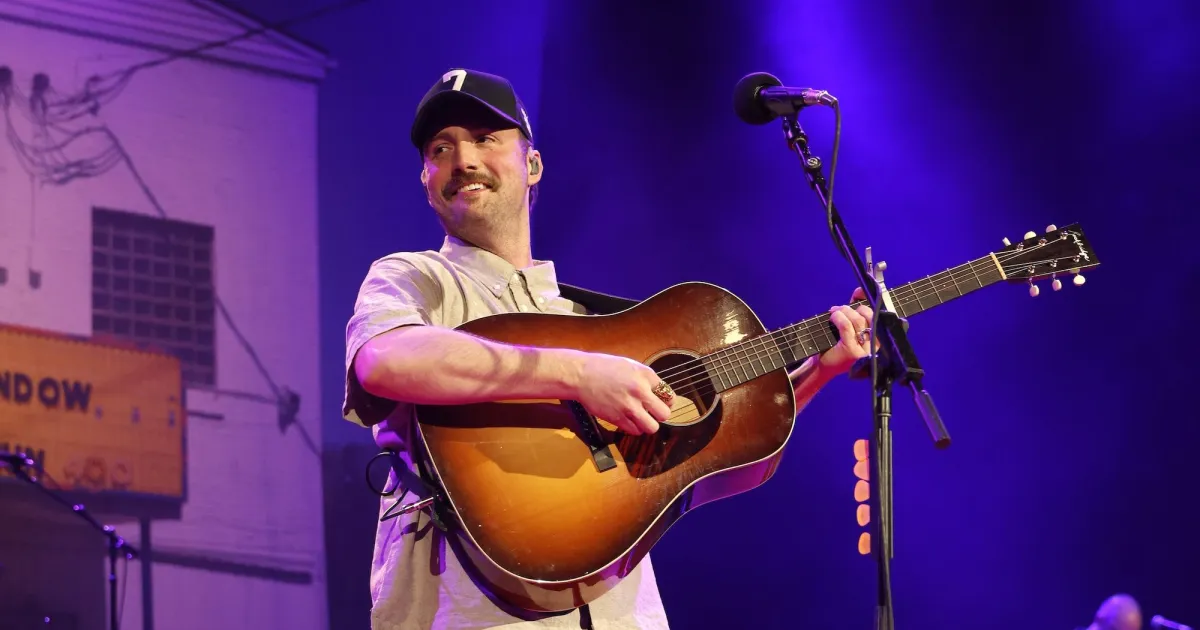
In an industry where artists are often pressured to maintain a polished, indestructible facade, country singer-songwriter Ruston Kelly recently chose raw, unfiltered vulnerability instead. Taking to Instagram, the 37-year-old musician courageously shared that he was starting over, marking his third day of complete sobriety after suffering a deeply humbling relapse. For years, Kelly had operated under a self-crafted definition of recovery. Following his initial struggles, he convinced himself in 2021 that as long as he stayed away from amphetamines—the specific pills that had previously gripped his life—he was successfully navigating his “clean” journey. He admitted to slipping into a state of obstinacy, believing he wasn’t a “traditional” addict and could safely moderate alcohol, THC, and other substances. This illusion of self-control allowed him to feed his physical impulses while falsely believing he remained firmly in the driver’s seat of his own life.
However, the fragile peace Kelly had constructed was shattered in June by a terrifying, freak accident that completely upended his physical and mental health. While riding in a residential golf cart, the vehicle collided with an overgrown tree root, launching it into the air and flipping it violently. The crash sent Kelly flying, smashing his head directly into a mailbox and leaving his arm practically broken in half. Plunged into what he described as “level 15 pain,” the emergency room and subsequent medical care required an aggressive regimen of heavy narcotics, including fentanyl, morphine, ketamine, dilaudid, oxycodone, and a month-long prescription for Percocet. While medically necessary in the immediate aftermath of such catastrophic trauma, the flood of highly addictive painkillers quickly reopened a door he thought he had closed, challenging his sobriety in ways he never anticipated.
It did not take long for the subtle, insidious patterns of active addiction to reclaim their hold on Kelly’s daily routine. He watched in real-time as his prescribed medication began running out faster and faster, prompting him to chew pills right inside the pharmacy before even walking out the door. The classic, exhausting behaviors of dependency returned: hiding the quantity of pills he was consuming, secretly scheming to get more, and constantly complaining to his doctors that his dosage simply was not enough to manage his pain. This rapid escalation was a jarring wake-up call for the singer, forcing him to confront a terrifying truth. The intense, insatiable craving he had managed to keep at bay for years had been violently shocked back to life, proving that the boundary between medically managed pain relief and active substance abuse had entirely dissolved.
Realizing he was on the precipice of losing everything he loved, Kelly made the brave and pivotal decision on Sunday, July 26, to strip away all safety nets and commit to an uncompromising, total sobriety. He accepted, with profound humility, that he suffers from a lifelong substance abuse disease that does not allow for half-measures or selective moderation. In his poignant public declaration, he announced that all mood-altering substances—including alcohol and THC—are permanently off the table, as he recognizes that anything capable of scratching an itch will inevitably lead him back to the depths of addiction. By choosing to face his reality head-on, Kelly committed to protecting his soul, his marriage, his family, and his creative calling, resolving to live his life entirely clean and sober, taking it one day at a time.
Kelly’s radical honesty resonated deeply with his fans and peers, prompting an outpouring of love and solidarity from the music community. Fellow artists quickly flooded his social media feed with encouragement; singer Katie Pruitt praised his transparency for its potential to help others, while musician Natalie Hemby offered prayers and a comforting message of spiritual surrender. This collective embrace is a testament to Kelly’s ongoing, long-term willingness to speak openly about his mental health. He has never shied away from discussing his history of emotional recklessness and self-abuse, previously reflecting on how the isolation of the 2020 pandemic forced him to slow down, take an honest spiritual inventory, and learn the vital difference between creative spontaneity and self-destruction.
Today, as Kelly begins this challenging but hopeful new chapter, he does so with a renewed sense of purpose and deep personal grounding. Having navigated high-profile life changes, including his 2020 divorce from country star Kacey Musgraves and his recent, joyful marriage to Tia Cubelic this past May, he is focused on building a stable, honest future. His story serves as a powerful, humanizing reminder that recovery is rarely a straight line, but rather a continuous journey of self-discovery, forgiveness, and resilience. For anyone who reads Kelly’s words and feels a familiar ache of struggle within their own life, support is always within reach; the Substance Abuse and Mental Health Services Administration (SAMHSA) stands ready to help at 1-800-662-HELP (4357), proving that no one has to walk the path to healing alone.