





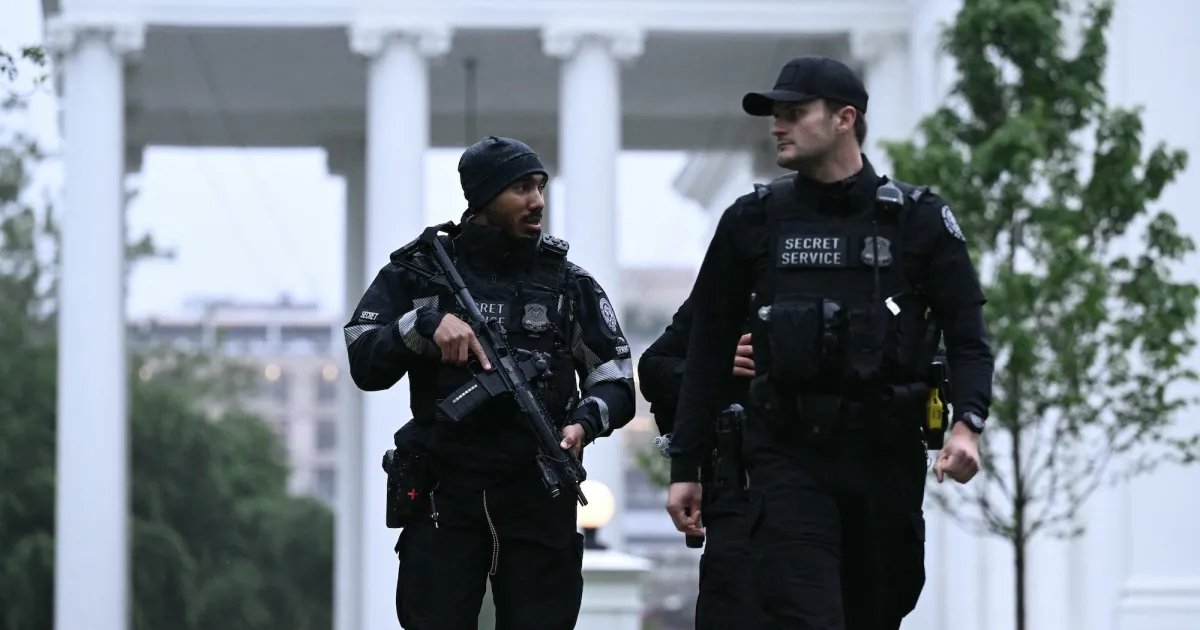
The quiet of a late spring Saturday afternoon in Washington, D.C., was shattered on May 23 when the echoes of sudden, unexplained gunfire erupted near the high-security perimeter of the White House. This frantic scene unfolded at the bustling intersection of 17th Street and Pennsylvania Avenue Northwest, a historic crossroads that serves as a gateway to the seat of American executive power, often crowded with tourists and government officials going about their daily routines. Almost immediately, rumors and panic rippled through the capital as witnesses reported hearing a rapid succession of shots that seemed to emanate from the vicinity of the nearby Eisenhower Executive Office Building, which houses the offices of various White House staff members and administrative officials. Within minutes of the first reported crack of gunfire, the United States Secret Service mobilized its elite tactical units, securing the immediate area and establishing a heavy security cordon around the executive mansion. Utilizing their official social media channels to communicate with an anxious and deeply concerned public, the Secret Service confirmed they were actively responding to reports of shots fired and were working hard to corroborate incoming intelligence with personnel. The environment in the district became increasingly tense as black armored vehicles flooded the streets, sirens wailed through the grand avenues, and heavily armed agents in tactical gear established defensive perimeters under the afternoon sun. Soon after, Federal Bureau of Investigation Director Kash Patel took to internet platforms to announce that FBI field agents had arrived at the scene to provide critical operational support to the Secret Service. The combined, rapid response of these key federal law enforcement agencies underscored the extreme gravity of a potential security breach occurring so close to the physical heart of the presidency as the nation watched in horror. This event highlighted the growing safety challenges and the constant operational readiness required by elite forces to neutralize sudden threats and maintain absolute control over the secure perimeter surrounding the executive offices during times of high political tension here.
For the members of the White House press corps, what began as a routine day of political reporting instantly transformed into a terrifying struggle for personal safety. ABC News correspondent Selina Wang was in the middle of recording a social media update on her mobile phone from the seemingly tranquil expanse of the iconic White House North Lawn, a historic lawn known for global prestige. As she spoke to her followers, the peaceful atmosphere of the spring afternoon was violently shattered by a barrage of sharp, deafening blasts that sounded sharp and unmistakably like a rapid succession of dozens of high-caliber gunshots. The raw, unfiltered terror of the moment was captured live on video as Wang, visibly shaken and startled by the proximity of the sounds, was forced to abruptly cut her broadcast short, ducking instinctively toward the gravel to find whatever cover the open, highly exposed lawn could offer. Amidst the shouting of armed security personnel and the chaotic rush of adrenaline, the pool of journalists were ordered to run for their lives, sprinting in panic across the lawn toward the press briefing room. Once inside the room, heavy doors were slammed shut, locked, and barred, transforming the press room into a security bunker. As they sheltered, huddled together in the cramped space, the reporters found themselves in an agonizing limbo of uncertainty, listening to the muffled sounds of safety operations outside while desperately trying to communicate with newsrooms. This incident showed the dangerous environment journalists face, pointing out that the fine line separating historic reporting from survival can completely vanish in seconds. Inside the lock down, several senior correspondents took to social media, posting urgent updates to let the outside world know they were secure and waiting, while the sound of distant sirens and helicopter rotors hummed heavily through the thick walls of the briefing building during this unexpected, terrifying pause in their professional assignment to chronicle the daily affairs of the executive branch of the federal government right there now.
This terrifying security emergency unfolded less than a single month after another devastating incident had already shaken the very foundations of the American political establishment to its core, leaving the capital deeply on edge. On the evening of April 25, during the prestigious White House Correspondents’ Dinner, high-profile gathering meant to celebrate journalism and civic leadership, the celebratory atmosphere was violently shattered. In the bustling lobby of the historic hotel, where guests were arriving, thirty-one-year-old Cole Tomas Allen allegedly opened fire, unleashing a sudden, chaotic barrage of bullets that sent shockwaves of panic through the crowd of dignitaries and guests. In the crossfire that immediately ensued, a dedicated Secret Service agent was struck by a bullet, though he was saved because the round was absorbed by his protective tactical vest. The agent was quickly transported to a hospital for medical treatment as chaos erupted. At the moment of the shooting, several of the most influential leaders, including President Donald Trump, First Lady Melania Trump, and Vice President JD Vance, were inside the grand ballroom, preparing to participate in the dinner. Secret Service details acted with speed, immediately rushing them out of the venue into armored vehicles. The speed with which the security of the state was compromised served as a chilling reminder of the lethal threats that hover over public life in America, showing that even highly secured political spaces are vulnerable to sudden outbursts of extreme violence, which can instantly disrupt the functioning of democratic governance and shatter the peace of mind of those who work within the capital on a daily basis. The shock felt by participants lingered long after, sparking extensive debates regarding security protocols for high-profile events and prompting a comprehensive review of how such gatherings are policed, emphasizing the need for enhanced surveillance, stricter access control, and more effective coordination between local, state, and federal protection departments to prevent future breaches from happening in spaces where influential leaders meet to shape the future of the modern free world today.
The immense emotional toll of these violent events was vividly reflected in the raw, visible trauma of those who were present inside the Washington Hilton hotel during the shooting, such as Turning Point USA Chief Executive Officer Erika Kirk. In the frantic moments immediately following the sudden gunfire in the lobby, Erika Kirk, age thirty seven, was observed being rushed out of the grand ballroom lobby area, visibly weeping, trembling, and completely overcome with intense distress as security officers cleared the area. She later spoke out passionately about her harrowing ordeal, describing it as another deeply traumatic manifestation of the profound evil and malevolence that currently plagues our modern society, pointing to the incident as evidence of a deeply disturbing, systematic rise in the frequency of politically motivated violence throughout the nation. For Kirk, however, this brief encounter with public gunfire was not merely an isolated political nightmare, but rather a painful and unexpected reopening of an incredibly deep and devastating personal wound. Just a short time prior, on September tenth, year twenty twenty five, her husband, the highly influential, articulate, and prominent conservative activist Charlie Kirk, was tragically and fatally shot during a violent incident at Utah Valley University in Orem, Utah. That devastating loss had sent major shockwaves through the entire conservative movement and the wider national community, leading directly to the rapid arrest of a twenty two year old male who was subsequently hit with heavy criminal charges, which included aggravated murder, felony discharge of a firearm, obstruction of justice and unlawful witness tampering. At the time of these latest physical security scares near the executive grounds, the accused perpetrator of that horrific crime in Utah had yet to formally enter any plea of guilty or not guilty in a court of law, prolonging the family search for closure. The tragic intersection of her deep personal grief with the systemic violence targeting public figures underscored the human cost of polarization, showing how victims must rebuild their shattered daily lives from scratch.
Following the swift apprehension of suspect Cole Tomas Allen in the immediate aftermath of the shooting at the Washington Hilton, the federal justice system began the complex and highly scrutinized process of holding him accountable for the violence that disrupted the gathering. Allen was subsequently hit with multiple severe federal indictments, reflecting the extreme gravity of his alleged actions; these charges included attempting to assassinate the President of the United States, the interstate transportation of weapons, and the unlawful discharge of a firearm during the commission of a violent crime. During a highly anticipated and heavily secured federal court hearing on May eleventh, the suspect formally entered a plea of not guilty to all counts, setting the stage for a protracted, intense legal battle that will inevitably keep these tragic events in the public eye for months to come. Meanwhile, this escalating pattern of threats and active shooters has placed an unimaginable burden upon protective institutions like the United States Secret Service, whose dedicated personnel are tasked with serving as physical barriers for the nation’s political leadership. The fact that an agent was shot in his protective armor during the April incident illustrates the extreme physical dangers these guards willingly face daily, showing that the boundary line between a routine assignment and a lethal encounter is paper thin. As the regulatory and safety agencies grapple with the modern challenges of securing open public spaces in a highly polarized social climate, the legal proceedings against violent individuals like Allen highlight the absolute necessity of robust judicial deterrence. Even as the wider society is left to wonder if law and the courts can hope to stem the rising tide of anger and violence that currently threatens to completely tear apart the country, prosecutors remain determined to deliver a clear message of zero tolerance for acts of terror targeting our leaders and our systems of democratic governance in an era marked by severe, unprecedented civic unrest throughout the length and breadth of the entire federal republic now.
Ultimately, these successive outbursts of violence near the physical seats of political and executive power reveal a deeply unsettling shift in the collective landscape of American public life, where the threat of physical harm has become a constant, background anxiety for politicians, journalists, and ordinary citizens alike. The rapid escalation of these incidents, occurring first within the glamorous, highly secure environment of a major Washington hotel and then directly outside the gates of the White House itself, proves that no space, raw physical perimeter, or security clearance can fully insulate individuals from the unpredictable reach of societal hostility and ideological resentment. For the reporters who bravely returned to their desks in the White House briefing room, and for the agents who stood watch on Pennsylvania Avenue just hours after the gunfire subsided, the call to duty persists despite the deep emotional scars left by these terrifying disruptions. They are forced to adapt to an increasingly tense reality where the pursuit of truth and the preservation of democracy are carried out under the imminent threat of violence, transforming routine civic spaces into potential battlegrounds. As families like the Kirks continue to navigate the profound personal tragedies wrought by such sudden acts of hostility, the nation is forced to grapple with a larger, more existential question: how to preserve the open, accessible values of a democratic society while simultaneously protecting the lives of those who serve and reflect it. In an era structured by deep seated division, the resilience shown by those who step forward to perform their vital duties in the face of imminent danger remains the ultimate defense against the destructive forces of fear, even as the complex search for lasting solutions and true peace within the cultural landscape continues to challenge our collective resolve. This challenging modern climate of instability demands a sustained, unified commitment to reinforce both national security and constitutional liberties, as the ultimate price of total societal inaction remains far too high for any modern society built on systemic freedom.