




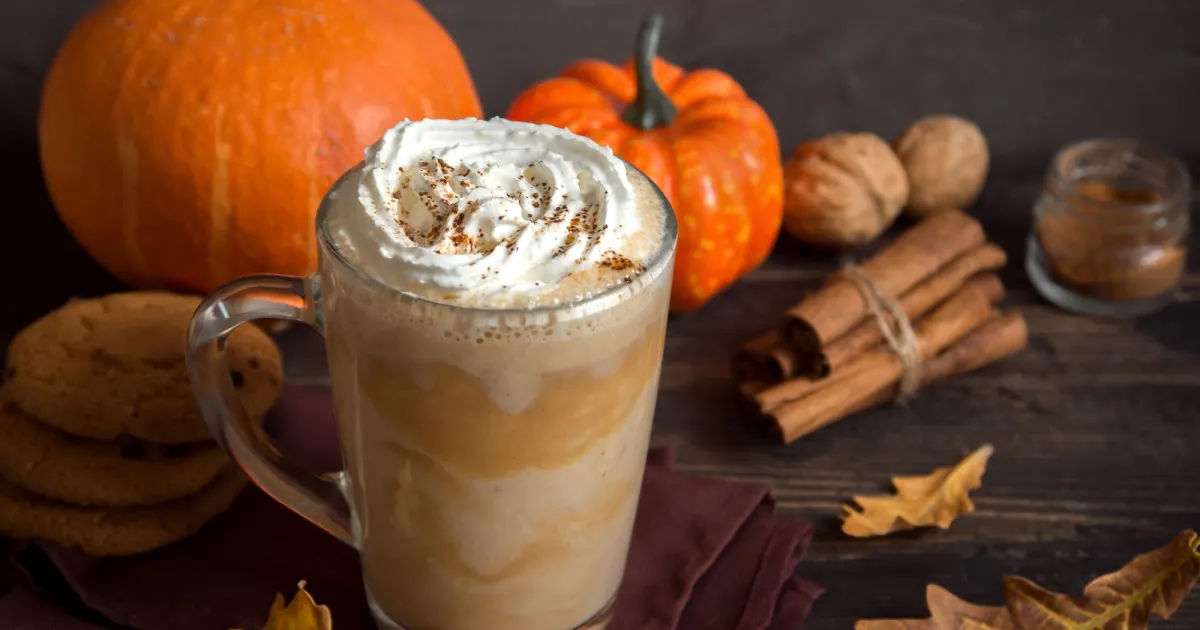
Pumpkin spice is back on menus, in coffee shops, on scented candles, and even in dog treats. Every year, its return feels less like a product launch and more like a seasonal homecoming. But for something so beloved, it remains surprisingly misunderstood. Most pumpkin spice syrups and flavorings contain no pumpkin at all. The name doesn’t refer to the gourd; it refers to a blend of warm fall spices—cinnamon, nutmeg, ginger, cloves, and sometimes allspice—that became associated with pumpkin pie. The seasoning is meant to flavor pumpkin, not to be made from it. Steve Talcott, a professor at Texas A&M University, put it simply in a video for Campus Insights Media: “I want you to think about pumpkin spice latte as not necessarily spiced pumpkin, but a spice for pumpkin.” That one sentence clears up a lot of confusion. It explains why a pumpkin spice latte can taste unmistakably like autumn without ever coming close to a pumpkin patch. It also explains why the flavor works in so many non-food products, from air fresheners to body scrub. The spices themselves are the story. They carry a specific memory of Thanksgiving tables, crisp air, and cozy sweaters. They are warm, familiar, and deeply comforting. Think about it from a food company’s perspective. Pumpkin puree is heavy, perishable, and expensive to ship. It also changes the texture of a syrup and doesn’t dissolve easily into a cold drink. Spices, on the other hand, are lightweight, shelf-stable, and incredibly concentrated. A little goes a long way. So it makes sense that most commercial pumpkin spice flavorings skip the gourd entirely and still deliver a flavor that people crave all year long. The absence of pumpkin is not a secret or a shortcut; it’s just the reality of how the flavor is made. When you see “pumpkin spice” on a label, you are not being tricked into eating squash. You are being invited to taste a tradition.
Starbucks invented the pumpkin spice latte in 2003, and for more than a decade, the drink’s flavor came entirely from that spice blend. No pumpkin puree. No pumpkin extract. Just the familiar combination of spices that reminded people of their grandmother’s pie. The drink became a phenomenon, spreading through social media and turning into a cultural marker of autumn. Then, in 2015, Starbucks changed the recipe. The company added pumpkin puree to the syrup, giving the drink a slightly different body and a more vegetal undertone. If you noticed a change in how your favorite fall drink tasted around that time, you weren’t imagining it. Some fans who had been drinking pumpkin spice lattes since the early days say the old version was more spice-forward—sharper, bolder, with cinnamon and clove leading the way. Others prefer the newer version, which is rounder and more mellow, with the pumpkin acting as a background note rather than the main event. Your preference between the two can tell you a lot about your taste. Do you like your fall flavor loud and spicy, or soft and comforting? Neither answer is wrong. The reformulation also shows that “pumpkin spice” is not a fixed formula. It is a family of flavors that can be adjusted, blended, and reinvented. The 2015 change was controversial in some corners of the internet, but it didn’t stop the drink from remaining one of the most anticipated seasonal beverages in the world. The pumpkin spice latte has become a ritual. People order it on the first cool day of September, post photos of it against a backdrop of falling leaves, and debate when it’s too early to start. Behind all that ritual is a product that has evolved—and that’s okay. Change can be disorienting, especially when it involves something so tied to memory. But the pumpkin spice latte is still here, still warm, still full of spices, and still capable of making a gray morning feel like a holiday.
Why does a pumpkin spice latte feel so good? It’s not just the caffeine or the sugar, though those certainly help. There is something genuinely unusual happening in your mouth, and it comes down to the chemistry of the spices. The blend creates a warming-and-cooling sensation at the same time. Natural compounds like eugenol, found in clove, cool the mouth even as the hot drink warms the body. Talcott explains it in vivid terms: “The chemistry of the spices that go into pumpkin spice is just amazing because we have these wonderful natural compounds like clove. We have a compound called eugenol which is a terpene. It’s a very cooling and cooling sensation in your mouth. So you get this warm feeling in your body as your mouth is being cooled off.” Let that sink in. You are drinking something hot, and your mouth is being cooled at the same time. That contrast is rare in food, and it’s part of why the drink feels so satisfying. It wakes up your senses. It keeps you guessing. The warmth is obvious—hot milk, hot espresso, steam rising from the cup. But underneath that, there’s a subtle, almost minty coolness from the cloves. It’s not strong enough to be shocking, but it’s noticeable enough to make each sip feel layered. Add cinnamon, nutmeg, and ginger, and you get a whole orchestra of volatile compounds, each with its own aroma and effect. Terpenes are aromatic compounds found throughout nature, responsible for many of the scents we associate with herbs and spices. These compounds don’t just taste good; they interact with the heat of the drink in a way that makes the whole experience more complex. So the next time you take a sip and feel a wave of comfort, remember that your mouth is doing something quite sophisticated. It’s processing opposing sensations at the same time and interpreting them as pleasure. That’s not just marketing. That’s chemistry.
Beyond the way it feels, is pumpkin spice actually good for you? Talcott says the natural compounds in the spice blend carry documented health benefits that go beyond flavor. “These warm notes that you get from all the spices being blended together,” he says, “those compounds are natural antioxidants as well as terpene. These flavor compounds, these volatile compounds that also have known health benefits. So these health benefits could be everywhere from cardiovascular health to lowering inflammation to even improving our cognitive health.” That’s a pretty impressive résumé for a collection of spices that most of us keep in the back of a cabinet. Cloves bring eugenol, an antioxidant. Cinnamon has long been studied for its effects on blood sugar and inflammation. Nutmeg and ginger have appeared in traditional medicine for centuries, used for everything from settling stomachs to warming cold hands and feet. The spices are not just flavoring agents; they are concentrated plant chemistry. But here is the important caveat: a pumpkin spice latte is still a sweetened latte. The amount of spice in a single pump of syrup is small, and it is mixed into a drink that can contain a significant amount of sugar, milk, and espresso. The health benefits of the spices are real, but they don’t cancel out the sugar. They also don’t mean you should treat your daily pumpkin spice latte as a nutritional supplement. Think of it this way: adding cinnamon to your oatmeal is good for you. Drinking a cinnamon-spiced latte is a treat. The same compound that gives the spice its health potential is present in both, but the context matters. So enjoy your pumpkin spice because it makes you happy, not because you’re trying to lower your inflammation. If you want the health benefits, go ahead and add extra cinnamon or nutmeg to your coffee at home. But don’t feel guilty about the occasional latte. It’s not medicine. It’s comfort, and there’s value in that too.
Another question people often ask is whether artificial pumpkin spice flavor tastes different from the real thing. The surprising answer is: not really. Lab-synthesized flavor compounds are essentially indistinguishable from natural extracts when you taste them side by side. Talcott is blunt about it: “You really can’t tell the difference between eugenol in clove that was synthesized in a laboratory in a food grade manner versus an extract from the actual clove.” This is hard to believe at first, because we’ve been taught to assume that natural is better. But when it comes to flavor, the molecules are the same. A natural extract from a clove contains eugenol. A food-grade synthetic version also contains eugenol. Your taste buds don’t know where it came from; they just know what it tastes like. Talcott adds a practical note: “So, when you’re purchasing a pumpkin spice latte flavor, you always want to check out the ingredient statement cuz more than likely, it’s going to be a combination of both natural and artificial flavors.” That’s not a warning. It’s just the truth about how modern food products are made. A syrup made with artificial flavors isn’t automatically inferior to one made with pure extracts. In fact, synthetic compounds are often more consistent, less expensive, and more stable than their natural counterparts. They can be precisely measured to create the same flavor profile every single time. Natural extracts, by contrast, can vary depending on the crop, the season, and the processing method. That variability is not necessarily a bad thing, but it can be a challenge for a company trying to make a million cups of coffee taste the same. So when you read the ingredient label on a pumpkin spice syrup, don’t be scared by the words “artificial flavors.” They are not a sign that you’re being cheated. They are a sign that food scientists have figured out how to recreate the taste of fall in a reliable, affordable way. The real test is in the cup. If it tastes good, it is good.
So what should you make of all this? First, pumpkin spice is not pumpkin, and that’s okay. The name is shorthand for a blend of spices that capture the feeling of autumn. The latte doesn’t need to contain the gourd to be authentic. It needs to contain the spices that remind us of pie, family, cool weather, and long evenings. Second, the pleasure of a pumpkin spice latte is not just psychological. It’s rooted in real chemistry—the cooling effect of eugenol, the warmth of the drink, the antioxidants in the spices, and the careful balance of natural and artificial flavors that make the whole thing possible. Third, you don’t have to choose between being a purist and being a fan. If you prefer the pre-2015 Starbucks recipe, you’re a spice-forward person. If you like the current version, you’re pumpkin-forward. Both are legitimate ways to enjoy the season. And if someone tells you that pumpkin spice doesn’t contain any pumpkin, you can smile, nod, and explain that it was never about the pumpkin. It’s about the spice—and the memory, the comfort, and the ritual that come with it. The next time you order your first pumpkin spice latte of the year, take a moment to appreciate what’s actually happening in that cup. The steam rising off the milk. The cinnamon dusted on top. The way your mouth cools even as your hands warm around the cup. There’s a little bit of history, a little bit of marketing, and a whole lot of chemistry in every sip. There’s also no wrong time to start. You don’t need to apologize for ordering it in September, and you don’t need to wait for a specific temperature to hit. Fall doesn’t last forever. But pumpkin spice will be back next year, right on time, ready to make the world feel a little cozier.