







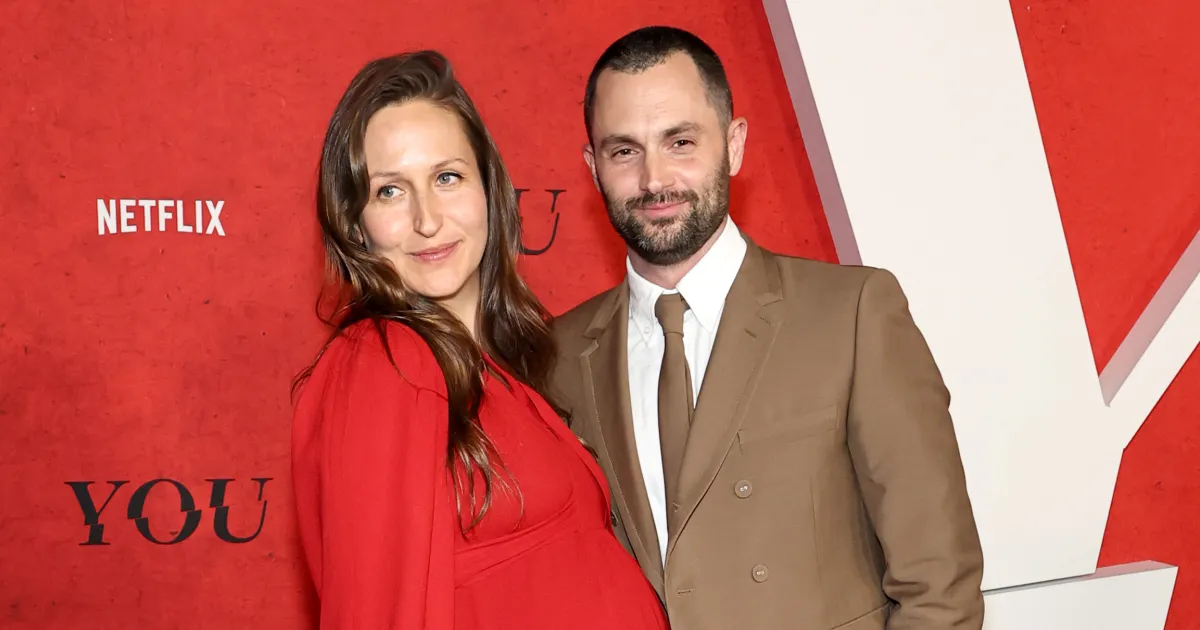
Behind the glittering, often sterile facade of celebrity romance lies the messy, beautiful reality of building a shared life—a truth that singer-songwriter and doula Domino Kirke recently laid bare in a remarkably candid Father’s Day tribute to her husband, actor Penn Badgley. Kirke did not offer the standard, sugar-coated platitudes typical of social media; instead, she chose to excavate the deeply personal, psychological landscapes that shaped her journey through motherhood and marital partnership. Growing up with an unreliable, childlike father left Kirke with an early emotional blueprint marked by the anticipation of disappointment and the habit of making excuses for adult behavior. This childhood wounding taught her to expect very little from the men in her life, a self-preservation tactic that followed her into adulthood and solidified when she became a single mother to her eldest son, Cassius. For years, running the household single-handedly felt like the only way to keep her world safe, stable, and predictable. She admitted that hyper-independence and a demand for total control were her ultimate defense mechanisms, a way to keep everything visible and manageable. However, mature love has a way of dismantling even the sturdiest defenses. Through her thirteen-year journey with Badgley, Kirke came to the humbling realization that control is nothing more than a stubborn illusion. Even on the difficult days when her old muscle memory whispers that it would be simpler to handle the storm alone, she now knows, deep within her bones, that she needs her husband. By allowing Badgley to share her burdens, she didn’t just find a co-parent; she found a healing space where she could finally drop her guard, surrender the exhausting mantle of solo survival, and trust another person with her heart and her family.
Transitioning from a tightly-knit duo to a bustling, chaotic household of six is an extraordinary feat, and Kirke’s tribute highlights the exhausting yet deeply rewarding nature of their expanded family. The couple, who married in 2017, now navigate the demanding, unpredictable waters of raising four children: sixteen-year-old Cassius, four-year-old James, and nine-month-old twin boys. To capture the sheer, dizzying overwhelm of their daily lives, Kirke leaned on the self-deprecating humor of comedian Jim Gaffigan, comparing the addition of a fourth child to the absurd scenario of someone handing you a baby while you are already drowning. It is a sentiment that resonates with any parent who has ever felt hopelessly outnumbered by endless chores, developmental milestones, and sleepless nights. Yet, it is within this chaotic domestic theater that the true strength of their marriage shines. Kirke poked fun at the intense pressure cooker of modern parenting by publicly thanking Badgley for “not agreeing to a divorce” every single time she asks for one during their most stressful moments. This joke, while humorous on the surface, carries a profound psychological weight; it speaks to the resilience of a marital bond that can withstand the momentary desires to run away when the noise of life becomes deafening. By acknowledging these raw, unpolished moments of vulnerability, Kirke demystifies the fantasy of a perfect marriage, showing that true love is not the absence of struggle, but the mutual commitment to ride every overwhelming wave together without letting go.
Before they welcomed their younger biological children, the foundation of Badgley and Kirke’s co-parenting dynamic was forged through his role as a stepfather to Cassius. Stepping into an established mother-son dynamic is notoriously difficult, particularly for someone like Badgley, who had no personal experience with stepparents while growing up. Yet, he approached this uncharted territory with grace, patience, and a willingness to learn. Kirke has praised Badgley’s ability to navigate this delicate position, noting that because he did not have to bear the traditional, disciplinary weight of the primary “dad” figure, he was free to develop a unique bond centered on mentorship, friendship, and shared joy. This boundary allowed Cassius to have an additional champion in his corner without feeling the friction that often accompanies blended families. Badgley’s effortless care for Cassius provided Kirke with the rare, comforting experience of watching her child be loved unconditionally by someone who had no biological obligation to do so. In a society that often struggles to define the boundaries of blended households, Badgley and Kirke’s approach offers a beautiful blueprint of what is possible when partners prioritize emotional safety, respect, and mutual support over rigid parental definitions.
Parenthood is a dynamic, rapidly shifting landscape, and Kirke has watched her children evolve with a mixture of awe and humor. She has openly reflected on the bittersweet experience of watching her eldest son, Cassius, grow from a young boy into a young man. Navigating the teenage years brings its own unique set of challenges, marked by sudden hormonal shifts and a burgeoning sense of independence. Kirke once noted with amusement how a ten-year-old boy can possess the same overwhelming surge of testosterone as an eighteen-year-old, resulting in a healthy dose of sass and attitude. Yet, amidst the typical adolescent eye-rolls, there are moments of startling tenderness that catch her off guard, such as when Cassius registers the exhaustion in his mother’s voice over the phone and gently urges her to go to sleep. These instances of profound empathy serve as a rewarding reminder of the compassionate adult he is becoming, validating the years of hard work, sleepless nights, and emotional energy poured into his upbringing. Managing the starkly different developmental needs of a teenager, a toddler, and infant twins requires an incredible amount of emotional agility from both Kirke and Badgley, making their unified front all the more crucial as they guide their boys through life.
Badgley’s entry into biological fatherhood brought its own unique set of transformations, particularly since their first biological son, James, was born during the height of the COVID-19 pandemic. This period of global uncertainty forced the couple into a state of profound isolation, stripping away the typical support systems of extended family, friends, and hired help. Left entirely to their own devices, Badgley and Kirke experienced a highly concentrated, intimate version of early parenthood. Badgley later reflected on this quarantine crucible, describing the experience as a delicate balance of beautiful joy and overwhelming difficulty. The isolation allowed him to cultivate an incredibly deep, light, and joyful connection with his newborn son, a bond that was unfettered by the distractions of the outside world. However, the lack of a respite also highlighted the relentless, exhausting reality of caring for an infant twenty-four hours a day without a break. This intense baptism by fire as a first-time biological father deepened Badgley’s empathy for the universal struggles of parenting, grounding him in a reality far removed from his Hollywood career and solidifying his dedication to the chaotic sanctuary of his home life.
Interestingly, Badgley’s real-life transition into biological fatherhood coincided with a major narrative shift for his infamous character, Joe Goldberg, on the hit Netflix series You. In the show’s third season, Joe becomes a father, a plotline that forced Badgley to navigate the strange intersection of his genuine, joyful real-world parenting and his character’s dark, obsessive tendencies. Badgley admitted that drawing on his own fresh experience of biological fatherhood was a natural asset for the role’s softer moments, but he quickly found that the parallel had its limits. While Badgley was experiencing a parenting journey filled with light, conscious connection, and emotional growth, Joe Goldberg’s paternal instincts were purely primal, rooted in fear, morbid self-preservation, and obsessive control. Badgley noted the challenge of acting out such a dark, twisted version of fatherhood when his own home life was defined by love and vulnerability. Ultimately, this contrast highlights the profound difference between the healthy surrender of ego required in real parenting and the toxic possessiveness of a fictional monster. Through his devotion to his wife and their four sons, Badgley demonstrates that being a good parent requires rising far above survival instincts, choosing instead to meet the daily, beautiful chaos of family life with patience, humility, and an open heart.