




1.
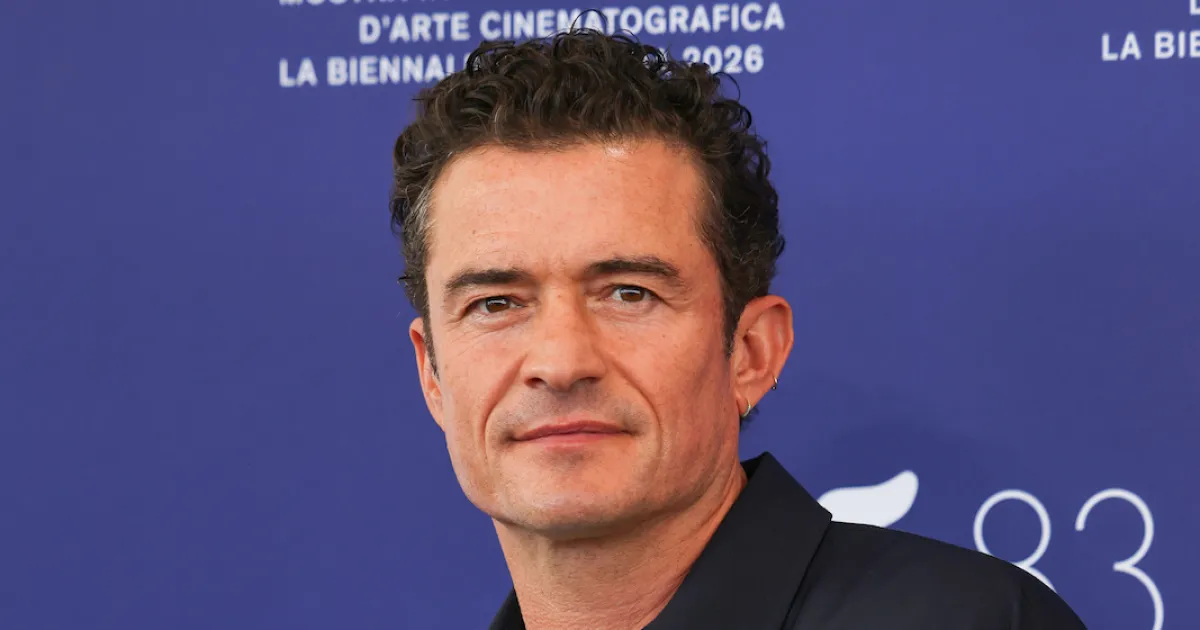
There are moments in a film career that stay with an actor long after the cameras stop rolling, and for Orlando Bloom, one of those moments happened in a bed with two sisters. The 49-year-old actor, best known for his roles in The Lord of the Rings and Pirates of the Caribbean, found himself in a deeply intimate scene alongside real-life siblings Rooney Mara and Kate Mara in the new Werner Herzog film, Bucking Fastard. Bloom appeared at the San Sebastián Film Festival to promote the movie, and naturally, a question about the film’s most talked-about moment came up: a threesome scene between his character and the two sisters. Rather than dodging the question or turning it into a joke, Bloom responded with a kind of gentle sincerity that caught people off guard. He talked about the “simplicity” of the characters, their “carnal desires,” and the strange innocence that defined the relationship between the two sisters. He described his own character, the titular Bucking Fastard, as a sensitive man who quickly finds himself in over his head, almost before he even realizes what is happening to him. For Bloom, the scene was not about shock value or spectacle; it was about creating a moment that felt truthful, fragile, and deeply human. He spoke about the careful tone that Herzog set on set, allowing the actors to find something real rather than forcing them into something mechanical or rehearsed. What could have been a wildly uncomfortable experience instead became, in Bloom’s words, a “very sincere sort of moment.” It is a testament to the trust that a great director can build, and to the courage actors bring to scenes that ask them to be vulnerable in the most exposed ways.
2.
Werner Herzog, the legendary 84-year-old filmmaker, has never been one to follow the rules of conventional cinema, and he brought that same fearless approach to this intimate sequence. Speaking about the scene at the festival, Herzog recounted how he stepped back when the moment came to film it. “There are moments when a director has to step back,” he said. He recalled telling Bloom, “You are in bed, and you have two women in your arms. How you deal with it, I cannot give instructions.” It is a remarkable admission from a director known for pushing his actors to their absolute limits, often into physical and emotional extremes. But in this case, Herzog understood that the scene required something far more delicate than directions. It required instinct, trust, and a willingness to simply be present within the moment. He described the result as “beautiful because it has such charm and depth.” Those words carry weight, especially coming from a filmmaker whose body of work includes stories of obsession, madness, and the rawest human survival. That Herzog allowed the scene to breathe, without imposing his technical will upon it, says a great deal about the atmosphere he created. For Bloom, having a director who trusted him and his co-stars enough to step away was probably the best possible gift. It allowed the actors to explore the emotional truth of the scene without the pressure of a commanding voice in their ears, and it gave the moment a naturalness that might otherwise have been lost. There is something almost poetic in the idea of a director stepping back at the exact moment when his guidance might have done the most damage. It suggests a level of wisdom that comes from decades of filmmaking, a recognition that sometimes the greatest thing a director can do is simply get out of the way and let human beings connect.
3.
Bucking Fastard made its world premiere at the Venice Film Festival on September 3, and the film has already begun generating serious conversation. The official synopsis paints a picture that is both strange and beautiful: two sisters, Jean and Joan Holbrooke, played by Kate and Rooney Mara, are so close that they speak in unison, love the same man, and share the same dreams. They even make mistakes together, committing the same slip of the tongue at the same moment, as though they are two bodies with a single soul. The synopsis goes on to say that we cannot see the world the way they see it, but we can see how the world reacts to them, through courts and the press, through people who want to help them and others who want to use them, through the eyes of tame and wild beasts, and through their own echoes in the core of the earth. It is a profoundly ambitious and somewhat mystical premise, but for Herzog, it fits naturally within his long career of exploring the strange edges of human consciousness. The idea of two people who are so intertwined that they become almost one is not just a narrative gimmick; it is a vehicle for asking larger questions about identity, love, and boundaries. If two sisters can speak in unison and love the same man, what does that say about individuality? Where does one person end and another begin? These are not easy questions, and Herzog is not interested in easy answers. Instead, he seems to want to immerse the audience in the experience of these women, to make us feel the strange, magnetic pull that binds them together, even when that pull complicates the lives of everyone around them.
4.
For Rooney and Kate Mara, Bucking Fastard represents a deeply personal milestone. It is the first time the real-life sisters have ever made a movie together, and they chose to do so in a film that asks them to play twins so close that they are almost indistinguishable. In an interview with People published on Friday, September 17, Kate opened up about what the experience meant to her. “To be able to play this role with my sister was just a dream really,” she said. She described the experience as feeling “totally right,” as though it was something that had always been waiting for them. Kate also touched on the almost impossible coincidence of the project coming along at the exact moment when they were ready to work together. She explained that they had often said out loud that they really wanted to make a film together, with a filmmaker they both equally adored, and with two roles that were equally interesting. And then, almost as if the universe had heard them, they were sent a script that asked them to play two sisters in perfect unison. “Never in our wildest dreams do we expect that to happen,” Kate said. There is something magical about that kind of timing, and it is easy to imagine the Mara sisters reading the script for the first time, looking at each other, and realizing that this was the project they had been waiting for. The fact that they would be playing characters who speak in unison and share the same dreams adds another layer of irony and beauty. They did not just want to work together; they wanted to disappear into the idea of sameness itself, to test the boundaries of their own sibling connection through the lens of fiction.
5.
To truly appreciate what this film promises, it helps to think about what it means for actors to take on roles like these. In most movies, actors are asked to create chemistry with strangers, to convince audiences that two people who just met can fall in love or fight like brothers. But in Bucking Fastard, the chemistry was already there, baked into the real lives of the two women playing the lead roles. Rooney and Kate did not have to manufacture the sense of intimacy that their characters require. They grew up together, shared memories, fights, laughter, and all the complicated feelings that come with being siblings. What they had to do, instead, was transform that real intimacy into something even more extreme, almost mythic. Their characters do not just love each other; they are each other, in a way that transcends ordinary sibling bonds. The threesome scene, then, becomes something far more complex than a simple sexual encounter. It is an expression of their shared identity, a physical manifestation of the strange and beautiful bond that defines their lives. For Bloom, entering that world must have been both exhilarating and intimidating. He was not just acting against two co-stars; he was stepping into a relationship that existed long before the cameras started rolling and will continue to exist long after they stop. The sensitivity he spoke about suggests that he understood this, that he approached the role with a level of care and humility that the material demanded. In a way, the scene is not really about sex at all. It is about trust, surrender, and the terrifying beauty of being seen completely by another person, or in this case, by two people who see each other as one.
6.
At its heart, Bucking Fastard seems to be a film about connection in all its strange and overwhelming forms. It is about the connection between sisters who are so close that they blur into one another, the connection between lovers who are trying to find their way into each other’s lives, and the connection between human beings and the wider world, both tame and wild. Herzog’s willingness to step back during the most intimate moment in the film is emblematic of his broader approach to storytelling. He does not want to explain his characters; he wants to reveal them. He trusts the audience to sit with the discomfort, the beauty, and the mystery of it all. The title itself, Bucking Fastard, carries a playful, almost absurd energy that feels very much in line with Herzog’s sense of the world. Life is messy, strange, and often ridiculous, and the film seems to embrace that fully. For Orlando Bloom, this movie marks another chapter in a career that has always balanced mainstream spectacle with more artistic choices. For Rooney and Kate Mara, it is a once-in-a-lifetime opportunity to share the screen as only they can, bringing their real history and their real bond to characters that ask them to go further than they have ever gone before. Audiences who saw the premiere at Venice came away buzzing, and now the film is making its way through festivals, slowly building the kind of word-of-mouth reputation that independent films thrive on. When audiences finally have the chance to see Bucking Fastard in full, they will be witnessing something rare: a film that dares to be weird, tender, unsettling, and deeply human all at once. It is a reminder that cinema, at its best, can still surprise us, not by giving us what we expect, but by showing us something we never knew we needed to feel.