






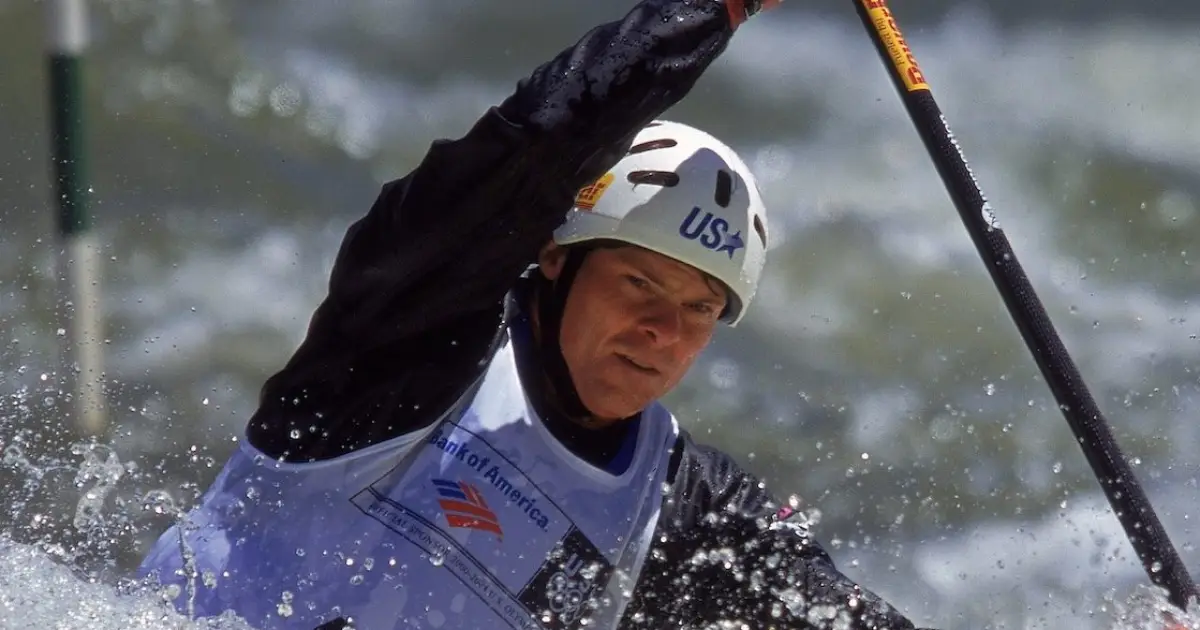
On a humid Friday afternoon in mid-June, sixty-seven-year-old David Hearn was doing what many veteran athletes do to keep their minds sharp and their bodies resilient: he was finishing up a grueling, fifty-two-mile bicycle ride through the historic heart of Washington, D.C. As a former Olympic canoeist who proudly represented the United States on the global stage at the 2000 Summer Games, Hearn’s relationship with water and physical endurance runs deep, making the grand, open spaces of the National Mall a natural sanctuary for his post-ride cool-down. Seeking a moment of quiet reflection, he pedaled his bicycle toward the iconic Lincoln Memorial Reflecting Pool, a place designed to mirror the sky and offer a solemn space for contemplation to millions of visitors from around the globe. Instead of finding a peaceful end to an arduous physical journey, Hearn found himself abruptly thrust into a surreal, highly charged domestic melodrama. Within minutes of stopping to inspect the water, the celebrated athlete was suddenly surrounded by law enforcement, had his wrists bound in heavy steel handcuffs, and was escorted away to spend the next five agonizing hours in a holding cell on suspicion of misdemeanor destruction of government property.
The catalyst for this baffling confrontation lay submerged in the shallow waters of the iconic pool itself, which had recently been the subject of a highly publicized and deeply controversial fourteen-million-dollar renovation project. In an effort to give the monument a more vibrant, patriotic aesthetic, officials had undertaken the ambitious task of painting the entire concrete bottom of the vast pool a bright, eye-catching shade known as “American flag blue.” However, as many locals and tourists had already noticed, the ambitious paint job was not holding up well against the elements, plagued by persistent algae blooms, shifting temperatures, and a severe chemical rejection of the lining material. As Hearn stood by the water’s edge with his bicycle, his experienced eye caught sight of a large, detached section of the synthetic blue liner waving languidly in the water like an underwater ribbon. Driven by a simple, harmless curiosity to feel the texture of the material and understand why this expensive public work was already falling apart, the Olympian reached down and gently touched the flapping piece of blue lining, which was already peeling and entirely disconnected from the concrete floor. Hearn insisted he did not pull, tear, or vandalize anything, merely touching what had already failed, but before he could even process the sensation of the cool water on his fingers, federal officers descended upon him.
The scene of Hearn’s arrest was quickly captured on camera and weaponized by conservative media commentator Emily Miller, who immediately shared the footage online to her thousands of followers, instantly transforming a simple misunderstanding into a national viral sensation. Miller claimed that Hearn was actively sabotaging the site by grabbing a hose that female National Park Service employees were using to clear away the thick, green algae choking the blue paint, paint that had already begun to peel away in heavy, unsightly chunks. Hearn vehemently denied these accusations, explaining that while his parked bicycle may have brushed against the lawn equipment, his only physical interaction was with the pre-damaged pool lining that was already floating loose in the water. For Hearn, the physical and psychological toll of the arrest was immense; the active senior citizen went from enjoying the cool breeze on his bicycle to facing formal criminal charges in a Washington, D.C. Superior Court, scheduled for July 9. The contrast between his decades of disciplined service representing his country in international sports and his sudden public vilification as an anti-government vandal highlighted the incredibly hostile, trigger-happy climate of modern American public life.
This local incident escalated into a national political flashpoint just hours later when President Donald Trump took to his social media platform, TruthSocial, to address the decaying state of the Reflecting Pool. In a characteristic, late-night series of posts, the eighty-year-old president framed the peeling paint of the pool not as an engineering failure or a bureaucratic miscalculation, but as a deliberate act of domestic terrorism and political sabotage. Trump used the opportunity to boast about his administration’s extensive efforts to cosmeticize the nation’s capital, claiming to have successfully cleaned, renovated, and beautified dozens of monuments, statues, and fountains across Washington, D.C., while simultaneously declaring that his tough-on-crime policies had made the city one of the safest in the world. He then pivoted sharply to the reflecting pool, alleging that “Radical Left Lunatics” and “Dumocats” were actively conspiring to ruin his administration’s beautiful work by using specialized chemicals to destroy the newly installed “American flag blue” surface. By framing a simple physical deterioration as a malicious culture-war conspiracy, the president effectively turned a routine maintenance issue into a battleground for national ideologues.
In reality, investigative reporting by media outlets like the New York Times paints a far more mundane, though frustrating, picture of structural incompetence rather than political sabotage. Engineers and park officials noted that the newly applied blue coating was simply rejecting the adhesive materials, leading to widespread peeling, floating blue debris, and severe discoloration under the heavy summer sun, all of which was compounded by a severe, naturally occurring seasonal algae problem. Despite these clear technical explanations, the narrative of a coordinated, chemical-based attack by political dissidents continued to spread rapidly online, leaving ordinary citizens like Hearn caught directly in the crossfire of a deeply polarized national debate. The physical reality of the pool—shedding its bright blue skin in thick, rubbery sheets—became a heavy-handed, ironic metaphor for the fragile state of American public discourse, where a technical malfunction is quickly reframed as an act of treason, and an inquisitive senior citizen is treated as a dangerous insurgent.
Ultimately, the arrest of David Hearn highlights the profound, exhausting human cost of living in an era defined by constant suspicion, hyper-surveillance, and relentless political theater. A man who once spent his youth navigating the turbulent, unpredictable waters of whitewater canoe slalom was ultimately pulled under by the toxic, highly manufactured currents of modern political outrage. As Hearn prepares to defend his character and his innocence in a federal courtroom, his ordeal serves as a sobering reminder of how easily normal human curiosity can be criminalized when public spaces are treated as ideological fortresses. What should have been a simple, quiet summer day on the National Mall ended instead in handcuffs, leaving a dedicated American athlete to defend himself against a storm of political accusations, all for the simple crime of reaching out to touch the fraying, peeling edges of a monument that was already falling apart on its own.