


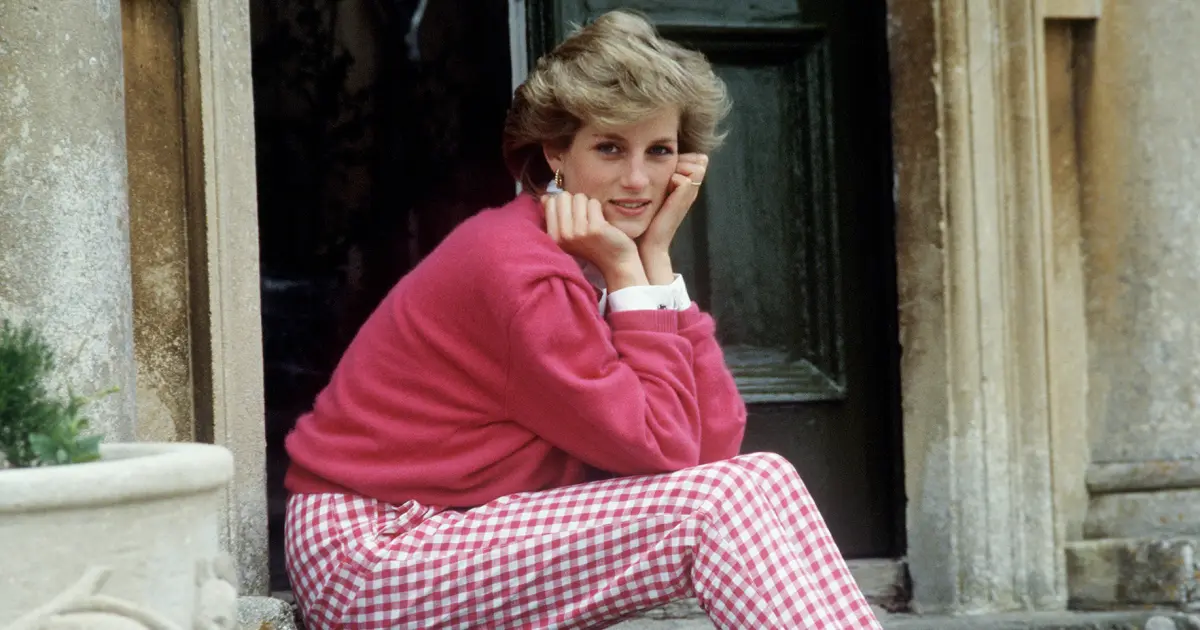
For millions around the world, Princess Diana was more than just a royal figure; she was a beacon of compassion, a symbol of grace under pressure, and a woman whose humanity shone through even the most rigid protocols of the British monarchy. When she tragically passed away in the late summer of 1997, the world collectively grieved not only for a princess but for a mother, a friend, and a tireless advocate for the marginalized. Her life, though cut devastatingly short at just 36 years old, left an indelible mark on the fabric of modern society. To understand the grandeur of her legacy, one must first look back at the fairy-tale beginning that captured the world’s imagination, and then trace the complex, often painful journey that transformed her from a shy young noblewoman into the “People’s Princess.” Her story is not merely a timeline of royal duties and titles; it is a deeply human saga of love, betrayal, resilience, and ultimately, an enduring love that continues to inspire her sons and millions of others every single day.
The story begins with a whirlwind romance that seemed plucked from the pages of a storybook. In July 1981, a young, demure Diana Spencer, just 20 years old, married Prince Charles, the heir to the British throne, in a lavish ceremony at St. Paul’s Cathedral. The world watched as she walked down the aisle in a breathtaking, puff-sleeved gown with a 25-foot train, a vision of youthful innocence and hopeful devotion. It was a moment of pure spectacle, a televised event that drew an estimated 750 million viewers across the globe. Behind the scenes, however, the seeds of immense personal turmoil were already being sown. The couple barely knew each other, and Diana would later famously describe their courtship as being “on a treadmill,” with Charles sweeping her off her feet into a life she was entirely unprepared for. The birth of their first son, Prince William, in June 1982, brought immense joy, followed by the arrival of Prince Harry in September 1984. To the outside world, they were the perfect royal family, a portrait of domestic bliss. But within the gilded walls of Kensington Palace, the marriage was crumbling under the weight of unrealistic expectations, intense media scrutiny, and the painful reality of infidelity on both sides. Diana, struggling with postpartum depression and an eating disorder, felt isolated and unsupported, trapped in a role that demanded perfection while offering little emotional sustenance.
The cracks in the royal facade became impossible to ignore as the years passed. Charles and Diana’s marriage, once celebrated, became a source of tabloid fodder, with each revelation chipping away at the carefully constructed image of royal harmony. Their separation in December 1992, which was announced by then-Prime Minister John Major, was a shocking but perhaps inevitable admission of a union that had long ceased to function. The subsequent years were marked by a painful public airing of grievances, culminating in Diana’s famous 1995 BBC Panorama interview where she declared, “There were three of us in this marriage, so it was a bit crowded.” That poignant phrase, along with her candid admissions about her own struggles, endeared her even more to the public, who saw her vulnerability as a refreshing contrast to the stoic, unemotional royal family. The divorce was finalized in August 1996, granting Diana a substantial settlement but stripping her of her “Her Royal Highness” title. Yet, rather than retreating into obscurity, Diana began to forge her own path, redefining what it meant to be a public figure. She used her platform to champion causes that were then considered controversial or taboo, from hugging AIDS patients to walking through an active minefield in Angola to raise awareness for landmine removal. Her warmth, her directness, and her ability to connect with people from all walks of life marked her as a different kind of royal—one who led with her heart, not just her crown.
The summer of 1997 was a time of personal renewal for Diana. She had been enjoying a holiday in the Mediterranean with her new companion, Dodi Fayed, the son of an Egyptian billionaire. The paparazzi hounded their every move, eager for a photograph of the royal couple in love. On the night of August 30, 1997, as they left the Ritz Paris hotel, their driver, Henri Paul, sped away to evade the pursuing photographers. In the Pont de l’Alma tunnel, the car crashed with catastrophic force. Diana, Dodi, and Henri Paul were all gravely injured. Diana was rushed to a Paris hospital, but her injuries were too severe, and she was pronounced dead in the early hours of August 31. The news sent shockwaves around the world. An unprecedented outpouring of grief followed, with millions of mourners leaving mountains of flowers, cards, and tears outside royal palaces, particularly at Kensington Palace. The public mood forced the royal family, who remained sequestered at Balmoral Castle in Scotland, to break with tradition and publicly acknowledge the national sorrow. The funeral, which took place on September 6, 1997, was watched by an estimated 2.5 billion people, and the image of Princes William and Harry, then just 15 and 12 years old, walking solemnly behind their mother’s coffin, remains one of the most heart-wrenching moments in modern history. In her brother Charles Spencer’s eulogy, he promised that Diana would be remembered as “the unique, the complex, the extraordinary and irreplaceable Diana.”
For William and Harry, the loss of their mother at such tender ages was an unimaginable trauma that would shape their entire lives. Growing up in the relentless glare of the media, they had to navigate their grief publicly, but they have consistently found ways to keep Diana’s memory alive. Both princes have spoken openly about the deep, ongoing impact of losing their mother, and they have dedicated much of their adult lives to continuing her humanitarian work. William has championed mental health awareness through the Heads Together campaign, echoing Diana’s belief that emotional well-being is just as important as physical health. Harry has followed in her footsteps with his own charity work, including the Invictus Games for wounded veterans, and he has frequently referenced his mother’s influence on his commitment to service. Perhaps most poignantly, both brothers have made the tribute of naming their daughters after her. Prince William and his wife, Catherine, the Princess of Wales, gave their daughter, Princess Charlotte, the full name Charlotte Elizabeth Diana, a beautiful fusion of tributes to Diana, the late Queen Elizabeth II, and the enduring legacy of her mother. Similarly, Prince Harry and his wife, Meghan, the Duchess of Sussex, named their daughter Lilibet “Lili” Diana, honoring both her great-grandmother, Queen Elizabeth II, whose childhood nickname was Lilibet, and her grandmother, Princess Diana. These names are more than just formalities; they are a public declaration that Diana’s memory is woven into the very fabric of the next generation of royals.
Beyond the names, Diana’s legacy is a living, breathing force that continues to shape the royal family and the world at large. She revolutionized the concept of monarchy, proving that authenticity and empathy are far more powerful than aloofness and ceremony. Her groundbreaking work in de-stigmatizing HIV/AIDS, her advocacy for landmine ban, and her gentle yet fierce dedication to helping the sick, the poor, and the forgotten transformed the role of a princess from a decorative one to a substantive one. The way her sons have chosen to raise their own children, with a focus on normalcy, emotional openness, and charitable duty, is a direct reflection of the values Diana instilled in them. William has spoken about sharing stories of their grandmother with his children, ensuring that Charlotte, George, and Louis know who she was and what she stood for. Harry, too, has expressed his desire to keep her spirit alive through his own family and his work. Even in her absence, Diana’s presence is felt—in the gentle way her sons speak of her, in the charitable foundations that bear her name, and in the countless individuals whose lives were touched by her kindness. She remains a timeless figure, not just because of her tragic death, but because of how fully she lived. Her story, once a fairy tale turned to tragedy, has become an enduring narrative of love, resilience, and the profound power of a mother’s legacy. As we look back through the years, through photographs of her radiant smile and her compassionate embrace, we are reminded that the true measure of a life is not in the titles one holds, but in the hearts one leaves behind.