







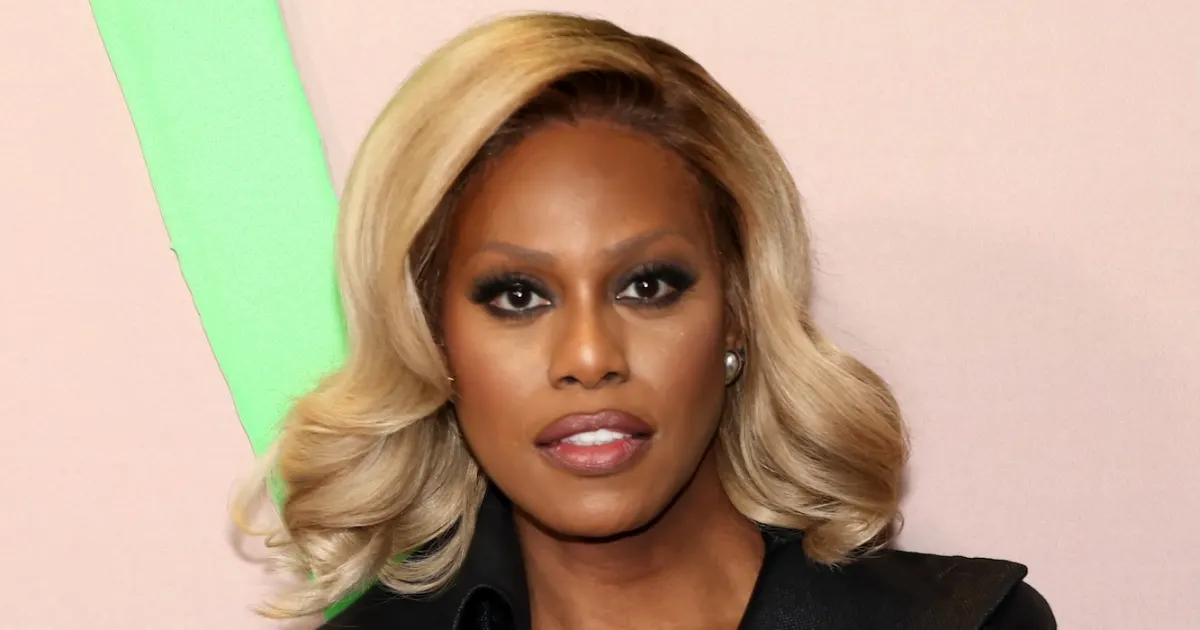
At fifty-four years old, Laverne Cox has achieved a level of self-actualization and peace that many spend their entire lives chasing, presenting a refreshing paradigm of resilience in an industry often defined by fleeting validation and superficial relationships. In promoting her profound and deeply intimate new memoir, Transcendent, the pioneering actress and advocate has chosen to reframe her life experiences through a lens of immense gratitude, viewing her identity not as a source of struggle, but as a unique avenue of spiritual and emotional protection. Cox candidly acknowledges that navigating the entertainment industry as a Black transgender woman has provided her with a rare kind of grounding, preventing her from succumbing to the toxic ego inflation that frequently plagues those who find fame in Hollywood. This grounding, she notes, acts as a crucial reality check that forces her to remain tethered to her authentic self, even when surrounded by the seductive illusions of celebrity culture. Rather than viewing the societal barriers she has faced as mere victimization, Cox has come to recognize that her transness has served as an unexpected shield, filtering out predatory, opportunistic, and emotionally unavailable individuals who might otherwise have derailed her peace. By sharing these insights, she invites her audience into a vulnerable exploration of how marginalization, while thoroughly painful and unjust, can also foster a profound spiritual discernment that protects the soul from the insincere dynamics of the spotlight. It is a powerful testament to her emotional maturity that she can look back at the hurdles of her career and recognize them not as simple hardships, but as divine interventions—what she beautifully describes as “God’s protection” disguised as rejection. Through this perspective, Cox reframes the narrative of the trans experience from one of constant struggle to one of profound spiritual empowerment, showing that true strength lies in the ability to find blessings in the very things that society might use to exclude you.
The reality of dating within the glittering corridors of Hollywood is a complex maze for any woman, but for a high-profile transgender woman, it introduces a layer of emotional exploitation that Cox exposes with startling clarity and dignity. Over the course of her career, she has encountered numerous high-profile men—ranging from celebrated professional athletes and chart-topping rappers to prominent actors—who have shown intense romantic interest in her behind closed doors, yet remained entirely unwilling to acknowledge her publicly. This experience of being compartmentalized, hidden away like a shameful secret while being pursued in private, is a painful dynamic that could easily crush a person’s self-esteem and foster deep-seated resentment. However, Cox has humanized this painful pattern by transforming it into a protective filter, realizing that a man’s refusal to stand beside her in the warmth of the public eye says everything about his own insecurity, vanity, and fragility, and nothing about her inherent worth. She recognizes that many of these men are deeply insecure, trapped in the rigid constructs of toxic masculinity and desperately afraid of how dating a trans woman might affect their public brand or social status. By refusing to play the role of the dirty little secret, Cox protects herself from narcissistic men who look to women merely as accessories to flatter their own fragile egos rather than as human beings deserving of honor and respect. This self-preserving boundary allows her to bypass the emotional devastation of being instrumentalized by men who are incapable of offering genuine, courageous love, turning what could be a source of deep rejection into a powerful affirmation of her own high self-worth. In shedding light on this dynamic, she speaks directly to the universal female experience of navigating male egoism, while highlighting the specific, intersectional dignity required of trans women of color who refuse to settle for anything less than complete transparency and public respect in their romantic endeavors.
To truly understand Cox’s current state of peace, one must look closely at her intentional practice of holistic self-love, an ongoing daily commitment that stretches far beyond the conventional wellness trends of sleep, nutrition, and regular medical checkups. For Cox, genuine healing is an active, sometimes brutal process of emotional curation, requiring her to evaluate not just her physical habits, but the psychological safety of the environments and relationships she permits in her life. Having lived through a traumatic childhood and clawed her way to success through decades of systemic marginalization, she has come to understand that her energy is a sacred, finite resource that must be fiercely guarded against toxic influences. This has necessitated the hard, deliberate work of setting uncompromising boundaries and learning the difficult art of letting go of people who drain her emotional tank, trigger historical traumas, or fail to respect her emotional limits. Humanizing this process, she admits that outgrowing old people-pleasing patterns is incredibly painful, especially when it involves distancing herself from individuals who evoke familiar, childhood-rooted dynamics of seeking approval. Cox emphasizes that true self-respect is demonstrated by the company one keeps, demanding that those in her inner circle be active contributors to her well-being rather than emotional parasites who make her feel diminished or insecure. By speaking openly about her need to cut loose those who do not serve her spiritual growth, she demystifies the concept of boundaries, showing that walks of self-empowerment are often paved with the quiet, devastating, yet ultimately liberating choices of saying goodbye to the people and habits that keep us small. This holistic approach to wellness acknowledges that physical health is intricately linked to emotional and relational hygiene, making the curation of her social circle an act of survival. For a Black trans woman who has spent her life navigating a world that often hostilely debates her right to exist, finding safety in her personal life is not a luxury, but an absolute necessity. Consequently, letting go of toxic relationships becomes a profound act of self-reclamation, allowing her to clear away the clutter of other people’s dysfunctions so she can focus on her own continued healing and creative expression, ultimately demonstrating that the greatest love story she will ever live is the one she creates with herself.
Nowhere is Cox’s commitment to self-preservation and emotional honesty more visibly tested than in her raw, public reflections on the painful end of her nearly four-year relationship with a man she deeply loved. This relationship, which she detailed with immense vulnerability in her memoir and during a recent appearance on The New York Times’ “Modern Love” podcast, involved a New York City police officer whose political ideology stood in stark, devastating contrast to her own lived reality. For years, Cox lived in a state of genuine emotional bliss with this partner, experiencing a profound romantic connection that brought her immense joy and a sense of shared humanity that transcended everyday social divisions. Throughout their time together, they navigated their ideological differences by agreeing to disagree on various political topics, with Cox striving to extend grace to him by recognizing the ways in which his upbringing, background, and digital echo chambers had propagandized his worldview. However, the ultimate revelation that her partner had voted for Donald Trump three times forced her into a profound existential crisis, stripping away the comfortable illusion that their personal love could entirely shield them from the painful realities of systemic oppression. It was a heart-wrenching realization that love, no matter how pure or deep, cannot exist in a vacuum, entirely divorced from the political choices that actively threaten the safety, rights, and existence of the person you claim to cherish. By parsing out this deeply personal dilemma, Cox humanizes the excruciating conflict faced by so many individuals in our highly polarized modern society: the painful math of determining when a political disagreement ceases to be a mere difference of opinion and instead becomes a fundamental compromise of one’s safety, values, and soul.
This painful rupture led Cox to a sophisticated, highly nuanced understanding of how human beings connect on a spiritual level versus how they must navigate the material realities of a deeply prejudiced world. In exploring her connection with the police officer, she beautifully articulates the concept of a “soul connection”—an ethereal, spiritual bond that exists beyond the superficial constructs of human history, social categorization, and contemporary political debates. She refuses to diminish or erase the love she felt, acknowledging that the spiritual intimacy they shared was incredibly real, beautiful, and valid in its own right, existing in a realm untouched by societal discord. Yet, with a grounded maturity that reflects her journey as an activist, she balances this spiritual idealism with the cold, material facts of life, asserting that our social identities and the politics we endorse have tangible, real-world consequences that cannot be ignored. For Cox, being a Black trans woman is not a mere intellectual exercise or a lifestyle choice; it is a material reality defined by systemic discrimination, disproportionate violence, and legislative battles over her very humanity. When a partner supports political figures and policies that seek to strip away the rights of marginalized communities, that choice is not an abstract debate—it is an active participation in the systems that oppress her and people like her. Cox’s realization that she could not build a life or a future with someone whose political platform actively endangered her community is a profound testament to her self-respect, highlighting the painful truth that a soul connection cannot survive when it is starved of mutual respect for one’s material safety and human dignity. This boundary-setting serves as a guidepost for anyone struggling to balance their affection for someone with the recognition that their values are fundamentally incompatible, proving that walking away from a deep connection is sometimes the only way to remain faithful to oneself.
Ultimately, Laverne Cox’s journey, as chronicled in Transcendent, serves as an inspiring blueprint for how to navigate a highly compromised world with unyielding grace, intellectual depth, and uncompromising self-love. She speaks wistfully of a utopian desire to live in a colorblind, genderless society—a beautiful, egalitarian world where individuals could connect solely on the basis of their humanity and spiritual energy, entirely free from the heavy, historical burdens of oppression and prejudice. Yet, she remains clear-eyed about the present, recognizing that we do not live in that idealized world, and that pretending we do only serves to erase the ongoing struggles of those fighting for basic survival on the margins. By embracing her identity as a transgender woman with all its attendant challenges, Cox has transformed what society often marks as a vulnerability into her greatest source of wisdom, clarity, and personal empowerment. Her story is a poignant reminder that finding peace does not mean avoiding pain, but rather integrating that pain into a larger narrative of resilience, healing, and self-advocacy. Through her memoir, her public conversations, and the quiet boundaries she sets in her private affairs, she continues to model what it looks like to stand tall in one’s truth, demonstrating that the ultimate blessing of self-acceptance is the freedom to love yourself fiercely enough to walk away from anything—and anyone—that threatens your security or compromises your humanity. It is this refusal to settle, this commitment to living authentically despite the intense pressures of both Hollywood and society at large, that cements her legacy not just as a talented actress, but as a cultural beacon of emotional intelligence. In a world that often demands marginalized people shrink themselves to make others comfortable, Cox displays the magnificent alternative: standing fully in the spotlight, unapologetic, healed, and beautifully whole, proving that when we align our material actions with our spiritual truths, we unlock an indestructible kind of freedom.