






The Tipping Point of Tragedy: Inside the Biermann Family’s Fight for Their Son’s Future
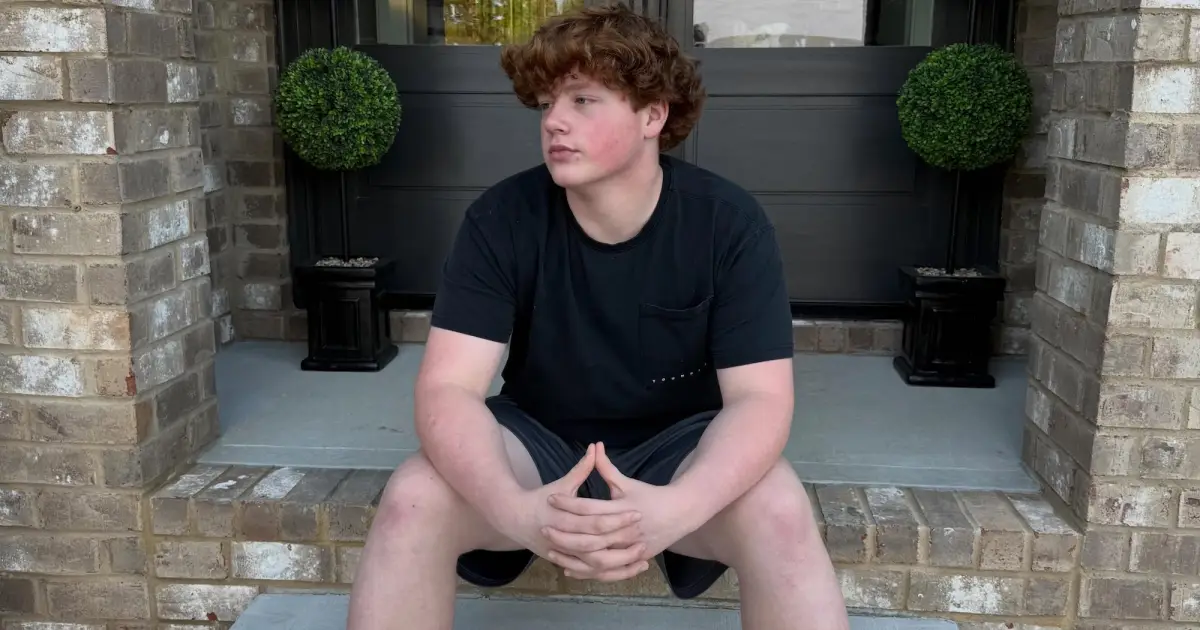
The limelight that once bathed the Biermann-Zolciak household in the golden glow of reality TV stardom has now cast a long, unforgiving shadow over a family in crisis. Kim Zolciak and Kroy Biermann, a couple already entrenched in their own very public marital separation, find themselves united by a far graver struggle: defending their 15-year-old son, Kroy “KJ” Biermann Jr., against a cascade of sexual assault charges that threaten to derail his life before it truly begins. The teenager was initially arrested in August, but it was the formal indictment on September 3 that sent shockwaves through the legal system and the public consciousness. The indictment leveled a staggering ten charges against the young man, including aggravated child molestation, aggravated sexual battery, aggravated sodomy, false imprisonment, and three counts of sexual battery allegedly committed against a child under the age of sixteen. With those words—”aggravated,” “molestation,” “sodomy”—the abstract notion of a troubled teen became a stark legal reality. KJ is not merely facing a misdemeanor; he is confronting the possibility of decades in a state penitentiary if convicted as an adult. Currently, he is being held in Atlanta’s Regional Youth Detention Center, a facility designed to secure juveniles, while his legal team fights to keep him out of an adult prison system that would almost certainly consume him. The clock is ticking, and every day he spends behind bars without a bond hearing—which is scheduled for September 11—represents a lifetime lost in the isolation of a cell, separated from the only world he has ever known.
The cornerstone of KJ’s defense is a legal maneuver filed by his attorney, Jason Sheffield, on Tuesday, September 8. Sheffield petitioned the court to transfer the case to juvenile court and to enforce confidentiality proceedings. This is not merely a technicality; it is a fight for the very nature of KJ’s legal fate. If the judge grants this transfer, KJ would be prosecuted under the purview of the juvenile justice system, which focuses on rehabilitation and treatment rather than punitive incarceration. The stakes could not be higher. An adult conviction on these charges would carry a mandatory minimum sentence, likely resulting in decades of imprisonment in a maximum-security facility designed for hardened criminals. A juvenile adjudication, while still carrying severe consequences, offers a path toward psychological counseling, supervision, and the possibility of a second chance upon reaching adulthood. Sheffield is arguing that KJ’s age at the time of the alleged offense—he was likely 14 or 15—makes him developmentally incapable of being held to the same standard of culpability as an adult, despite the heinous nature of the accusations. Furthermore, Sheffield seeks to seal the proceedings entirely, shielding the case from the prying eyes of the tabloids and social media. He argues that the public dissemination of the allegations, before a single piece of evidence has been tested in a courtroom, has already irreparably damaged KJ’s reputation in a court of public opinion that cares little for due process. The motion highlights a broader societal tension: how do we balance the need for transparency in the justice system with the fundamental right of a child to be presumed innocent until proven guilty?
The defense’s narrative is built on a foundation of what they claim is exculpatory evidence that was ignored by law enforcement. In a scathing statement to the press, Sheffield revealed that his client “is 100 percent innocent” and that they attempted to provide the arresting officer with evidence that contradicted the accuser’s story. Most notably, KJ voluntarily submitted to a polygraph examination, administered by a notable and respected sex offender polygrapher, which he passed. While polygraph tests are not admissible in court as definitive proof of truthfulness, they are often used by defense attorneys to gauge a client’s veracity and to pressure investigators into re-evaluating their cases. More damning, however, is the revelation regarding DNA evidence. Sheffield stated that the Georgia Bureau of Investigation (GBI) found no male DNA on or inside the areas where the alleged victim claimed she was assaulted. This absence of forensic evidence, the defense argues, physically contradicts the accusation of sexual contact. Sheffield expressed profound disappointment with the investigating detective’s decisions, asserting that had the officer sat down with him to review the polygraph results and the DNA exclusion, “she would’ve never made an arrest.” He criticized the detective’s approach as reactionary, charge-first, and evidence-second. He pointed out the profound injustice of a 14- or 15-year-old child being held in detention for a month or longer simply waiting for a bond hearing. “It is difficult to comprehend,” Sheffield said, framing the detention itself as a punitive measure that violates the presumption of innocence, effectively punishing a child before a judge has even weighed the evidence. The defense’s strategy is clear: paint the arrest as a rush to judgment, supported by faulty analysis and an overzealous investigator who prioritized optics over objectivity.
Kim Zolciak, for her part, has stepped into the fray with a mother’s fierce indignation, issuing statements that are as much a plea for empathy as they are a legal defense. In a statement to Us Weekly in August, she described the allegations as “nothing short of reckless and deeply troubling.” She confirmed that her son “categorically denies ever being involved with this woman or engaging in the conduct she has alleged.” Echoing her lawyer’s points, Zolciak highlighted the voluntary polygraph test her son passed and the DNA analysis that found no trace of him at the scene. But her words carried a deeper, more philosophical weight, touching on the collateral damage of false accusations. “False accusations can have devastating consequences not only for the person being accused,” she said, “but also for genuine survivors of sexual assault and abuse.” She implored the public to remember that “every legitimate allegation deserves to be taken seriously and investigated based on the facts and evidence” while simultaneously warning that “no one should be publicly condemned based solely on an accusation.” This delicate tightrope walk—acknowledging the legitimacy of the #MeToo era while fiercely protecting her child—is a precarious position for any parent, let alone one whose life has been dissected by reality TV cameras for over a decade. Zolciak knows that public opinion often acts as a second jury, and she is fighting an uphill battle against the visceral disgust that accompanies any allegation involving a minor. Kroy, the former NFL star, has remained quieter publicly, but sources suggest he is equally devastated, spending sleepless nights worrying about his son’s future and the fracturing of the family unit that has already suffered from the ongoing divorce proceedings.
The family dynamics at play add another layer of heartbreak to an already tragic narrative. KJ is not an only child; he is one of a brood that includes his biological siblings—Kash, 14, and twins Kaia and Kane, both 12—as well as Kim’s daughters from a previous relationship, Brielle, 29, and Ariana, 24, who were adopted by Kroy upon their marriage. For these siblings, the scandal is a suffocating blanket that covers their every public interactionton. They are forced to navigate school hallways, social media feeds, and the whispers of peers who may not distinguish between an accusation and a conviction. The family home, once a chaotic but loving arena featured on Don’t Be Tardy, has become a fortress of anxiety, where every phone call from the detention center brings a mix of relief and dread. The estranged parents are having to put aside their personal grievances to coordinate legal visits, emotional support, and the mundane logistics of a child in crisis. Friends of the family have noted that the strain is palpable; Kim has been seen without her characteristic glamour, appearing exhausted and tearful, while Kroy has leaned on his faith and former teammates for support. The tragedy is that this legal nightmare may irrevocably alter the trajectory of not just KJ’s life, but the entire family’s ability to heal from previous wounds. The siblings are caught in a crossfire of loyalty, forced to choose sides in a battle that isn’t theirs, while also grappling with the fear that their brother might never come home again.
As the family braces for the upcoming arraignment next month, where KJ’s attorney has stated he will formally “enter a not guilty plea to all charges,” the broader implications of this case resonate far beyond the Biermann household. This is a story about the fragility of adolescence in the digital age, where a single accusation can become an eternal digital tattoo, impossible to erase even if exoneration follows. It is also a stark reminder of the imperfections within the criminal justice system, where the presumption of innocence can feel like an anachronism when the public is clamoring for swift and brutal justice. For now, KJ remains in the youth detention center, his world shrunk to a small cell, his future hanging in the balance of a judge’s decision on the motion to move to juvenile court. His parents, despite their own marital dissolution, are united in a single, desperate goal: to bring their son home and prove his innocence. They are clinging to the evidence that supports their claims—the passed polygraph, the absent DNA—as lifelines in a sea of public doubt. While the legal wheels grind slowly, the human cost is immediate. If you or someone you know has been sexually assaulted, the National Sexual Assault Hotline is available at 1-800-656-HOPE (4673). But for those on the other side of an accusation, the hotline is the chilling echo of a justice system that demands certainty where none exists, and the deeply human story of a family fighting to save a boy who insists he has done nothing wrong. The road ahead is brutally long, but for the Biermanns, there is no other option but to fight, hoping that the truth will emerge from the shadows of the courtroom before the light of their son’s youth is completely extinguished.