




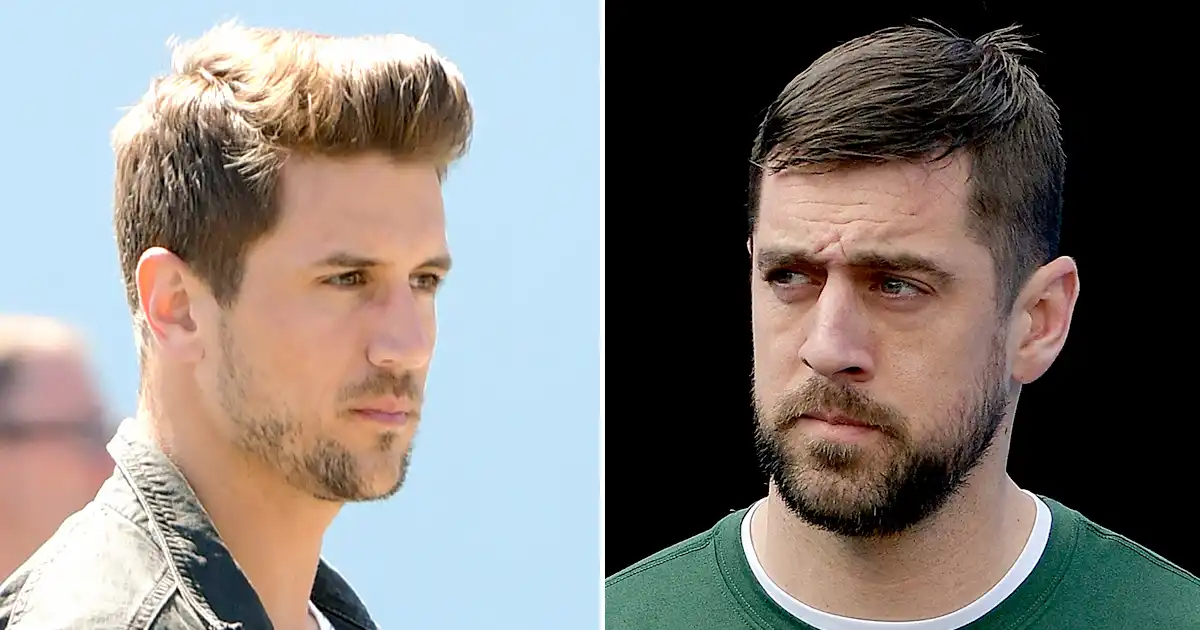
The bright headlights of contemporary reality television have a unique, often unforgiving way of peeling back the carefully constructed layers of public figures, exposing the raw, fragile vulnerabilities that lie beneath their polished public personas. This bittersweet reality became painfully evident during the summer of 2016 during Season 12 of ABC’s The Bachelorette, when the nation watched former college quarterback Jordan Rodgers contend for the heart and hand of JoJo Fletcher. While the popular television franchise is traditionally designed to celebrate the dizzying, romantic heights of idealized courtship and happy endings, it instead became the unlikely stage for a deeply personal, long-festering family tragedy that captured the intense curiosity of millions. During the pivotal “hometown dates” episode, as Jordan brought JoJo to meet his family in Chico, California, the physical absence of his middle brother—NFL superstar quarterback Aaron Rodgers—loomed vastly larger than any physical presence in the room, creating an atmosphere thick with unspoken tension. Rather than sweeping this massive elephant under the rug to maintain a glossy facade of family perfection, the Rodgers family met the situation with a striking, heartbreaking honesty that shocked both viewers and producers alike. Jordan’s oldest brother, Luke Rodgers, candidly confessed to JoJo that the ongoing estrangement was a source of profound sorrow for them all, noting how deeply it pained them to live without an active relationship with Aaron and simply stating, “it pains both of us, like, not to have that relationship… we miss our brother.” In that singular, unscripted moment of vulnerability, millions of television viewers realized that behind the athletic prestige of professional sports and the glossy veneer of reality television lay a normal family navigating the quiet, devastating grief of a broken bond. This public unveiling proved that even the most celebrated households are not immune to the quiet, painful fractures of human relationships, turning a reality show about finding love into a poignant mirror reflecting the tragedies of familial alienation.
To truly understand the depth of this estrangement, one must look past the sensationalized entertainment headlines and consider the intricate, often exhausting dynamics of brotherhood under the intense, unforgiving glare of the public eye. Growing up in a household driven by athletic excellence and high standards, both Jordan and Aaron pursued careers on the gridiron, a shared passion that paradoxically united and separated them throughout their lives as they chased the same dreams. While Aaron scaled the highest peaks of football immortality with the Green Bay Packers, commanding the national spotlight with an enigmatic, fiercely guarded persona, Jordan forged his own path, navigating the triumphs and tribulations of a sports career before pivoting to broadcasting and media. The precise catalyst for their falling out remains shrouded in mystery, guarded jealously by a family that, despite their public lives, sought to protect the remaining remnants of their personal privacy. Yet, the emotional weight of this silence was incredibly heavy for everyone involved, casting a persistent shadow over holidays, achievements, and quiet moments that should have been celebratory. Sibling relationships are meant to be life’s longest-lasting alliances, built on shared childhood memories, synchronized milestones, and an unspoken, lifelong understanding of one’s origins. When that alliance crumbles, it leaves behind an emotional vacuum filled with unspoken thoughts, unresolved debates, and a lingering sense of loss that time and success do not easily erase. For years, the Rodgers family had to carry this heavy burden in public, constantly badgered by sports commentators and entertainment journalists alike who sought to commodify their pain. This relentless media cycle turned their private heartbreak into a spectator sport, which only served to widen the chasm between the brothers and make any hope of reconciliation seem like an impossible dream.
The painful reality of this division became even more pronounced as both brothers navigated major life milestones that typically serve as natural catalysts for familial unity, healing, and celebrations. When Aaron was engaged to actress Shailene Woodley, public curiosity reached a fever pitch regarding whether his family would be included in the celebration, a stressful, highly-publicized dynamic that preceded their ultimate split in May 2022 before they could make final decisions about invitations. Concurrently, Jordan’s relationship with JoJo Fletcher was culminating in a beautiful, sun-drenched destination wedding in Mexico that same month, an event that should have been a time of pure, unadulterated celebration for the entire Rodgers clan. In an act of profound vulnerability, hope, and courage, Jordan chose to extend an olive branch across the divide, inviting Aaron to witness his marriage and sit among their loved ones. This invitation was far more than just a polite, perfunctory formality; it was a quiet, hopeful hand reached out in the dark, offering a genuine path back into each other’s lives without conditions or lingering animosity. Ultimately, Aaron did not attend the celebration, leaving an empty seat that spoke volumes to those in attendance and to the eager public watching from afar. The disappointment of that vacant chair on one of the most important days of Jordan’s life underscored the devastating persistence of their rift. It illustrated the difficult, universal truth that even our most romantic, joyful moments can be tinged with the bittersweet sting of what is missing. It reminded us that reconciliation cannot be rushed, nor can it be willed into existence by one side alone when deep wounds remain unhealed, leaving a lingering hope for a tomorrow where the empty seats are finally filled and family is made whole again.
Beyond the immediate impact on the brothers themselves, the feud cast a long, exhausting shadow over their parents, Ed and Darla Rodgers, who found themselves in a painful, agonizing position that no parent ever wishes to occupy. Caught in the difficult, heartbreaking role of loving all their children equally while watching them drift apart into bitter silence, the parents became quiet casualties of a dispute they could neither fix nor easily escape. For any parent, watching your children refuse to speak to one another is a unique, painful form of heartbreak, one that calls into question past choices, stirs feelings of guilt, and leaves a perpetual sense of unfinished business at every holiday gathering, birthday, and family dinner. This domestic grief was compounded by the relentless, often intrusive curiosity of a media landscape eager to dissect every gesture, interview response, and social media post for signs of trouble or reconciliation. This constant external scrutiny transformed a deeply personal, psychological struggle into a public narrative where the complex, messy realities of human emotion were flattened into simple, unfair archetypes of heroes and villains. The public failed to see that behind the sensationalized headlines were real human beings—a mother who longed to hold her son and a father who wished for the simple camaraderie of his boys—dealing with pride, hurt feelings, heavy misunderstandings, and the terrifying vulnerability required to say “I’m sorry” or “I miss you.” In a world that often demands perfect family units, the Rodgers’ struggle became a public testament to the universal reality of family dynamics, showing that blood is not always an automatic guarantee of peace, but rather a bond that requires constant, intentional work, humility, and patience to maintain.
Thankfully, human relationships are not static, and the passage of time has a miraculous way of softening even the most stubborn of defenses. After a decade marked by cold silence and public speculation, a paradigm shift finally occurred in July 2026, breathing new life into a narrative that many had assumed was permanently broken and beyond repair. Reports emerged that Aaron had reunited with his mother, father, and his older brother, Luke, representing a seismic, hopeful shift in the family’s long-standing dynamic that caught the world by surprise. This reunion was not merely a convenient photo opportunity designed to appease fans or rehabilitate a public image, but a testament to the quiet, arduous work of healing that often takes place far away from the cameras and the public eye. It signaled a collective decision to prioritize blood over pride, and to begin the fragile, deliberate process of dismantling the walls that had been built over years of estrangement. To sit across a table from those you have hurt, and who have hurt you, requires an immense amount of developmental courage, humility, and grace. While a single meeting cannot instantly erase a decade of pain or answer every unresolved question, it serves as the crucial, foundational step upon which trust can gradually be rebuilt. For Aaron, taking off his helmet and stepping away from his public persona to simply be a son and a brother once again was a monumental step toward restoration. This unexpected reunion offered a comforting reminder that the bonds of family are resilient enough to survive even the longest seasons of separation. It suggests that behind the scenes, conversations took place that valued love over being right, showing that even the coldest winters of the human heart must eventually give way to the warmth of spring.
The story of the Rodgers family is a deeply human epic that resonates far beyond the narrow, glamorous realms of professional sports and entertainment television. It serves as a powerful, sometimes painful mirror for the millions of everyday families who wrestle with their own silent conflicts, unspoken grievances, and estranged loved ones. The journey of Aaron, Jordan, and their family teaches us that fame, fortune, and extraordinary athletic success cannot shield us from the fundamental human need for connection, understanding, and love. It reminds us that forgiveness is not a sign of weakness or capitulation, but a courageous, active choice to release the heavy burden of past hurts to make room for a healthier, more hopeful future. As the Rodgers family takes these tentative, private steps toward reconciliation, they show us that healing is a winding, non-linear journey that requires patience, time, and an open heart. There is no quick fix for a decade of distance, but the willingness to try is a victory in itself. Ultimately, their story is a testament to the enduring power of hope—a reminder that no matter how deep the divide, how public the dispute, or how many years have passed, the door to family, love, and mutual respect is never truly closed as long as there is a willingness to walk through it together. As they write this new chapter away from the public gaze, they offer a quiet, powerful beacon of hope to anyone waiting for their own family to mend, reminding us all that it is never too late to heal and that love, in the end, remains our greatest home.