





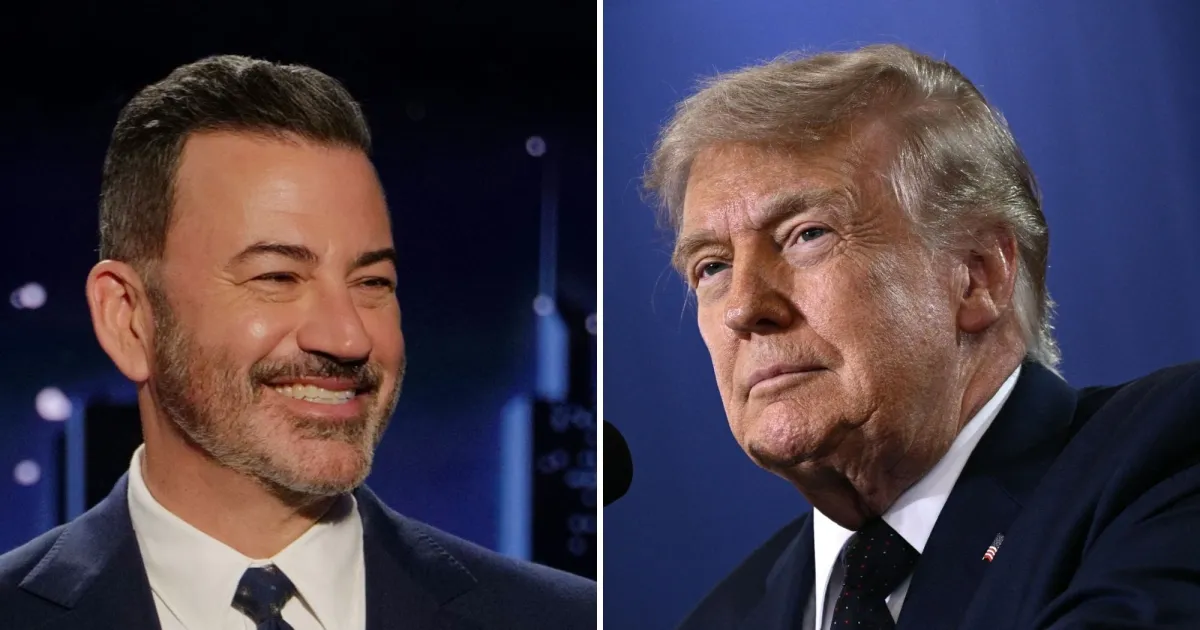
In the high-stakes, hyper-sensationalized world of American politics and pop culture, few arenas are as fascinating as the intersection where personal milestones clash with public personas, particularly when viewed through the razor-sharp lens of late-night television. A perfect storm of this dynamic recently erupted when Donald Trump Jr., the outspoken eldest son of the former president, tied the knot with his new bride, Bettina Anderson, on a stunning, sun-drenched private island in the Bahamas. While tropical weddings are traditionally joyous occasions filled with laughter, toast-making, and close family bonds, this particular ceremony immediately captured the public’s imagination for a glaring reason: the absence of the groom’s larger-than-life father, Donald J. Trump. The intimate affair, which featured a highly exclusive guest list of approximately forty close friends and family members, served as a beautiful celebration of love for the newlywed couple, yet it was the empty seat belonging to the patriarch that truly stole the tabloid headlines. For late-night comedian and veteran political satirist Jimmy Kimmel, this missing father-figure dynamic was not just a piece of juicy gossip, but a comedic goldmine waiting to be tapped on the stage of Jimmy Kimmel Live!. Kimmel, who has built a career on transforming the bizarre realities of modern political dynasties into digestible, laugh-out-loud commentary, seized upon the story with his trademark wry wit, casting a spotlight on the delicate, highly visible, and often complicated relationships that exist within one of the world’s most scrutinized families. By dissecting the event, Kimmel tapped into a deeply human curiosity: how does a family, so deeply entrenched in the pursuit of power and public attention, navigate the private, emotional milestones that define ordinary human existence? The contrast between the breezy, romantic shores of the Bahamas and the politically fraught, self-imposed isolation of Washington, D.C., set the stage for a national conversation about family loyalty, duty, and the unique challenges of growing up under the shadow of a famous father.
On his Tuesday night broadcast, Jimmy Kimmel did not hesitate to dissect the wedding’s guest roster, immediately homing in on the notable absence of the patriarch with surgical comedic precision. Addressing his studio audience with a characteristically deadpan expression, the fifty-eight-year-old host walked his viewers through the details of the Bahamian ceremony, painting a picture of an intimate gathering that had everything a couple could hope for—except, of course, the father of the groom. Kimmel joked about how the couple had to hold a small, tight-knit ceremony, highlighting the supreme irony that while forty of the couple’s closest confidants made the journey to the secluded island, the one person whose name is shared by the groom was nowhere to be found. Kimmel then transitioned into a sharp critique of the former president’s busy schedule, dismantling any excuses of a packed itinerary with a highly amusing rundown of Donald’s actual leisure activities. He pointed out to the laughing audience that the elder Trump is a man who routinely finds the time to hit the golf course two or three times every single week, and who has no trouble making highly publicized appearances at packed Ultimate Fighting Championship matches accompanied by nineties pop-cultural icons like Vanilla Ice. By contrasting these chaotic, high-energy public outings with his absence from an intimate, deeply personal family milestone, Kimmel highlighted a paradox that many ordinary families know all too well: the parent who is somehow always available for their own hobbies, crowds, and personal enjoyments, yet mysteriously finds themselves far too occupied when it comes to showing up for their children’s most significant life moments. This comedic contrast served to humanize Donald Trump Jr.’s situation, turning a political figure into a relatable son dealing with the classic, if amplified, disappointment of a father who chooses his own spotlight over a family gathering.
The mystery surrounding the elder Trump’s absence was only deepened by his own public attempt to explain it, utilizing his social media platform, Truth Social, to issue an official, rather formal statement that sought to balance parental affection with national duty. In his post, the seventy-nine-year-old former president expressed a deeply earnest, almost martyred regret, claiming that while he desperately wished to celebrate alongside his son Don Jr. and his new daughter-in-law Bettina, overriding “circumstances pertaining to Government” and his enduring, deep-seated “love for the United States of America” prevented him from leaving the domestic Capital. Kimmel took great pleasure in reading this grandiose message aloud, pausing to mock the high-minded rhetoric that transformed a simple family obligation into a matter of national security. The comedian dryly quipped that the president can indeed show warmth and fatherly affection when he truly wants to, proving his love for Don Jr. by making sure everyone knows that he simply happens to love the United States just a little bit more. This satirical breakdown exposed the fascinating, highly strategic ways in which public figures attempt to manage their family narratives, framing personal choices as noble sacrifices for the greater good of the republic. For the average observer, the idea of using national patriotism as an excuse to skip a destination wedding is both absurd and deeply revealing, shedding light on a family dynamic where every action, no matter how private, must be styled as a monumental act of statecraft, leaving one to wonder about the silent calculations, emotional negotiations, and potential disappointments that ripple through family chats when such grand public statements are issued to the world.
Beyond the simple physical absence of the patriarch, Kimmel found rich comedic territory in the broader history of the elder Trump’s marital life, using the wedding as a springboard to reflect on the complex saga of the family’s romantic history. Donald Trump Sr.’s life has been characterized by highly publicized, glamorous, and often turbulent marriages, beginning with his decades-long union with the late Ivana Trump from 1977 to 1990, followed by his media-frenzied marriage to actress Marla Maples throughout the mid-to-late nineties, and culminating in his current marriage to First Lady Melania Trump, whom he wed in a lavish ceremony in 2005. Kimmel weaponized this lengthy relationship resume with expert comedic timing, pointing out the irony of the elder Trump offering warm wishes for a long and stable marriage to the newlyweds, jokingly referring to him as a seasoned veteran who truly knows a great marriage because he has managed to have three of them himself. This jab brought a wave of laughter from the studio audience, but it also pointed to a deeper, more human reality about the generational cycles of family structures, particularly within dynasties where high-profile divorces, blended families, and multiple step-siblings are the norm. This complex backdrop is also mirrored in Donald Jr.’s own personal life; at forty-eight years old, his new union with the thirty-nine-year-old Bettina Anderson represents a fresh start and a second chance at domestic happiness following his highly publicized divorce from Vanessa Trump. Donald Jr. and Vanessa’s marriage, which lasted over a decade, produced five children—daughters Kai and Chloe, and sons Donald III, Tristan, and Spencer—who now find themselves navigating a newly expanded, blended family matrix. By highlighting these deep, layered personal histories, Kimmel’s comedy did not merely poke fun at political figures; it captured the universal, complicated human effort to find love, build lasting partnerships, and establish step-family dynamics under the intense, unforgiving glare of the media spotlight, where past failures and present hopes are constantly compared and contrasted on the public stage.
The comedic climax of Kimmel’s monologue came when he brilliantly juxtaposed Donald Trump’s refusal to attend his own son’s wedding with his well-documented and highly unusual habit of crashing the weddings of total strangers. To illustrate this hilarious double standard, Kimmel presented a series of real-world headlines detailing the former president’s frequent, unexpected appearances at wedding receptions hosted by paying members at his Mar-a-Lago resort in Palm Beach, Florida. The comedian painted a vivid, ridiculous picture of the elder Trump happily stepping into the spotlight of unsuspecting couples, grabbing the microphone to deliver impromptu speeches about political grievances, rising inflation, and transgender athletes, all while basking in the applause of a captive crowd of resort guests. Kimmel wryly noted that while Donald Trump is supposedly a man who simply doesn’t care for the traditional pomp and circumstance of wedding celebrations, the truth of the matter is that he absolutely loves them—so long as he is the center of attention and doesn’t have to travel far to get it. This segment of the monologue was particularly powerful because it went beyond cheap political points to touch upon a fundamental aspect of the human condition: the profound, sometimes tragic vulnerability of needing constant validation from a crowd of strangers at the expense of showing up for the quiet, intimate moments requested by those who love us most. For Don Jr., who has spent much of his adult life defending and championing his father’s legacy on the campaign trail, the image of his father enthusiastically hosting and speaking at the weddings of strangers while skipping his own private island nuptials must carry a unique emotional weight. By highlighting this paradox, Kimmel masterfully exposed the psychological eccentricities of fame and family neglect, demonstrating how satire can reveal the bittersweet, often painful ironies that lie beneath the polished, highly staged public lives of the rich and powerful.
Looking toward the future, the human story of Donald Jr. and Bettina Anderson’s union continues to unfold with plans for a spectacular, second wedding reception scheduled to take place at the historic White House, where both the president and First Lady Melania Trump are expected to be in attendance. Kimmel, never one to let a perfect setup go to waste, took one final, parting shot at the family dynamics by noting that since the senior Trumps actually reside in the White House, their attendance at this upcoming event should theoretically be guaranteed, though he joked that it would be incredibly funny if they still found a way to skip it, perhaps sending a message that they simply couldn’t make the long journey down the stairs from their private quarters. Beneath the layers of late-night sarcasm and political theater, however, lies the real-world, legal reality of a couple embarking on a new life together, having officially secured their marriage license in Palm Beach on Thursday, May 21, to solidify their bond under the law before jetting off to their intimate island getaway. This dual-celebration approach—a quiet, legal ceremony in Florida, an intimate escape in the Bahamas, and a grand, highly political reception in Washington—perfectly illustrates the tightrope walk that high-profile figures must perform, constantly balancing their genuine human desire for privacy and authentic connection with the inescapable demands of public theater. Ultimately, Jimmy Kimmel’s comedic deconstruction of the Trump wedding serves as a poignant, highly entertaining reminder of a universal truth: no matter how much wealth, influence, or power a family possesses, they are never entirely immune to the awkward silences, familial disconnects, and logistical negotiations that define the human experience. Through the lens of satire, we are able to see past the political banners and carefully drafted social media statements to witness a very real father, a very real son, and a very human family trying, in their own chaotic way, to navigate the ancient, bumpy terrains of love, commitment, and family duty.