




The return of HBO’s critically acclaimed and culturally dominant drama Euphoria in April 2026, following a grueling, highly publicized four-year hiatus, proved immediately that creator Sam Levinson was not interested in resting on past laurels or delivering a comforting homecoming for his beloved, yet profoundly tortured, ensemble cast. Instead, Season 3 burst back onto the cultural landscape with an audacious, highly anticipated five-year time jump, completely discarding the familiar, suburban high school hallways of East Highland in favor of a bleak, adult underworld where survival is a daily, exhausting negotiation. What once was a glossy, glitter-dusted portrait of adolescent angst, neon-soaked parties, and chemical escapism quickly curdled into a gritty, uncompromising neo-noir nightmare, leaving audiences both transfixed and deeply polarized by some of the most shocking, boundary-pushing, and downright chaotic narratives ever broadcast on premium television. Levinson doubled down on the show’s signature, hyper-stylized visual language—amplified by heavy shadows, 35mm film grain, and an unrelenting, atmospheric musical score—to explore the tragic, almost ancient-Greek inevitability of his characters’ self-destructive paths as they entered their mid-twenties. From the very first gorgeously shot frames of the premiere, it became abundantly clear that the youthful innocence, however fractured it had been in the first two seasons, was permanently dead, replaced by a cynical and dangerous adult reality where the stakes were no longer about passing high school classes, navigating love triangles, or surviving prom night, but rather about staying out of federal prison, dodging ruthless cartel bosses, and enduring the sheer physical toll of survival in a world that had abandoned them to their darkest, most desperate impulses. This stylistic pivot from teen melodrama to true crime survival horror redefined the show’s identity, cementing its status as a mirror to modern anxieties while raising the stakes to a fever pitch.
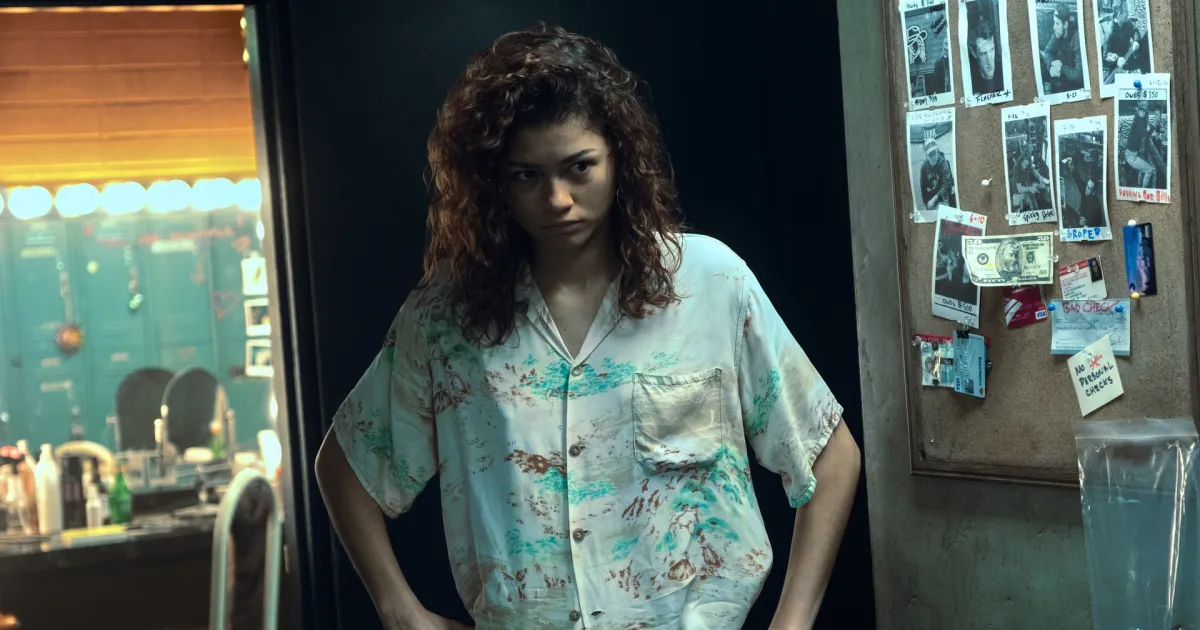
Nowhere was this grim maturation and abandonment of safety more jarringly evident than in the trajectory of the show’s central protagonist, Rue Bennett, portrayed once again with a haunting, bone-deep desperation by Zendaya in a performance that redefined the limits of her acting prowess and pushed her character into uncharted moral territory. The season premiere wasted absolutely no time in shattering any lingering illusions of recovery or domestic stability, revealing that Rue had graduated from a struggling street-level addict into an active drug mule operating under the terrifying, high-stakes threat of international cartels. In a sequence that immediately went viral for its visceral, stomach-churning realism and claustrophobic tension, Rue, alongside Chloe Cherry’s brilliantly tragicomic Faye, was shown using copious amounts of personal lubricant to swallow large, rubbery balloons filled to capacity with illicit substances, a desperate attempt to smuggle contraband across the heavily fortified Mexican border into the United States. While Rue managed to return to her domestic sphere with her dangerous cargo physically intact, the narrative presented a sickening, graphic contrast in Faye, whose body violently rejected the brutal smuggling process in an agonizing, deeply humiliating sequence of physical breakdown that culminated in a horrifying moment of domestic squalor involving a household pet licking up the aftermath of her physical failure. By forcing viewers to witness the raw, completely unglamorized mechanics of body packing and the absolute degradation of human dignity that accompanies it, Levinson stripped away any lingering romance associated with the drug-adjacent lifestyle, framing Rue’s survival not as a triumph of resourcefulness, but as a slow, agonizing descent into a systemic trap from which there may be no logical, clean escape, leaving fans to grapple with the disturbing reality of what their favorite protagonist had become to feed her survival.
Meanwhile, the tragic, desperate evolution of Cassie Howard, played with a heartbreakingly raw, hysterically fragile vulnerability by Sydney Sweeney, took center stage in a controversial storyline that became one of the season’s most polarizing and fiercely debated creative choices. Stripped of her high school sweetheart illusions and increasingly hollowed out by her obsessive need for validation, Cassie’s toxic, codependent relationship with the volatile Nate Jacobs dragged her directly into the rapidly monetized, highly exploitative world of online adult entertainment, serving as a bleak commentary on the commodification of female trauma in the digital age. A series of flashback episodes painstakingly traced her transition from a brokenhearted young woman into a prolific, explicit content creator on OnlyFans, showcasing increasingly bizarre, highly stylized, and degrading scenarios—ranging from visually striking, topless ice cream shoots to deeply unsettling adult-baby role-play sequences—all designed to satisfy the algorithm and generate quick cash. The tragedy of Cassie’s arc lay not just in the highly provocative, boundary-pushing nature of the content she produced, but in the psychological manipulation driving her actions behind the camera, as a debt-ridden and desperate Nate, portrayed with a chilling, parasitic intensity by Jacob Elordi, actively pressured his new bride to push her boundaries further, culminating in a scene of raw, televised exhibitionism where she mailed used intimate garments to anonymous subscribers and performed on camera to keep their fragile household afloat. This narrative thread ignited fierce debates among viewers regarding whether the show was offering a sharp feminist critique of modern digital labor or merely indulging in the very exploitation it sought to depict, highlighting the thin line Euphoria has always walked between artistic provocation and sensationalism.
The toxic, deeply unstable union between Cassie and Nate reached its inevitable, catastrophic climax in a highly anticipated mid-season wedding episode that subverted every traditional trope of matrimonial romance to deliver an agonizing exercise in psychological horror, sudden violence, and pitch-black comedy. What should have been a celebration of redemption and new beginnings instead unfolded as a logistical and emotional trainwreck from start to finish, beginning with a physically ill, panic-stricken Nate throwing up from stress and alcohol abuse while Cassie hovered on the verge of a complete mental breakdown before they even managed to exchange their hollow, desperate vows. The subsequent wedding dinner offered absolutely no respite, transitioning from awkward domestic tension to immediate, life-threatening danger when a menacing, shadowy loan shark named Naz cornered the newlyweds at their table, publicly exposing the monumental magnitude of Nate’s unpaid debts and shattering the fragile illusion of their happily-ever-after in front of their horrified, silent guests. The tension exploded into a bizarre sequence of domestic accident and gangland retribution; after Cassie accidentally struck Nate in the eye with a flying champagne cork during a frantic, post-dinner argument, their brief, tearful makeup session at home was brutally interrupted by Naz’s enforcers who were waiting in the shadows. In a sequence that cemented Season 3’s reputation for uncompromising, gut-wrenching brutality, Nate was pinned down on his own living room floor and systematically beaten before having his pinky finger severed with clinical precision, leaving Cassie to watch in absolute, paralyzed terror as the true, violent cost of her husband’s corporate and criminal ambitions was literally carved into his flesh in front of her eyes.
The moral decay of this universe expanded even further into the dark avenues of late-night survival with the introduction of Anna Van Patten as Kitty, a raw, cynical new dancer at the dimly lit, dangerous strip club where Rue now found herself working a secondary, protective shift to make ends meet and monitor the local ecosystem. Kitty’s debut on the show served as a stark, uncompromising window into the underbelly of nightlife exploitation, culminating in an agonizingly tense, highly controversial sequence where, after another dancer named Angel mysteriously vanished from a rehabilitation facility, Kitty was hired for an exclusive, highly lucrative booking by a group of four affluent, predatory men in a private VIP suite. Before entering the room, a terrified and emotionally numb Kitty consumed a heavy dose of ketamine to completely disassociate from her physical reality, leaving herself entirely vulnerable to the men’s escalating physical demands while a horrified Rue watched the entire encounter unfold through the cold, pixelated lens of the establishment’s security monitors. Rue’s desperate, frantic attempt to intervene and rescue the young woman highlighted her lingering, deeply buried sense of empathy and humanity, yet the ultimate tragedy of the scene was realized when Kitty, thoroughly numbed by the substances and the systemic, normalized violence of her profession, coldly brushed off Rue’s concerns and returned to the room, illustrating a profound, collective resignation to exploitation that has become the defining survival mechanism for the women of Euphoria‘s bleak new world. This sequence served as a powerful thematic mirror, reflecting how both Rue and Kitty had traded their bodily autonomy and peace of mind for mere survival, showcasing a world where empathy is a liability and numbness is the only available armor.
The ultimate, jaw-dropping climax of this chaotic season coalesced around a desperate, high-stakes negotiation between Maddy Perez and the enigmatic underground figure Alamo, played with a quiet, menacing authority by Adewale Akinnuoye-Baje, leading directly to the most shocking and unexpected character death in modern television history. With Nate’s life hovering in the balance after he was kidnapped and buried alive in an underground coffin, Maddy, portrayed with a fierce, mature resolve by Alexa Demie, was forced to leverage her own agency to secure a one-million-dollar loan from Alamo, a transaction that required her to submit to a degrading, highly suggestive meeting in his private hot tub that left viewers questioning the heavy, unspoken price she paid for the ransom. Though Alamo agreed to the deal in exchange for a massive, lifelong percentage of Maddy’s future earnings, the desperate rescue attempt by Maddy, Cassie, and Alamo ultimately arrived far too late to save the show’s primary antagonist. In a sequence that combined gothic horror with survivalist dread, Nate was trapped in the pitch-black claustrophobia of the wooden box, where a venomous rattlesnake had slithered inside, repeatedly biting him over an agonizing seventy-two-hour period until his body finally succumbed to the venom. When the desperate trio finally unearthed the coffin and pried open the lid, they were met not with a survivor, but with the cold, distorted corpse of Nate Jacobs, bringing a sudden, shocking, and deeply poetic end to his domestic reign of terror and leaving the survivors to pick up the fractured, ruined pieces of their lives as the credits rolled on a season that redefined the boundaries of television trauma and left an indelible mark on its audience.