





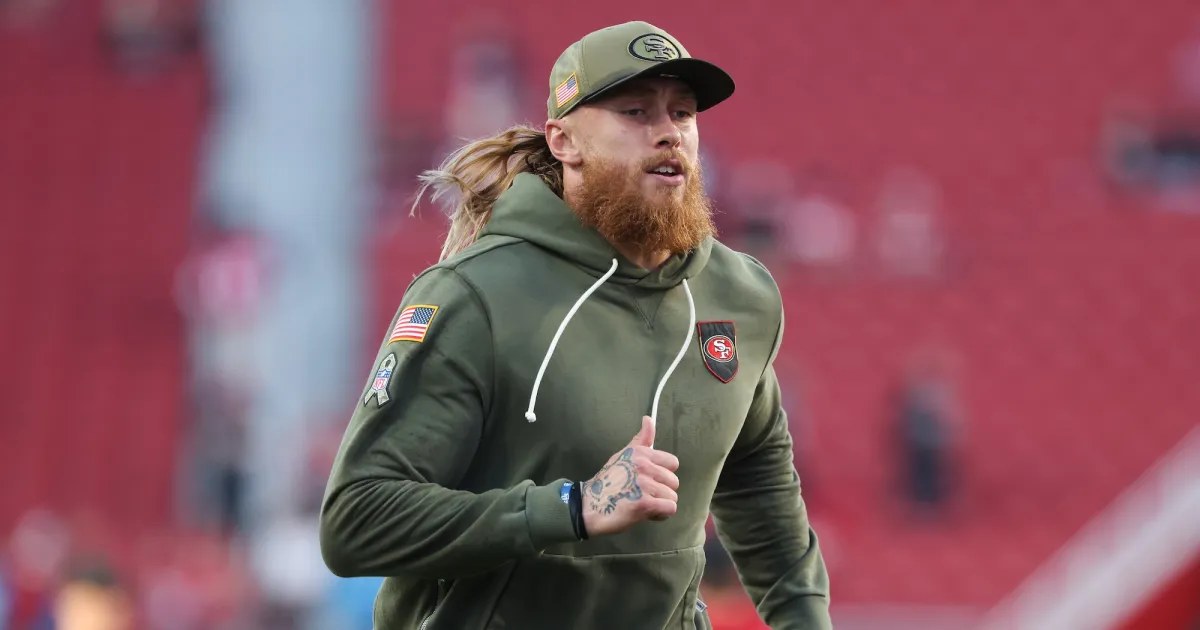
The humid summer air of Nashville, Tennessee, recently played host to a dazzling convergence of country music, athletic fellowship, and raw, unfiltered human emotion. Amidst the neon glow of the Broadway strip, San Francisco 49ers tight end George Kittle stood on the red carpet of the “Tight Ends and Friends Concert”—an event presented by Reese’s and Sports Illustrated that has fast become a cornerstone of the NFL offseason social calendar. Dressed in the relaxed, charismatic style that has endeared him to millions of fans worldwide, the 32-year-old veteran exuded an infectious sense of calm and reassurance that local fans desperately needed to hear. Standing beside him was his wife, Claire Kittle, whose bright smile and enthusiastic agreement painted a picture of absolute domestic solidarity and optimism. To the untrained eye, it was simply another glamorous evening celebrating the elite fraternity of professional gridiron stars; however, beneath the surface lay a franchise in transition, navigating the delicate, tension-filled space between organizational loyalty, commercial contract business, and personal player survival.
The immediate backdrop to Kittle’s lighthearted optimism is a simmering, deeply public contract standoff involving his teammate, star wide receiver Brandon Aiyuk. The 28-year-old Aiyuk is currently locked in an exhausting standoff with the 49ers’ front office, a high-stakes chess match that traces its painful origins back to a series of devastating knee injuries. For an elite athlete whose entire livelihood depends on physical grace and explosive speed, tearing the ACL, MCL, and meniscus in a single afternoon is a psychological and physical catastrophe. When the 49ers front office responded to this physical tragedy by voiding the remaining guaranteed money on his four-year contract, the fragile bond of trust between the player and the franchise shattered. In an act of quiet, desperate rebellion against a corporate structure he felt had abandoned his humanity, Aiyuk ceased attending his required rehabilitation sessions at the team’s facility. This cold war of silence culminated in December when the organization officially placed him on the reserve/left team list, formalizing a painful estrangement that highlights the brutal, transactional nature of the modern sports industry.
This corporate hostility has pushed Aiyuk to seek agency through the only avenue left available to him: the sprawling, unpredictable court of public opinion. Over past months, the wide receiver has taken to his social media channels to openly voice his frustration with the 49ers’ leadership, actively campaigning for a trade to the Washington Commanders. This public unraveling of a once-beautiful athletic partnership forces his teammates to walk an exceptionally thin emotional tightrope, balancing their love for a brother in the trenches with their obligations to the corporate entity that pays their salaries. In the locker room of an NFL team, players are acutely aware of the fleeting nature of their careers and the cold reality that their bodies are treated as depreciating assets. Watching a brother like Aiyuk fight for his financial security while healing a shattered knee is a sobering reminder that, behind the glitz and the multi-million-dollar stadiums, these athletes are vulnerable human beings trying to secure their families’ futures before their bodies give out entirely.
It was this complex web of empathy and realism that Kittle was forced to navigate during a recent appearance on the popular sports podcast “Pardon My Take.” When questioned about Aiyuk’s ongoing saga, Kittle offered a response that was both a masterclass in athletic diplomacy and a poignant reflection on the passage of time in the NFL. He recalled, with a sense of nostalgic awe, waking up early in the mornings specifically to watch Aiyuk train, remembering a version of his teammate who could sprint at over 22 miles per hour and halt on a single dime. Yet, beneath the praise lay a bittersweet acknowledgement of the distance that has grown between them, noting that it had been many months since they last shared a field. He punctuated his reflections with a sarcastic comment about not being happy either after a team paid him a massive sum of $130 million, a remark that captured the dual reality of the modern athlete—unfathomably wealthy by societal standards, yet still subjected to the emotional toll of corporate betrayal and physical vulnerability.
To preserve their own mental health and protect one another from the isolating pressures of the league, Kittle and his peers have actively sought to build alternative structures of support, most notably through the creation of Tight End University. Founded in 2021 by Kittle, Kansas City Chiefs star Travis Kelce, and retired veteran Greg Olsen, this unique annual summit brings together tight ends from all levels of the sport to share secrets, refine their crafts, and build an unbreakable network of mutual care. During his Nashville appearance, Kittle spoke with visible pride about how the initiative continues to expand and up the ante each year, defying their wildest expectations. This program represents a quiet revolution in professional sports; it is a space where fierce rivals on Sunday become teachers and confidants on Monday, offering the younger generation of players the strategic, emotional, and physical tools necessary to survive in a league that so often chews up and spits out its young talent.
As the 49ers look toward an incredibly exciting and physically demanding upcoming season that features historic, globally minded matchups in Australia and Mexico, Kittle’s message remains one of defiance and hope. The journey across oceans and borders offers a welcome escape from the sterile boardrooms and contract negotiations that have dominated the offseason headlines. It represents a return to the pure, childlike joy of playing football—an opportunity to bond under the hot sun, share laughs in locker rooms, and hear the roar of international crowds who care nothing for contract disputes. By focusing on the sheer, unadulterated fun of the game and the human connections that sustain it, George and Claire Kittle are reminding fans of a crucial truth: though the business of the NFL can be cold, calculating, and occasionally cruel, the human spirit, forged through brotherhood, physical resilience, and a shared love for the game, will always find a way to triumph over the spreadsheet.