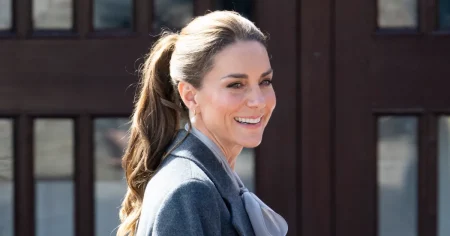




Denise Richards has spent more than half her life living under the intense, often unforgiving microscope of the public eye. Ever since she burst onto the Hollywood scene in her early twenties, her striking, expressive features became her signature, establishing her as an iconic beauty of her generation. However, in an industry that routinely treats the natural process of female aging as a quiet tragedy rather than a standard milestone of life, growing older gracefully becomes a complex public negotiation rather than a private, personal journey. For someone like Richards, whose face has been meticulously cataloged in film and television for over three decades, entering her fifties brought a unique and daunting set of pressures. The public often harbors a strange, subconscious sense of ownership over the faces of the celebrities they have watched grow up, creating an environment where any sign of aging is criticized, yet any visible attempt to reverse it is met with harsh judgment. This societal double standard places women in an agonizing position, forcing them to navigate a narrow corridor between preserving their youth and maintaining an elusive, highly scrutinized standard of naturalness. Richards’ journey toward her 2025 facelift was not a sudden impulse born of vanity, but a deeply contemplated response to this relentless scrutiny, reflecting the universal struggle of reconciling who we see in the mirror with how the world expects us to look.
The turning point in Richards’ decision-making process was marked by a profound shift from apprehension to a pragmatic, honest acceptance of her own desires. Speaking candidly during an episode of Bunnie Xo’s Dumb Blonde podcast, the 55-year-old actress revealed that her initial cosmetic ambitions were actually quite modest. She had originally only intended to address her neck, hoping a isolated procedure would provide a subtle lift without altering the core structure of her face. However, a pivotal conversation with a close, highly famous, yet fiercely private friend changed her entire perspective. This friend, who had successfully navigated her own cosmetic journey completely out of the public eye, offered a blunt piece of advice that stopped Richards in her tracks: “You have to do the whole thing.” The suggestion was initially terrifying to Denise, who feared losing the essence of her recognizable features and looking like a stranger to herself. To process this overwhelming recommendation, she conceptualized the surgical process through a brilliant and highly relatable home-renovation analogy. She reasoned that if you remodel only one room in an old, historic house, that single space will look spectacular, but it will simultaneously highlight the wear and tear of the surrounding rooms, rendering the overall aesthetic discordant and out of balance. This realization helped her overcome her fear of a full-facelift, allowing her to understand that harmony and facial balance were far more important than a piecemeal, hesitant approach.
Overcoming her deep-seated terror required finding a medical professional who was not merely a technician, but a true artist capable of respecting the delicate, familiar architecture of her face. She found this creative partnership in Dr. Ben Talei, a renowned facial plastic surgeon whose extensive portfolio of natural-looking transformations gave her the confidence she needed to surrender control. Trusting someone with your face—especially when your entire livelihood and public identity are tied to your appearance—is an immense act of vulnerability. Yet, after reviewing countless before-and-after photographs of Dr. Talei’s impeccable work, Richards decided to take a leap of faith, ultimately telling him, “You’re the artist, do what you want to do.” Dr. Talei subsequently performed a comprehensive transformation that addressed her neck, her lower face, her upper face, and a brow lift, along with delicately refining her upper eyelids while leaving her lower lids untouched. This holistic approach ensured that her features remained in perfect proportion, avoiding the tight, windswept look that so many patients dread. By treating Richards’ face as a cohesive canvas rather than a collection of isolated parts to be fixed, Dr. Talei executed a transformation that honored her natural bone structure, highlighting the profound difference between aggressively changing one’s appearance and artfully restoring it.
Despite the beautifully natural results of her procedure, Richards has been incredibly refreshing in her refusal to gloss over the physical realities, discomforts, and anxieties of the recovery process. She candidly admitted that the brow lift was an incredibly painful experience that caught her completely off guard, sharing with her podcast host that she was entirely unprepared for the intensity of the physical toll it took. A year after the surgery, she still experiences a lingering numbness directly beneath her chin, serving as a daily, physical reminder of the deeply invasive nature of major facial surgery. The emotional weight of recovery was equally challenging; during the early weeks, when swelling, bruising, and distortion are at their peak, it is incredibly easy for a patient to succumb to panic and wonder if they have made an irreversible mistake. When medical professionals assured her that her appearance would steadily improve as her tissues healed and reorganized, she found herself questioning the physics of the process, wondering how gravity could possibly work in her favor during recovery. Yet, as the months progressed, her face began to settle into its new contours, proving that patience and emotional resilience are just as critical to a successful cosmetic outcome as the surgeon’s initial skill. Ultimately, she describes the decision as the best thing she ever did for herself, transforming her initial terror into a deep sense of personal satisfaction.
This journey represents a massive evolution in Richards’ personal philosophy regarding cosmetic intervention, proving that self-image is never static. In the past, she had been highly vocal about her reluctance to ever undergo a facelift, joining the ranks of many public figures who publicly declare they will let nature take its course. However, she has since fully embraced the wisdom of the phrase “never say never,” recognizing that human desires are fluid and that changing one’s mind is a natural part of growth rather than a sign of hypocrisy. Her primary fear was always that she would cease to look like herself, a valid concern in an era where over-processing can strip away an individual’s unique character and warmth. Her willingness to speak openly about this shift in perspective, both on podcasts and in candid interviews with publications like Allure, highlights her deep commitment to honesty. Having previously undergone breast augmentation at nineteen and subsequent revision surgeries, she was no stranger to medical enhancement, but she recognized that a facelift carried an entirely different level of public exposure. Because she has been in the spotlight for decades, she knew that any major change to her face would be immediately obvious to the public, making any attempt to hide or deny the surgery futile and dishonest—a realization that fueled her brave choice to own her decision fully.
By choosing candor and transparency over secrecy and denial, Denise Richards is actively contributing to a vital, humanizing cultural shift in how we discuss aging, beauty, and female autonomy. For generations, Hollywood has fostered a culture of silence, where women are expected to remain magically ageless while simultaneously pretending that their youthfulness is merely the result of drinking water, getting sleep, and possessing good genetics. This collective gaslighting has long fueled deep feelings of inadequacy among everyday women who compare their natural aging process to the artificially preserved, unacknowledged standards of celebrities. Richards’ decision to pull back the curtain and share the pain, the fear, the physical numbness, and the ultimate joy of her facelift demystifies the entire cosmetic process, stripping away the shame and stigma that have historically shrouded plastic surgery. Her narrative reframes these procedures not as a desperate act of vanity or a submission to societal pressure, but as an empowering choice of personal agency and self-care. In a world that often seeks to diminish and hide women as they grow older, Denise Richards’ unapologetic transparency serves as a powerful reminder that women have the absolute right to define their own relationship with their bodies, to change their minds, and to reclaim their confidence entirely on their own terms.