





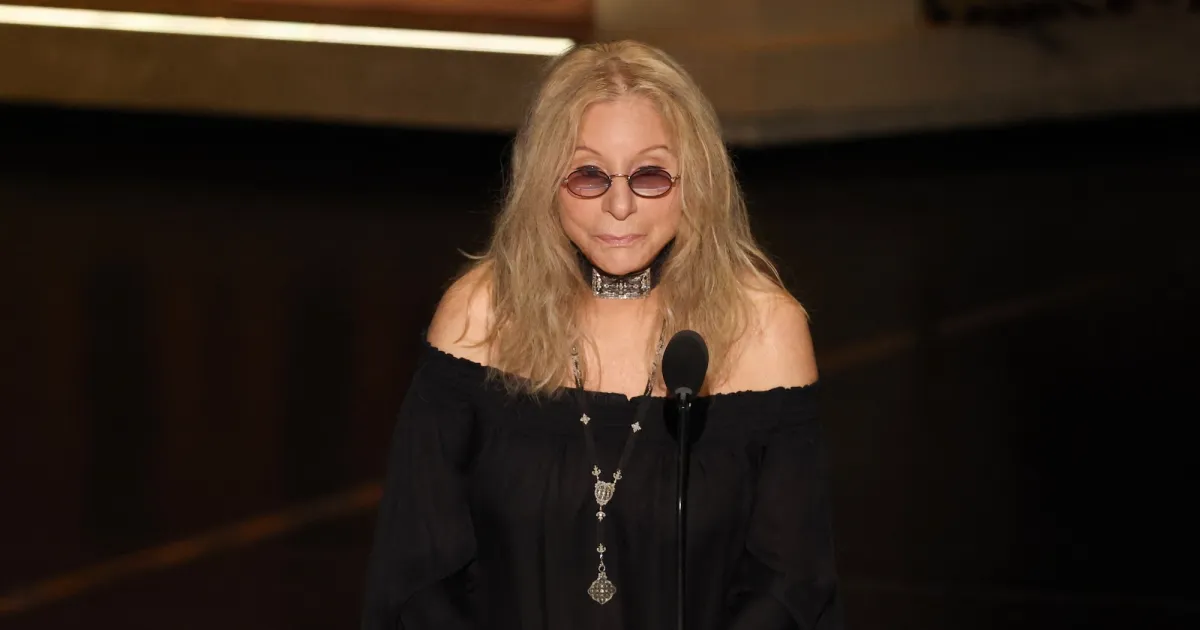
There is a poignant, universal truth in the reality that even the most legendary figures of our cultural landscape are ultimately bound by the fragile constraints of the human body. At eighty-four years old, Barbra Streisand remains an undisputed titan of American entertainment—a rare EGOT winner whose voice, presence, and artistic vision have defined generations. Yet, it was a simple, stubborn physical setback—a recovering knee injury—that ultimately prevented her from traveling to the south of France to accept one of the global film community’s highest achievements: the honorary Palme d’Or at the 79th Cannes Film Festival. While the red carpet of the Palais des Festivals was ready to roll out in her honor, the icon was forced to make the difficult, bittersweet decision to stay home on the advice of her physicians. To her global audience, this cancellation was a reminder of her humanity; to Streisand herself, it was an unwelcome obstacle in a life defined by overcoming obstacles. Rather than letting her absence dim the moment, she leaned into the vulnerability of her situation, sending a deeply personal virtual message that transformed a standard acceptance speech into an intimate, reflective conversation about aging, memory, the persistence of artistic passion, and the eternal magic of the silver screen.
In her virtual address, Streisand transported her audience back to the very beginning of her creative consciousness, speaking with a tender nostalgia that humanized her legendary persona. She recalled her childhood self, a young girl from Brooklyn who found solace and salvation in the cool darkness of local movie theaters, gazing up at the towering silver screen. For the young Streisand, those glowing, larger-than-life images were not mere entertainment; they were lifelines, mesmerizing her so deeply that they became permanently etched into her memory. She spoke of a desperate, beautiful desire to escape her immediate reality and inhabit “those other more interesting worlds” that movies promised. This confession reveals the classic origin story of many great artists—the drive to create born from a profound need to find safety, beauty, and meaning outside of a mundane or difficult childhood. Yet, as she grew older, Streisand realized that her relationship with cinema was different from that of her peers. She was not merely wishing to be the center of attention or to mimic the glamorous actresses of her youth; instead, she found herself dissecting the mechanics of the storytelling itself, asking endless questions about lighting, pacing, framing, and structure. Long before she ever sat in a canvas chair with her name printed on the back, she was subconsciously analyzing films from a holistic perspective. She was, as she beautifully put is, already thinking like a director—driven by an innate, irrepressible urge to figure out how to tell a story from the inside out.
The transition from a beloved, highly successful actress to a female director in Hollywood, however, was a journey fraught with systemic hostility and deep-seated skepticism. In her speech, Streisand pulled back the curtain on the quiet warfare she endured while trying to bring her directorial debut, Yentl, to life. It is easy to look at her monumental career today and assume that success came naturally, but the reality she described was one of relentless rejection. In the late twentieth century, Hollywood was a tightly guarded patriarchal fortress, and Streisand represented a dual threat that the establishment was eager to neutralize: she was a woman, which was already an immense barrier to entry, and she was an actress who dared to demand creative control. The industry had comfortably categorized her as a performer to be guided and directed, not a visionary to be funded. For fifteen exhausting years, the passion project of Yentl teetered on the edge of collapse as studio after studio turned her down, questioning her capability, her authority, and her right to direct. This long period of professional exile and constant doubt would have broken a lesser artist. Yet, Streisand’s recollection of this time is not colored by bitterness, but by an enduring sense of necessity; she did not merely want to make the film, she felt a spiritual and artistic obligation to do so, demonstrating the sheer force of will required for women of her generation to carve out space behind the camera.
This relentless drive to bring Yentl to the screen is what truly connects Streisand to the contemporary filmmakers gathered under the bright spring sun of Cannes. The festival has long been a sanctuary for independent voices, a place where artists risk everything to show their unique versions of the world. By recalling her fifteen-year struggle, Streisand extended a hand of empathy and solidarity to every director in the audience who has faced a wall of “no’s,” who has had their vision compromised, or who has wondered if the sacrifice is worth the toll. The story of Yentl—a narrative about a woman who must disguise herself as a man just to study and access the intellectual world—powerfully mirrored Streisand’s own lived experience in a hostile industry. When she spoke of having to make the movie, she was speaking of the desperate, universal hunger of the artist to speak their truth regardless of the cost. By sharing this vulnerability, she demystified her icon status, reminding the audience that beneath the glamour, the awards, and the historical milestones lies the same raw, stubborn, and fragile creative spirit that drives every filmmaker who fights to get their project onto the screen.
Looking out at a contemporary society plagued by geopolitical division, rapid technological upheaval, and social fragmentation, Streisand used her platform to highlight the vital, almost sacred role that cinema plays in the modern world. In a climate that feels increasingly volatile and fractured, she expressed a profound sense of comfort in the existence of festivals like Cannes, where diverse stories from countless cultures are celebrated on a global stage. To her, cinema is much more than a commercial product or a medium for passive consumption; it possesses a unique, almost supernatural ability to unite people across ideological and geographical divides. When the lights dim in a theater, individual differences fade, replaced by a collective emotional resonance that coaxes audiences into opening their hearts and minds to experiences far different from their own. In recognizing this, Streisand framed her honorary Palme d’Or not as a personal trophy to cap off a brilliant career, but as an invitation to remain an active, passionate member of a global community of dreamers who believe that storytelling can heal a wounded world.
Ultimately, Streisand’s message was a masterclass in grace, resilience, and enduring gratitude. Though physically absent from France—a country she has long loved and whose rich cinematic history has deeply influenced her own artistic sensibilities—she managed to bridge the thousands of miles with warmth and sincerity. She expressed her deepest regrets for not being able to celebrate alongside the colleagues she admires, yet her focus quickly shifted away from her own misfortune to shine a spotlight on the achievements of a new generation of filmmakers. Her heartfelt congratulations to the creators whose extraordinary talent and creative vision were being celebrated at the 79th edition of the festival showcased the generosity of an artist who is secure in her legacy and eager to champion the future of her craft. Closing her message with a passionate “merci beaucoup and vive la cinema,” Barbra Streisand made it clear that while physical injuries may temporarily slow her stride, her voice remains as powerful, clear, and inspiring as ever. Her virtual presence at Cannes was a beautiful testament to the fact that true artistry knows no boundaries of space, age, or physical limitation, continuing to unite us all in our shared love for the magic of the moving image.