


Dictionary.com has officially weighed in on the year that was, and the word it chose to define 2026 is one you’ve almost certainly seen scattered across your social media feeds. The winner? “Maxxing.” It’s a stripped-down, internet-born twist on “maximizing” or “increasing,” and according to the dictionary folks, it captures something essential about the way we live now. In a year dominated by conversations about technology, artificial intelligence, and the relentless pressure to be better, faster, and more optimized, “maxxing” has become a kind of shorthand for the collective urge to squeeze every last drop of potential out of ourselves. The research behind the choice is striking: Dictionary.com found that use of the word exploded nearly 19 times over the previous year, while the specific compound “looksmaxxing” appeared more than 900 percent more often in 2026 than in 2025. That’s not just a linguistic trend; it’s a cultural signal. We are all, it seems, trying to max something — our looks, our health, our productivity, even our fiber intake. The word has a slightly goofy, meme-adjacent energy to it, but it also carries a heavier weight. It speaks to a society that never quite feels finished, always chasing the next upgrade.
The beauty of “maxxing” is how flexible it is. It can stand alone, as in “I’m maxxing this week,” or it can be attached to just about anything to create a new ritual of self-improvement. Some of the most popular variations have become tiny cultural phenomena in their own right. There’s “looksmaxxing,” which means optimizing your physical appearance — think skincare routines, gym sessions, grooming, and even the way you dress. There’s “fibermaxxing,” a genuinely funny term for loading your diet with as much fiber as possible, often for gut health and regularity, which says a lot about wellness culture’s obsession with digestion. Then there’s “proteinmaxxing,” the gym-rat favorite that has people planning every meal around hitting absurd protein targets, and “productivity-maxxing,” which turns your workday into a series of timed sprints designed to produce more than any human reasonably should. In other words, “maxxing” can be applied to almost any area of life, and that versatility is exactly why it resonated so deeply. The phrase feels both playful and exhausting, like a video game power-up that you’re never quite sure you’re using correctly. Dictionary.com’s announcement framed the choice as a natural reaction to a year full of digital noise, noting that “in a year dominated by discussions of technology’s role in society, it’s only natural that we selected a word that was forged online.” It’s hard to argue with that logic. The internet has become the birthplace of our collective vocabulary, and “maxxing” is a perfect example of a word that emerged from the chaos of online culture and somehow made its way into daily conversations.
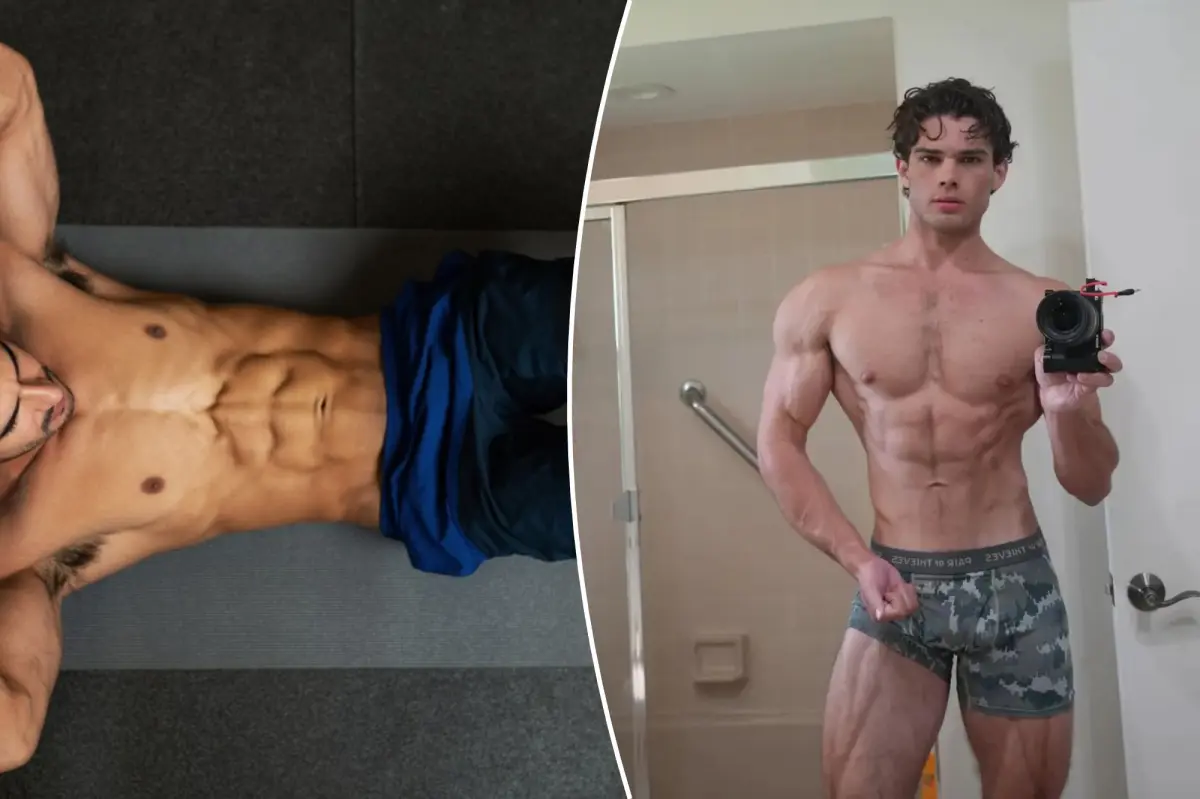
Of all the ways people have been maxxing in 2026, the one that has gained the most traction is undoubtedly “looksmaxxing.” It’s a term that has a complicated, and somewhat dark, origin story. It first emerged in the mid-2010s on shadowy online message boards associated with the involuntarily celibate, or “incel,” community. There, it was used as a kind of brutal self-help mantra for men who believed their romantic failures were tied to their physical appearance. The idea was simple: if you couldn’t change your circumstances, at least you could change your face, your body, your style. It was a concept born out of frustration and isolation, and for a while it remained in the darker corners of the internet. But in the early 2020s, TikTok creators began picking it up, and the term went mainstream. One of the figures most associated with that shift is Braden Peters, a livestreamer known online as Clavicular, whose own controversial journey with looksmaxxing — including harmful steroid use — brought the term into the broader cultural conversation. Suddenly, what had once been niche and somewhat eerie became just another hashtag. Today, looksmaxxing is used casually to describe everything from intense workout regimens to deep conditioning treatments at the salon. It has lost much of its original edge and become a glossy, mainstream slang term for self-care and appearance-related optimization. A quick search on Instagram reveals a staggering 523,000 posts under the hashtag, ranging from skincare transformation videos to gym progress updates. It’s a strange journey for a word that began in such a troubled corner of the web, but it shows how quickly language can be repackaged, sanitized, and reabsorbed into popular culture.
When Dictionary.com announced its choice on social media, the reaction was, to put it mildly, mixed. The internet collectively groaned. “I understand why, but I still hate this for us as a society lol,” one commenter wrote, capturing a sentiment that seemed to echo across platforms. Another added, “We are living in the worst timeline.” The idea that “maxxing” is the word of the year felt, to many, like a confirmation that we’ve become a little too obsessed with self-optimization, a little too tangled in the never-ending quest for more. There’s something almost exhausting about a word that implies constant motion, constant improvement, constant pressure to perform. It can feel less like a celebration of ambition and more like a mirror held up to our collective burnout. But not everyone was ready to write off the choice. There were plenty of people who found it spot-on. One cheerful word-lover responded, “Such a spot-on word for 2026! I’m definitely knowledge-maxxing by reading more every day.” That’s the thing about “maxxing”: it can be applied to positive pursuits too. Reading, learning, connecting, growing — all of those can be framed as forms of maxxing. The word is a little goofy, a little cringe, and yet somehow perfectly suited to a time when we are all trying to do the most with what we have. The emotional reaction to it says as much about where we are as a culture as the word itself does. We’re tired, but we’re also ambitious. We want to laugh at the absurdity of it all, but we also secretly want to be the kind of person who is maxxing their own life.
Dictionary.com didn’t just pick “maxxing” out of a hat — the choice was part of a larger conversation about what defined the year. The other contenders for Word of the Year paint a vivid picture of 2026’s anxieties. There’s “affordability,” a term that reflects the ongoing economic strain so many people are feeling as groceries, rent, and everyday expenses continue to climb. There’s “data center,” a two-word phrase that sounds boring at first but actually points to the massive infrastructure boom behind artificial intelligence, and the widespread panic about what AI is doing to our jobs, our privacy, and our sanity. There’s “odyssey,” which got a boost from the Matt Damon movie but also resonates as a metaphor for the long, strange journeys we’ve all been on. And then there’s “unc,” another bit of internet slang, short for “uncool” or “out of touch,” which is the kind of word that can be used affectionately to describe your dad trying to use slang, or more sharply to call out a brand that desperately wants to be hip. Together, these words capture a year that felt economically precarious, technologically overwhelming, and culturally fractured. But “maxxing” won out because it gets at the way we respond to all of that pressure. Instead of giving up, we optimize. Instead of slowing down, we add more. It’s a survival mechanism, dressed up in the language of self-improvement. And last year’s pick makes even more sense as a contrast: 2025’s Word of the Year was “67,” a viral term used by Gen Z and Gen Alpha middle schoolers as a catch-all phrase, partly as a way to drive their Baby Boomer and Gen X teachers absolutely crazy. That was a word about chaos and absurdity. This year’s is about order, effort, and the endless grind of being a person in 2026.
So what do we take away from all of this? On one level, “maxxing” is just a fun, slightly ridiculous word that emerged from the cesspool of internet culture and made its way into dictionaries. It’s silly to say, and even sillier to apply to things like fiber intake or deep conditioning. But on a deeper level, it’s a mirror. It reflects a culture that has become addicted to the idea of optimization, of never settling, of always pushing forward. The word carries an implicit promise: if you just try hard enough, you can become something better. But it also carries an implicit warning: that there is always more to do, always another level to reach, and that the moment you stop is the moment you fall behind. That tension is uncomfortable, but perhaps that’s exactly why “maxxing” is so perfect for 2026. It’s a word that can be used joyfully, as in “I’m life-maxxing” or “I’m happiness-maxxing,” but it also has a shadow side. It speaks to the way we have monetized our own existence, turned every aspect of our lives into a project that needs to be managed, measured, and improved. In that sense, the internet’s groan at the announcement might be the most honest reaction of all. We understand why the word fits. We see ourselves in it. We just aren’t sure we like what we see. But language has a way of holding up a mirror whether we’re ready for it or not, and “maxxing” does exactly that. It asks us to consider what we’re trying to maximize, why we’re trying to maximize it, and whether, in the process, we’re missing the point entirely. And maybe, just maybe, the answer isn’t to stop maxxing, but to be a little more thoughtful about what we choose to max. Because at the end of the day, language grows and changes with us, and the words we use reveal what we value. If 2026 is the year of “maxxing,” then perhaps 2027 will be the year we learn to find enough in what we already have.