


CFTC Takes Aim at ‘Mention Markets’ — Warning to Kalshi, Polymarket Over Manipulation Dangers
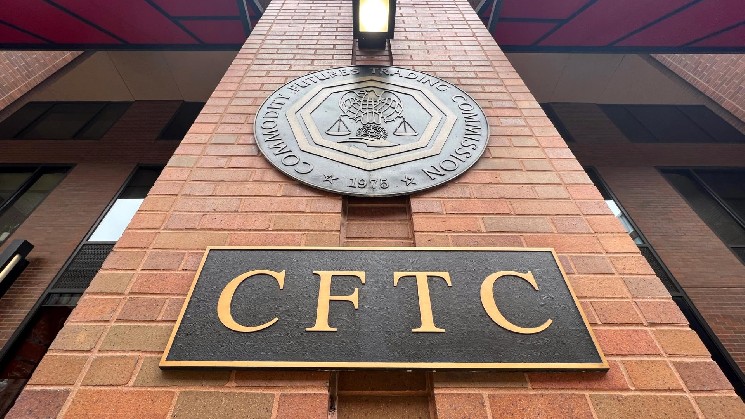
The U.S. Commodity Futures Trading Commission (CFTC) issued a stark advisory on Tuesday that could reshape the fast-growing prediction market industry, signaling heightened scrutiny of so-called “mention markets” — contracts that allow users to bet on what a specific individual might say or do. The move directly targets platforms like Kalshi and Polymarket, which have surged in popularity over the past several years by offering event-based trading on everything from elections to Federal Reserve decisions. According to the agency’s staff advisory, these particular contracts present unique dangers that set them apart from more traditional derivatives tied to objective, verifiable outcomes. The message from Washington is unmistakably clear: the days of lightly regulated betting on a person’s words or behavior may be numbered.
Unlike conventional prediction markets — where outcomes are rooted in independently generated and externally verifiable events entirely beyond any single person’s influence — mention markets hinge on the discrete conduct of a named individual. That distinction, regulators argue, creates a pipeline for manipulation that is both obvious and dangerous. Whether the contract involves a celebrity’s off-the-cuff remark, a politician’s public statement, or a corporate executive’s social media post, the underlying result is determined by what one human being chooses to say or do. As the CFTC’s Division of Market Oversight elaborated, such conduct is oftentimes “neither independently generated nor externally verifiable,” which makes it presumptively difficult to protect against fraud or price distortion.
What makes these contracts particularly troublesome, the advisory suggests, is the inherent knowledge gap that exists between the named person and the broader betting public. When an individual is the subject of a prediction market, they maintain the ability to influence the outcome through their own words and actions — and so do the people in their immediate orbit. Family members, close friends, business associates, and communications staff all possess information that the general trading public does not. This creates an environment where a small, informed group could exploit that asymmetry to profit at the expense of other market participants. In regulatory terms, the CFTC views these situations as “presumptively readily susceptible to manipulation,” a legal standard that prediction platforms must take seriously.
For firms like Kalshi and Polymarket, which have built their entire business models around offering event contracts to retail traders, this advisory could represent a significant operational headwind. These platforms have long positioned themselves at the intersection of financial innovation and entertainment, attracting millions of users with the promise of real-money positions on future realities. Yet the CFTC’s staff guidance serves as a direct reminder that under current law, derivatives platforms are expressly permitted to list only those contracts “not readily susceptible to manipulation.” Any product that fails to meet that standard is suspect. The advisory effectively places a thicket of legal uncertainty around an entire class of popular products, forcing compliance teams to re-evaluate both pending listings and existing actively-traded contracts that reference identifiable individuals.
The broader regulatory backdrop amplifies the timing and weight of this announcement. The CFTC has grown increasingly active in the prediction market space, having previously pursued enforcement actions against unregistered platforms and taken steps to clarify jurisdictional boundaries in the digital asset and event contract arena. This latest advisory should also be viewed in connection with the agency’s ongoing efforts to police market integrity across all categories of derivatives trading. By singling out mention markets, the CFTC is drawing a bright-line distinction between contracts tied to natural, observable occurrences — like whether an economic indicator rises or falls on a given date — and those tied to human behavior. The former offers some objective benchmark for settlement; the latter is shaped by the choices of an individual who may also know exactly where the money is being bet.
Industry reactions have been predictably mixed. Defenders of prediction markets argue that the CFTC is being overly cautious and that such platforms actually inhibit manipulation by aggregating diverse viewpoints and allowing participants to take opposing positions. They contend that even mention-driven outcomes are genuinely difficult to distort in practice, since any deviation between market prices and real-world probabilities would create arbitrage opportunities for sophisticated traders. Moreover, they point out that many mention markets — such as those involving political figures — involve individuals who are already closely observed and frequently covered by the press. Under that logic, the public availability of information should reduce the information advantage that insiders might otherwise possess.
Nevertheless, the advisory carries real weight and cannot be dismissed as mere belt-and-suspenders guidance. When a regulatory body issues formal staff direction, exchanges and trading platforms typically take notice — not just out of deference, but because such guidance often serves as a precursor to enforcement. A platform that continues to list contracts in the face of clear regulatory concern raises its own risk profile while simultaneously exposing its executives and compliance officers to potential liability. Furthermore, the CFTC’s Division of Market Oversight is the same arm of the agency that evaluates product submissions. An advisory of this nature effectively telegraphs the standard by which future platforms will be judged: if a contract depends on a single person’s conduct, particularly when hidden knowledge could sway the result, it may face substantial headwinds before ever reaching the market.
For retail traders who have flocked to prediction platforms, the practical impact of this may be measured in fewer available products and a more constrained trading experience. Contracts that once offered speculative exposure to what a central banker might say at an upcoming press conference, or whether a prominent business leader would make a specific announcement, could disappear from listing immediately. Platforms will need to decide whether to challenge the advisory, seek formal exemptions, or preemptively adjust their product offerings to focus on safer, objectively verifiable categories of event contracts. Some may pivot toward more defensible areas such as macroeconomic data releases, corporate earnings, and electoral results — though even the latter category carries its own complex regulatory history.
Lawyers and compliance professionals will likely spend considerable time parsing the exact language of the advisory to determine its scope. Questions immediately arise: Does a reference to a “named person” encompass public figures only, or does it extend to chief executives of publicly traded companies, central bank officials, and other market-moving individuals? Does it apply to contracts that simply aggregate forecasts about future statements, or only those that settle based on a direct quotation? How should platforms account for individuals who voluntarily engage with these markets, either to promote transparency or to position themselves financially? These interpretive ambiguities may ultimately require further rulemaking or additional staff advisories, but for now, the prevailing regulatory posture is one of heightened suspicion.
The international dimension of the prediction market industry adds yet another layer. While Kalshi is a U.S.-registered exchange operating under CFTC-approved rules, Polymarket has historically serviced a broader international user base, relying at times on non-U.S. entities and blockchain-based infrastructure. The mere issuance of a U.S. advisory does not directly bind platforms operating beyond American borders. However, given that these platforms regularly serve U.S. customers and that the CFTC has demonstrated a willingness to pursue cross-border enforcement, the reach of this guidance should not be underestimated. Global regulatory bodies often take cues from U.S. policy stances, and the signal being sent here may well influence how other jurisdictions approach the legal treatment of prediction markets going forward.
In the weeks and months ahead, the true test of this advisory will unfold in real time as platforms respond to the new regulatory environment. Some may choose to aggressively litigate the issue, arguing that the CFTC has overstepped its congressional authority or failed to account for the ways in which robust market design can mitigate manipulation risks. Others will take a more conciliatory approach, viewing this as an opportunity to demonstrate good-faith compliance while continuing to lobby for legislative clarity in the form of the recently introduced bills aimed at formally carving out legal space for such markets. Either way, the period of unbridled growth in mention-based prediction trading appears likely to contract.
At the core of this regulatory showdown is a deeper philosophical debate about the very nature of prediction markets and their social utility. Proponents argue that these markets serve a public good by aggregating dispersed information, producing forecasts that are frequently more accurate than polls or expert opinions. They point to historically reliable election markets and the growing corporate adoption of internal prediction platforms as evidence that this form of information discovery adds genuine value. Yet the CFTC’s concern is equally understandable from a market integrity perspective: if the purpose of a derivatives contract is to hedge risk or discover prices based on genuine underlying economic activity, a market that settles on the subjective behavior of a single individual starts to resemble gambling more closely than legitimate finance.
The human element cannot be overlooked in this discussion. Behind every event contract is a person whose actions are being scrutinized and financially instrumented by anonymous strangers. When that individual realizes that their words can directly affect the settlement of a financial product, the incentive structure becomes distorted. They might become more guarded, less spontaneous, and more calculated in their public communications. Alternatively, a person could be incentivized to act in ways that enrich themselves through carefully timed announcements or private information-sharing arrangements with favored traders. Either outcome — self-censorship or deliberate market influence — undermines the authenticity that makes public communication valuable in the first place.
Perhaps recognizing these second-order effects, the CFTC’s guidance emphasizes not just the integrity of the market itself, but also the broader societal implications of commodifying personal conduct. By limiting the permissible scope of event contracts, the agency is aiming to prevent the financialization of human behavior, an objective that may resonate with lawmakers from across the political spectrum. In an era of deep political polarization and widespread information disorder, the prospect of financially betting on whether a public figure will make a controversial statement adds a destabilizing element to an already fragile information ecosystem.
For now, market participants would be well advised to monitor subsequent regulatory filings and any further clarification from the Division of Market Oversight. The prediction industry is still in its relative infancy, and regulatory frameworks governing it remain very much in flux. Tuesday’s advisory, while specifically aimed at mention markets, fits within a broader pattern of maturing oversight from the CFTC and other financial regulators. As with any emerging financial innovation, the initial phase of exuberance frequently gives way to a more measured, risk-conscious approach.
Ultimately, the message is a straightforward one: in the eyes of U.S. regulators, not all prediction markets are created equal. Those built on objectively verifiable foundations will continue to find a welcome home. But those that depend on the whims, statements, and behaviors of identifiable individuals can no longer fly beneath the regulatory radar. The warning has been issued, and prediction platforms are now on notice. Whether they adapt, resist, or pivot to safer ground remains to be seen — but one thing is certain: the landscape for mention markets has changed forever, and the industry must now write the next chapter in its development under the watchful eye of Washington.